

'We need to reflect on why women still do most of the childcare'
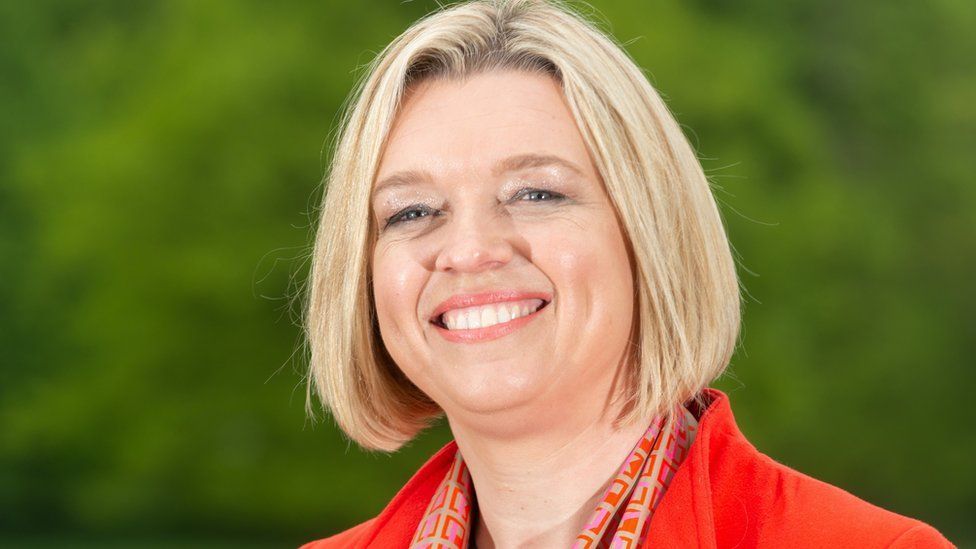 Carlene Jackson says that mums need dads to help out as equally as possible with the childcare
"Imagine if you were asked at the last minute to take on the diary of a colleague who is as busy as you, on top of your own workload," says the chief executive of Brighton-based tech firm Cloud9 Insight.
"It would need you to be in two meetings at the same time, regularly. It's actually impossible, but that's what it's like."
Ms Jackson's husband is a British Airways pilot, who is now working part-time again. She says that the benefits of sharing the childcare as equitably as possible between parents are "unquantifiable".

Last year, official data showed that during the first month of the first UK-wide lockdown, "women were carrying out, on average, two-thirds more of the childcare duties per day than men".
Now 12 months and three lockdowns later, a new survey commissioned by the BBC suggests that this gender inequality has not lessened, despite both parents more often working from home.
The report, which spoke to more than 1,000 people across the UK at the end of February, found that 71% of women "felt they had assumed most of the responsibility for childcare or home schooling" during the lockdowns.
This was despite almost two thirds (64%) of respondents to the survey, which was carried out by market research firm Kantar Public, saying that childcare should be shared equally when both parents are working at home.
Fewer than 8% of people said primary parental responsibility should lie with women.
The research lays bare a "classic value and action gap", says Kantar Public's chief executive Michelle Harrison.
"It is heartening that just 8% feel that childcare is the woman's job," she says. "Over the past 20 years there's been an enormous change, but what the Covid crisis has taught us is that behaviours haven't changed."
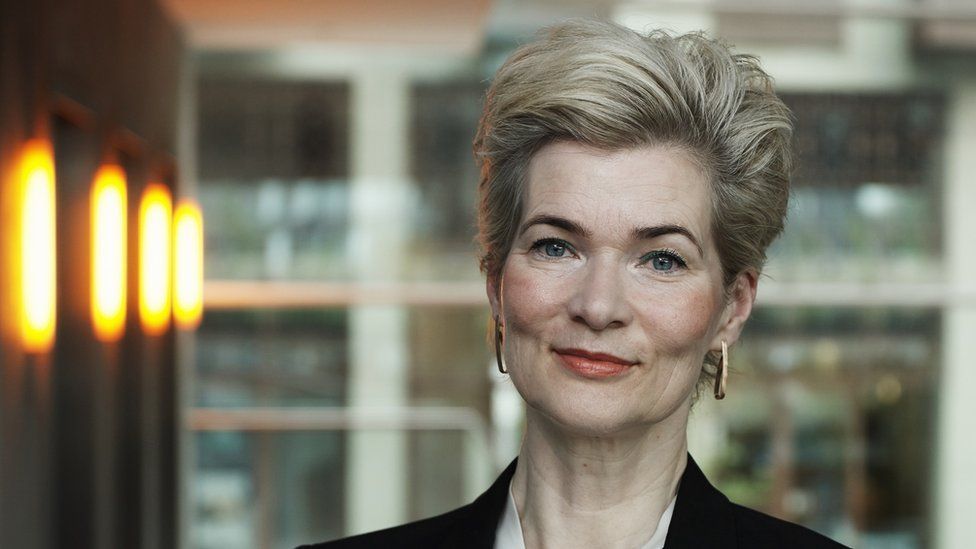
She identifies a "complex interplay", whereby economic reality - notably the fact that men more often still earn more - prevents parents putting their equality beliefs into practice.
"A lot of people would have been forced to make choices based on whose job you've got to protect because it pays the mortgage, and the gender pay gap situation that arises as soon as women have children," she says.
Under Ms Harrison's stewardship Kantar Public also conducts the annual Reykjavik Index for Leadership report, which looks at whether societies around the world think men and women are equally suitable to lead, be it in business, politics, childcare, or education.
Drawing on data from the most recent Reykjavik report, which was published back in the autumn, she suggests that some mothers may also have doubts about their partner's suitability to take the lead in looking after the kids.
"Are women stepping in because they want to make sure the childcare is good enough?" she says. "It's a difficult thing to ask, but that's what the data says.
"We've got to acknowledge that women are part of this discussion as well as men, and a starting point is believing in equality - that men can be childcare leaders."
For Leonie Huie and her partner Joshua Ajibola, it is mum who takes the lead in looking after their three-year-old twin girls.
"I genuinely do feel the responsibility is on the mother," says Ms Huie, who is a London-based business coach and a teacher.
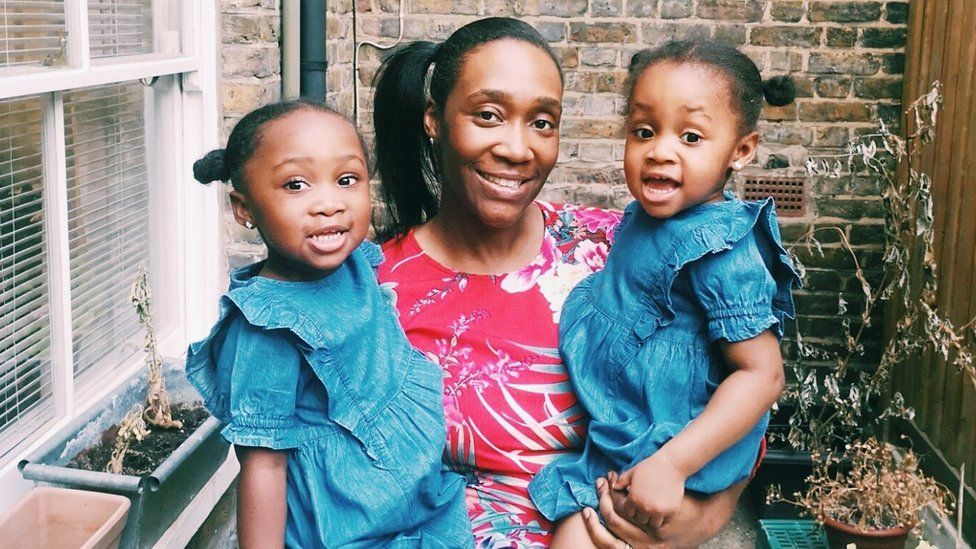
"I'm sure Josh would agree that mums are more hands on with the kids and the learning because we're just a bit more organised."
Mr Ajibola, a personal trainer, says he is very conscious that the lion's share of responsibility, falls on his partner's shoulders.
However, while he is busy with work, he is able to pick the girls up from nursery "among other things to help Leonie... like taking the girls to the park, as I can do that now between clients".
Rachel Carrell, chief executive of childcare provider Koru Kids, advises working parents to seek help from their extended families and other support networks. "We have this idea of the modern nuclear family where everything's on the parents' poor old shoulders," she says.
"That's not the way we used to live, and it is not the way lots of other countries do it today. They disperse pressures across lots of grownups, and make use of their extended families."
Ms Carrell's London-based firm, which provides nannies, experienced a 150% surge in demand for its services when schools first closed last year. "Lockdown has been incredibly tough, and we've seen it really affect mental health of parents as it's been relentless for them," she says.
Even with the reopening of schools, many parents have re-assessed their circumstances, to help with the childcare in the longer-term.
"A lot of people are changing the whole way they live, with vastly more people realising they want to work from home," Ms Carrell says.
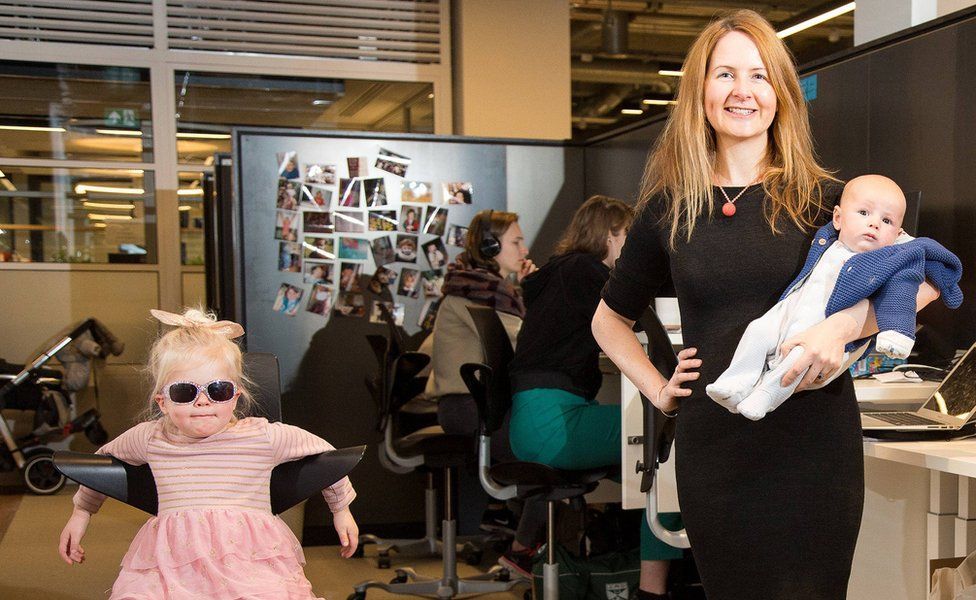
Uma Cresswell, chief executive of human resources firm Paradigm, agrees that some home working is here to stay.
"We need to stop talking about flexible working, or remote working, and realise it is just working," says Ms Cresswell who is also president of the City Women Network, a networking and support group for business women.
The hope is that this longer-term home working will ultimately lead to more equitable childcare sharing.
Tabitha Morton, deputy leader of the Women's Equality Party, says the UK needs to get to a position where more men take paternity leave.
"One of the problems is the social stigma, because men see what happens when women take maternity leave," she says. "They see the impact on their careers."
For Ms Morton the solution would include shared paid parental leave being the default - both parents automatically getting and having to take leave after the birth of their children.
She also wants to see more affordable childcare. "When parents are starting to say, 'Who wants to go back to work?' it shouldn't be who earns the least, but actually who wants to go back to work."
Ms Harrison believes some lockdown lessons have been learnt, but there is more to do. "We came into the pandemic with more progressive views than at any time in history, and we come out realising women are actually still doing most of the childcare work," she says.
"We've been under unique pressures, so it wasn't a moment for reflection. That reflection should start now."