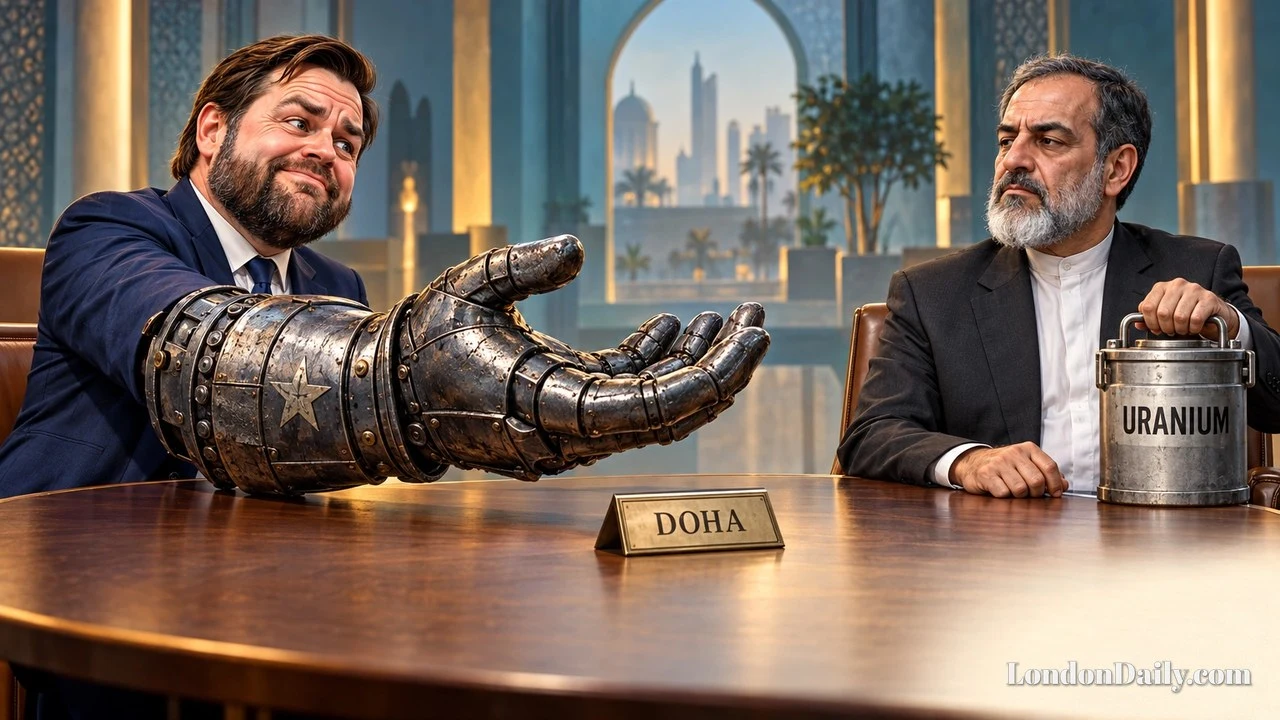
Is Iran winning the war in West Asia? I know it sounds unthinkable. It is fighting the most powerful military in history, so how could it possibly win?
Because this war is different. The victor may be decided not on the battlefield, but at the negotiating table. And that is where Iran has an edge.
Donald Trump’s greatest leverage was his military: his ability to hit Iran and hit it hard. But that leverage has been restricted in recent weeks.
First came the midterm setback. Trump’s Republican Party has lost both houses of the US Congress. The Democrats have won in long-standing Republican strongholds, and it is all because of the war on Iran. The war was deeply unpopular with American voters, so Trump’s ability to restart it has been curbed. That is the first setback.
Second, his allies are opposing him. Arab Gulf states have lined up to lobby Trump, all with the same message: do not restart the war. They stand to lose a great deal.
Look at the situation in Saudi Arabia. Riyadh is fighting the Houthis, who are backed by Iran. Despite weeks of fighting, the Saudi kingdom remains besieged.
Yesterday, Saudi forces bombed Sana’a, the Yemeni capital, which has been held by the Houthis for more than a decade. Still no luck. Overnight, the Houthis fired ballistic missiles at Saudi Arabia. Riyadh claims it shot down the missiles, but the debris crashed into the Mecca region — just 35 kilometres from the Grand Mosque.
And this is just the Houthis. If Iran joins in, the damage would be worse.
The Iranian regime is warning of widespread retaliation, threatening to hit American bases around the world, even in Europe.
“First, we will hit all the bases nearby, and second, we will also hit America’s distant military bases — America’s military bases that are far away, which we have not yet attacked. Perhaps we will hit some of the islands that they believe our missiles cannot reach. We may even strike some US military bases in European countries if aircraft take off from them.”
The pressure seems to have worked. Donald Trump says further strikes are highly unlikely. Instead, he is giving diplomacy a chance, with his vice-president, JD Vance, leading the effort.
Vance is calling for a direct meeting. He wants to sit down with Iran’s security chief, Mohsen Rezaei, who is believed to represent the regime’s hardliners. Vance wants to meet him in Doha and thrash out a deal.
The problem is that Iran is not open to concessions. Tehran knows the midterms have weakened Donald Trump. It knows his Gulf allies are on edge, and it knows the strikes have been delayed. So Iran feels that now is the time to make maximalist demands.
One of those demands involves its nuclear stockpile. Iran has around 440 kilograms of enriched uranium. Reports say the US wants to move that material to another country. Russia has put forward a proposal, but yesterday Tehran rejected the idea. It said not a single particle would leave the country.
“The first point is that we will not allow even a single particle of enriched nuclear material to leave Iran. We have also informed our Russian friends that all of our enriched material will remain in Iran for our own use.”
And that is just one demand. Iran has a total of seven items on its list. It wants control over the Strait of Hormuz, the departure of US forces from West Asia, and a complete end to US sanctions and the blockade. Maximalist positions, as I said.
Where does that leave Donald Trump? He is really struggling to explain the status quo. Look at his remarks yesterday: Trump claimed he had already won the Iran war. At the same time, he said it was not a total victory.








Join the conversation