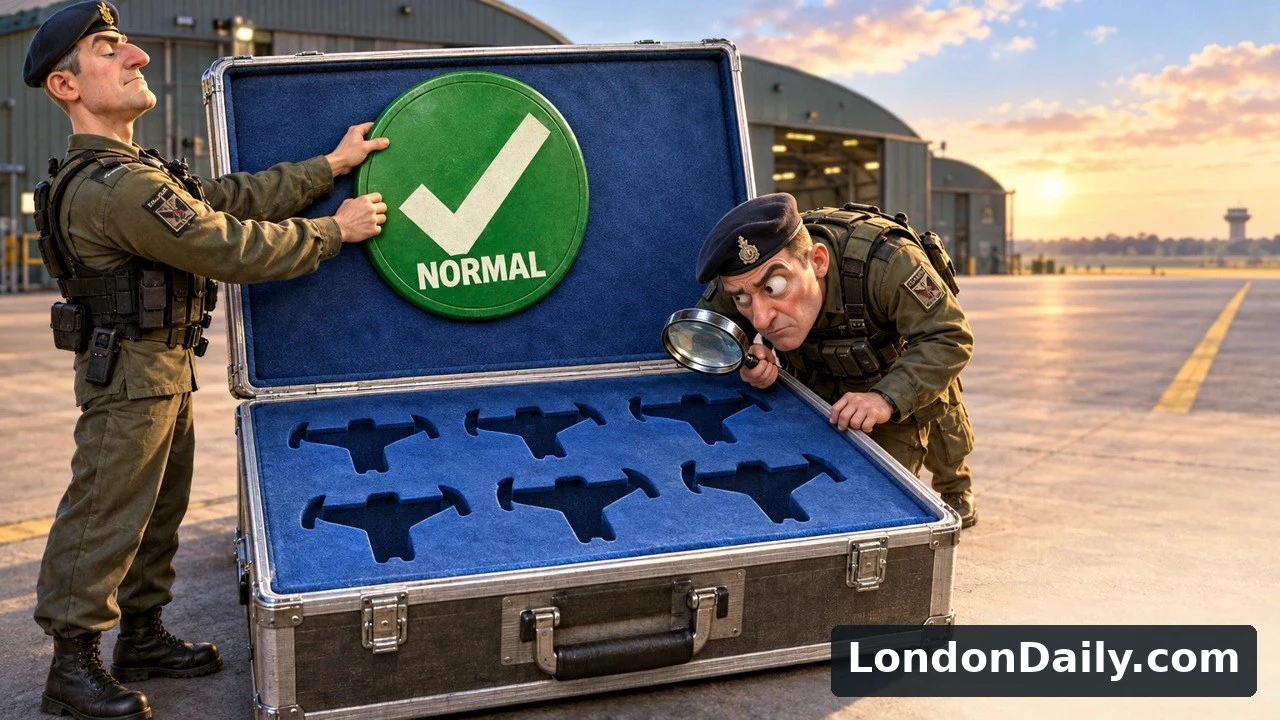
US forces repelled approximately six drones over RAF Lakenheath in Suffolk earlier this month in a suspected Iranian attack, the Financial Times reported, citing people familiar with the incident.
None of the devices was recovered. That leaves US and British authorities unable to establish whether they carried weapons, espionage equipment or other kit. The suspected Iranian connection also remains unconfirmed: the account attributes that suspicion to people familiar with the matter, rather than a publicly announced official finding.
The US Air Force said on 13 November that it was responding to “suspected unauthorised drone activity” over the base. The Ministry of Defence said on Saturday that MoD Police and Suffolk Police had worked closely with US Air Force security forces and that the situation was “quickly resolved, with RAF Lakenheath returning to normal security and force protection measures”.
The distinction matters: restoring normal operations establishes that the immediate incident ended, but does not settle what the drones were carrying or who sent them.
US Air Forces in Europe declined on Friday to discuss counter-drone systems, citing operational security. On Saturday, a spokesperson said security forces used a proactive, integrated and layered approach to base defence, working closely with British partners to protect service personnel, civilians, contractors, families and surrounding communities. Residents were encouraged to remain vigilant and report suspicious activity to local authorities.
Lakenheath houses the 48th Fighter Wing, also known as the Liberty Wing. With almost 7,000 active-duty personnel, it is the largest US fighter operation in Europe. In September, the base said it was on “Charlie alert”, the US Department of Defence’s second-highest threat level.
The UK government is investing an additional £470 million in military-site security, including physical protection, surveillance and counter-drone capabilities. New digital systems are also being used to identify threats and vulnerabilities.
Over the past 18 months, £15 million has been invested in remotely piloted and counter-drone systems and associated training to strengthen surveillance, early warning and rapid responses. The Lakenheath incident nevertheless leaves a specific unanswered question: what threat, if any, the unrecovered drones carried.








Join the conversation