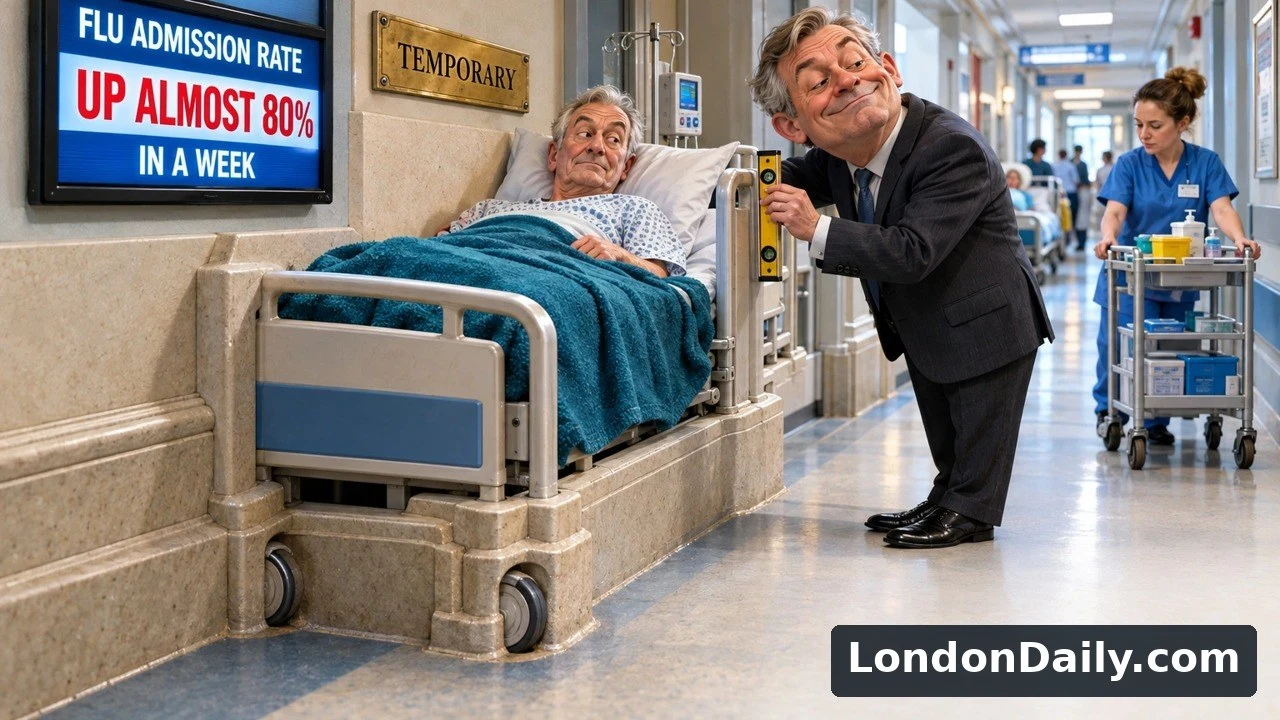
Hospital admission rates for flu in England have risen by almost 80% in a week, reaching their highest level for this time of year since before the Covid pandemic as vaccination uptake leaves substantial gaps among vulnerable groups.
The UK Health Security Agency (UKHSA) urged those most at risk to get vaccinated promptly. Uptake among people aged 65 and over was just under 68%, below the usual level at this stage of the season.
Among almost 9.5 million eligible under-65s in clinical risk groups, including people with lung conditions, kidney or liver disease and diabetes, the agency reported uptake of 34% by 22 November. It also put the number remaining unvaccinated at almost seven million, although those figures do not directly reconcile.
Sir Jim Mackey, NHS England’s outgoing chief executive, warned of a “horrible spike in flu”. Speaking at the NHS Alliance autumn conference, he said some hospitals had introduced masks to limit respiratory infections. Being asked to wear one during a hospital visit for the first time in years had been “a bit of a shock”, he said.
UKHSA flu programme lead Suzanna McDonald said H1N1 was driving transmission and appeared to have acquired more changes than expected over the season. She pointed to encouraging experience last year, when vaccination still worked well against a changed strain, and warned that flu kills thousands annually.
Protection among young children is also limited: 39% of eligible toddlers have been vaccinated this autumn. Two- and three-year-olds can receive a free nasal spray at GP surgeries and some community pharmacies. School-age children usually receive it at school, with pharmacy catch-up appointments available from 1 December for those who missed out.
McDonald advised people with respiratory symptoms to stay at home, avoid those at higher risk, wash their hands with warm soapy water and cough or sneeze into an elbow or tissue.
The pressure extends beyond flu. Mackey condemned corridor care as having become “embedded” in parts of the NHS and called for its elimination on safety and dignity grounds. Patient numbers across illnesses have also increased over the past year, partly because of the ageing population.
Sir Ciaran Devane, chief executive of the NHS Alliance, which represents employers, warned that an early flu season could compound pressure after summer heatwaves. But he stressed that its peak remained unknown.
More indoor socialising around Christmas is expected to increase transmission. Last year, however, an early surge peaked sooner than feared. Admissions are now slightly higher than a year ago; that does not yet establish how severe the winter will become.








Join the conversation