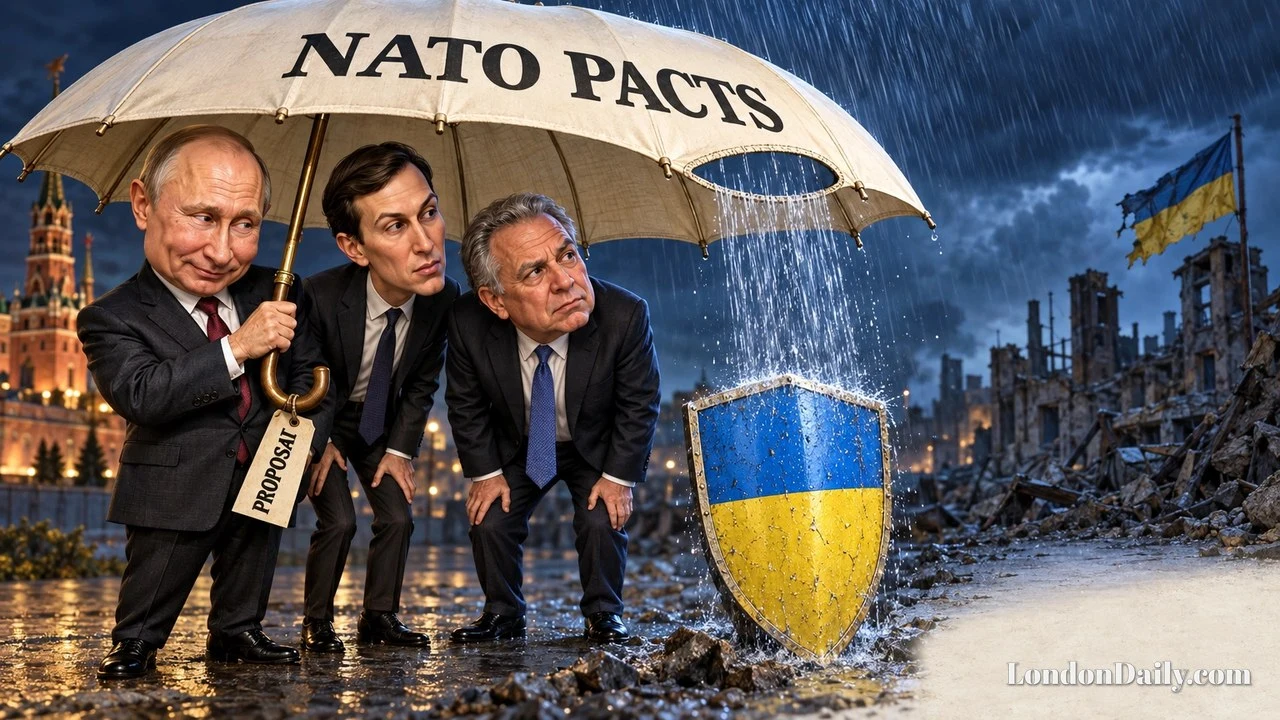
Two of Donald Trump’s most trusted men are in Russia today to meet President Vladimir Putin: his son-in-law Jared Kushner and top adviser Steve Witkoff.
Their visit follows two days of US-mediated negotiations between Ukraine and Russia in Abu Dhabi, which ended yesterday. There is no peace deal yet, but both sides have agreed to keep talking. Russia has also floated a new proposal: non-aggression pacts with NATO member countries.
Over the past two days, the world’s eyes were on Abu Dhabi as the city hosted a rare three-way meeting aimed at ending the Ukraine war. Russia and Ukraine both sent negotiators, with the United States acting as mediator. Witkoff and Kushner represented America.
You would hope that would be enough to secure a deal, or at least a path towards one. But it wasn’t. Russia and Ukraine remain far apart.
Ukraine is still demanding ironclad security guarantees from its Western allies. Kyiv will not sign any agreement without them. Think of these guarantees as an insurance policy for Ukraine: a deterrent against any future Russian attack.
In Kushner’s view, the guarantees are not the problem. But there is a catch. First, Kyiv must reach a deal with Moscow on one crucial issue: territory.
“I think that having these discussions is very important, but the implementation of post-war security will not occur until there’s an agreement on territory and on all other bilateral issues,” Kushner said.
Witkoff and Kushner are now engaging Russia and Ukraine separately, which is why they left for Moscow once the Abu Dhabi talks ended. Their first stop was a meeting with Putin, who had some clear messages to deliver to the American delegation.
In Abu Dhabi, Moscow also dropped hints about what a deal could look like. Russia’s chief negotiator pitched one idea in particular: non-aggression pacts with NATO member states.
In other words, a promise that NATO countries will not attack Russia. It may sound harmless, but a pact like that could limit how far the West can go in helping Ukraine.
The American negotiators’ next stop is Dublin, the Irish capital, where European leaders are holding a summit. Ukraine’s president, Volodymyr Zelensky, is there too, and that is where he will meet Witkoff and Kushner.
Zelensky wants a peace deal before the year is out. But in his view, much depends on one thing: how America deals with Russia.
“I believe it is also very important for the Americans, and for this negotiating team in particular, to achieve a result this year, in my view, given what we are seeing happening,” Zelensky said.
“And it seems to me that they really do want this very much. And so, looking at all the details, we hope to achieve a result.”
So, was Abu Dhabi a success? It depends on which side of the table you are sitting on.
The Americans may call it the beginning of a process, with both sides taking small, incremental steps towards a future deal. They point to a large-scale prisoner-of-war exchange as a sign of progress.
The Ukrainians are more guarded. Their negotiators agree that there is good momentum, but maintain that the talks were exceptionally difficult. That tells you a deal is still a long way off.








Join the conversation