UK Reports Doubling of Unauthorised Drone Activity Near Military Bases Amid Heightened Tensions with Russia
Ministry of Defence reveals significant rise in drone sightings last year, prompting expanded powers and strengthened airspace security measures
Unidentified drones were observed near British military installations at more than twice the rate recorded the previous year, according to fresh data released by the United Kingdom’s Ministry of Defence, underscoring growing challenges to national security against the backdrop of heightened geopolitical tension with Russia.
Defence officials reported that in 2025 there were roughly two hundred drone incidents close to bases across the UK, compared with significantly fewer in 2024, reflecting an intensification of unauthorised aerial activity within sensitive airspace.
The surge in sightings has been linked by experts and government figures to the evolving security landscape in Europe and Russia’s extensive use of unmanned systems in prolonged conflict zones, particularly in Ukraine.
Defence Minister John Healey said the sharp rise in drone incursions highlights the changing nature of contemporary threats and has accelerated efforts to equip British forces with enhanced legal authority and technological capability to counter such activity.
Under new measures incorporated into defence legislation, the UK military will have expanded powers to engage and neutralise drones that pose potential risks near key installations.
This shift is part of a broader strategy to bolster the defence of critical sites and reassure the public and allied partners of Britain’s readiness to deter aerial threats.
The Ministry of Defence has stressed that precise details of specific incidents, including locations and countermeasures, remain sensitive for operational security reasons.
However, officials emphasise that multi-layered detection and response systems are in place to protect personnel, assets, and operations.
Some of the most notable drone activity reported in recent years has occurred around airfields hosting allied forces, including United States Air Force units, prompting collaborative responses and investigations with NATO partners.
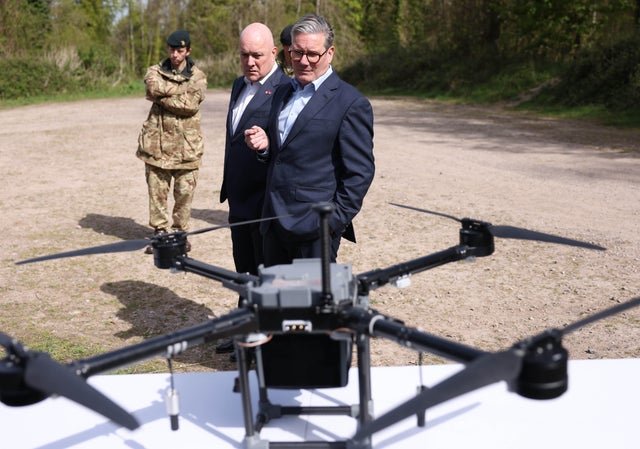
In addition to domestic measures, the UK has deployed specialist counter-drone teams to assist allies facing similar incursions and is investing in upgraded defence technologies designed to detect, track and defeat unmanned aerial systems.
While no state has been officially held responsible for the unauthorised flights, Western military sources and analysts point to patterns consistent with broader hybrid operations conducted by hostile actors.
Defence officials and lawmakers continue to debate the implications of this trend for national and allied security, with increased focus on both strategic deterrence and tactical responses to evolving aerial threats.
Defence officials reported that in 2025 there were roughly two hundred drone incidents close to bases across the UK, compared with significantly fewer in 2024, reflecting an intensification of unauthorised aerial activity within sensitive airspace.
The surge in sightings has been linked by experts and government figures to the evolving security landscape in Europe and Russia’s extensive use of unmanned systems in prolonged conflict zones, particularly in Ukraine.
Defence Minister John Healey said the sharp rise in drone incursions highlights the changing nature of contemporary threats and has accelerated efforts to equip British forces with enhanced legal authority and technological capability to counter such activity.
Under new measures incorporated into defence legislation, the UK military will have expanded powers to engage and neutralise drones that pose potential risks near key installations.
This shift is part of a broader strategy to bolster the defence of critical sites and reassure the public and allied partners of Britain’s readiness to deter aerial threats.
The Ministry of Defence has stressed that precise details of specific incidents, including locations and countermeasures, remain sensitive for operational security reasons.
However, officials emphasise that multi-layered detection and response systems are in place to protect personnel, assets, and operations.
Some of the most notable drone activity reported in recent years has occurred around airfields hosting allied forces, including United States Air Force units, prompting collaborative responses and investigations with NATO partners.
In addition to domestic measures, the UK has deployed specialist counter-drone teams to assist allies facing similar incursions and is investing in upgraded defence technologies designed to detect, track and defeat unmanned aerial systems.
While no state has been officially held responsible for the unauthorised flights, Western military sources and analysts point to patterns consistent with broader hybrid operations conducted by hostile actors.
Defence officials and lawmakers continue to debate the implications of this trend for national and allied security, with increased focus on both strategic deterrence and tactical responses to evolving aerial threats.