UK Government Advances Major Offshore Wind Expansion Off North Wales Coast
The United Kingdom government has unveiled concrete progress on a new suite of offshore wind developments off the coast of North Wales, part of a broader strategy to expand renewable energy capacity and strengthen energy security.
In the country’s most recent Contracts for Difference allocation round, renewable power providers secured agreements that include the long-anticipated Awel y Môr offshore wind project in the Irish Sea, marking the first Welsh offshore wind development to win a major contract in more than a decade.
Alongside this, another significant project — Erebus, a floating wind farm off the Pembrokeshire coast — also secured support, reflecting a growing diversification of offshore wind technologies.
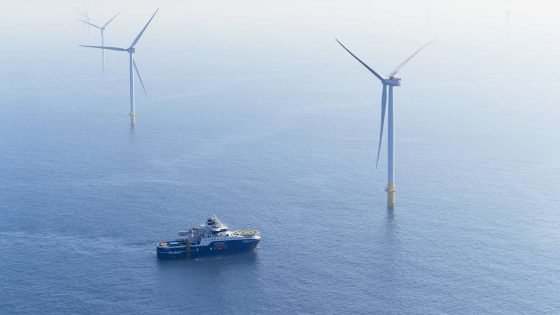
The Awel y Môr development, led by energy company RWE and partners, is planned west of the existing Gwynt y Môr wind farm and is expected to comprise dozens of turbines capable of generating hundreds of megawatts of clean power.
With its Contracts for Difference award at a competitive strike price, the project now moves toward final investment decisions and preparatory work for construction ahead of its planned operational phase late in the decade.
It is anticipated to contribute substantially to regional energy generation and support hundreds of jobs throughout its construction and supply chain.
The Erebus initiative, notable for its floating offshore wind technology, reflects a strategic push by the government to back innovative solutions that can harness deeper waters beyond traditional fixed-bottom designs.
Floating turbines expand the range of viable offshore sites, unlocking additional wind resources across a broader maritime footprint.
The combined approvals from the latest auction are part of a record set of offshore wind allocations that collectively are expected to deliver gigawatts of new capacity across the United Kingdom, attract billions in private investment, and create thousands of skilled jobs in ports, manufacturing, and construction sectors.
Government officials, including the minister responsible for energy, have emphasised the significance of these agreements in advancing the UK’s transition to secure, homegrown clean power.
They note that the success of Welsh projects in the auction demonstrates the region’s strategic role in delivering renewable energy targets and contributing to national decarbonisation goals.
Offshore wind capacity secured in this round forms part of a broader clean energy mission intended to reduce costs for households, enhance energy sovereignty, and stimulate growth in coastal industrial supply chains.
As these developments proceed through planning and investment phases, they underscore the government’s commitment to scaling up offshore renewables as a cornerstone of the country’s energy infrastructure transformation.