Greenland’s NATO Stress Test: Coercion, Credibility, and the New Arctic Bargaining Game
key Points
The Greenland saga is less a “land grab” story than a coercion-and-credibility crisis inside the NATO family. The acute risk was not conquest feasibility, but alliance fracture, miscalculation, and escalation via tariffs, information operations, and military signaling. High confidence.
The January 21, 2026 Davos “framework” de-escalated immediate pressure but did not resolve the underlying problem: ambiguity over U.S. intent versus U.S. already-existing access rights. Expect a long tail of distrust and hedging behavior in Copenhagen, Nuuk, Brussels, and among Arctic allies. High confidence.
Greenland’s domestic politics became a strategic variable. External pressure pushed Greenlandic parties to display unity on “not for sale,” while simultaneously making independence debates more complicated by tying sovereignty to immediate security guarantees. Medium–high confidence.
Europe’s institutional response hardened noticeably: public unity, explicit territorial-integrity messaging, and credible consideration of EU counter-coercion tools. That response materially raised the cost of coercive U.S. tactics. High confidence.
Most likely trajectory (next 3–9 months): intensified negotiation around Arctic security cooperation and base access (including reopening/renegotiation of legacy arrangements), selective investment frameworks, and clearer “red lines” on sovereignty. Medium confidence (contingent on U.S. domestic politics and future crises).
1. What happened (timeline at analytic resolution)
Phase 1 — Strategic interest becomes explicit policy pressure (2025)
The U.S. push to “acquire” Greenland moved from rhetorical interest to repeated, public insistence that U.S. security requires control, creating a persistent diplomatic incident rather than a one-off remark.
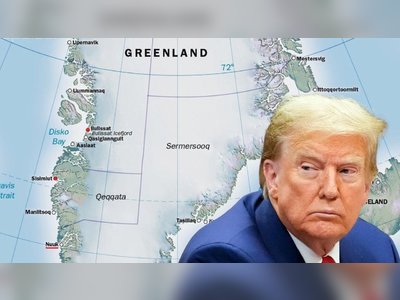
The Greenland issue also intersected with U.S. military presence at Pituffik Space Base (formerly Thule), which operates under U.S.–Denmark arrangements. Importantly, the base’s existence undercuts the claim that Washington lacks access—one reason Europeans framed U.S. demands as unnecessary and destabilizing.
A notable alliance-signal moment occurred when a U.S. base commander’s message distancing the base from Washington’s political rhetoric reportedly contributed to her removal, which allies interpreted as politicization of a sensitive theater.
Phase 2 — Coercion peak (early–mid January 2026)
The crisis escalated sharply when U.S. rhetoric mixed sovereignty demands with coercive instruments (notably threats of tariffs and refusal—until Jan 21—to rule out force).
European leaders shifted to unusually blunt and coordinated language, framing the episode as a challenge to territorial integrity norms and the post-war order.
Public mobilization in Greenland and Denmark (“Hands off Greenland”) reinforced that this was not only a state-to-state dispute but also a legitimacy battle over the right to decide Greenland’s future.
Phase 3 — De-escalation by ambiguity (Jan 21, 2026 Davos)
At Davos, President Trump stated he would not use military force and announced a “framework of a future deal” after talks with NATO Secretary General Mark Rutte, alongside dropping threatened tariffs.
Denmark and Greenland publicly reiterated sovereignty is not negotiable and signaled that no territorial-transfer agreement exists. NATO also indicated the Secretary General did not endorse any surrender of territory.
The immediate temperature dropped; the structural trust problem remained. Commentators emphasized the episode demonstrated “limits” to coercive power due to allied resistance and domestic constraints.
2. Definitions and frames (what the dispute actually is)
“Greenland” is three things at once
A people and polity (self-government with its own elections and internal legitimacy).
A sovereignty arrangement inside the Kingdom of Denmark (Copenhagen retains core defense/foreign-policy responsibilities in the Kingdom structure).
A strategic geography for Arctic security and space/missile-warning functions, reflected in longstanding U.S. basing arrangements.
“Acquisition” vs “access”
A central analytical distinction is between:
Sovereignty change (acquisition/annexation) — politically explosive, legally hostile, alliance-breaking.
Operational access expansion — potentially negotiable if framed as mutual defense modernization, investment, and rules-based cooperation.
The post-Davos “framework” messaging fits the second bucket in practical terms, even when presented in maximalist language.
3. Mechanisms: how leverage was attempted and how it was countered
A) U.S. coercive toolkit used or threatened
Security narrative: framing Greenland as “necessary” for U.S. defense and for denying rivals Arctic advantage.
Economic coercion: tariff threats aimed at pressuring Denmark and allied capitals by raising the cost of resistance.
Alliance conditionality signaling: rhetoric implying U.S. defense commitments could be weighed against Greenland outcomes—this is what elevated the matter from dispute to NATO credibility crisis.
Information dominance: creating uncertainty about “what deal exists,” forcing allies to respond publicly and repeatedly, and consuming diplomatic bandwidth.
Why it partly worked tactically: it forced urgent engagement at the highest level and moved Greenland from “background issue” to “front-page Arctic settlement problem.”
Why it backfired strategically: it triggered rare European unity, public protests, and open discussion of countermeasures—raising reputational and political costs for Washington.
B) Denmark/Greenland counter-leverage
Sovereignty clarity: repeated “not for sale / not negotiable” messaging, denying the U.S. a “gray zone” to exploit.
NATO doctrine pressure: making explicit that attacking a NATO ally would be alliance-ending; even discussion of that possibility was treated as catastrophic.
Legitimacy via public mobilization: protests and cross-party Greenlandic messaging signaled that any “deal” that smells like transfer lacks local consent and would be ungovernable.
Reframing to cooperation: willingness to discuss Arctic security cooperation and investment—so long as sovereignty remains intact—offered Washington an “off-ramp.”
C) EU counter-coercion logic
Even though Greenland is not an EU member in the same way as Denmark proper, the episode immediately implicated the EU’s broader stance on:
border inviolability,
economic coercion deterrence,
and collective response capacity.
Discussion of the EU’s Anti-Coercion Instrument (the “bazooka” framing) mattered because it signaled credible retaliation capability against tariff blackmail—reducing the payoff of U.S. pressure tactics.
D) NATO’s institutional constraints
NATO’s role was structurally awkward: it is designed to deter external threats, not mediate intra-alliance coercion. That is why the Secretary General’s messaging reportedly emphasized Arctic security cooperation rather than sovereignty transfer, and why allies insisted NATO has no mandate to trade away territory.
4. The legal architecture (why “already have access” became a key argument)
A recurring European/Greenlandic point: the U.S. already has significant operating rights under longstanding arrangements, notably the 1951 Defense of Greenland agreement framework between Denmark and the U.S., which is publicly available in treaty text form.
After Davos, reporting indicated the U.S. and Denmark may reopen/renegotiate elements of the 1951 pact—consistent with a shift from “acquire territory” to “modernize access rules.”
Key implication:
If Washington can obtain most operational objectives via modernization of access, the political cost of pursuing sovereignty change becomes harder to justify—even in purely strategic terms.
5. Stakeholder perspectives (steel-manned)
United States (White House / “deal” framing)
Core claim: Greenland’s geography is pivotal for U.S. security in a more contested Arctic; the U.S. should lock in long-term basing and influence and reduce rival footholds.
Negotiation posture: extreme opening asks + economic leverage to force movement, followed by reframing as a “framework.”
Risk accepted: reputational and alliance backlash, betting that European dependence on U.S. security ultimately limits their resistance.
Denmark (state integrity + alliance credibility)
Core claim: sovereignty and borders are not tradable; coercion from an ally is uniquely dangerous because it undermines NATO’s premise.
Operational stance: strengthen Arctic defense, intensify allied coordination, and keep the U.S. engaged through “cooperation without concession.”
Greenland (self-determination + practical security)
Core claim: Greenland’s future is decided by Greenlanders; “we’re open to business, not for sale” logic (as widely reported) is essentially “investment yes, ownership no.”
Domestic effect: external pressure incentivizes internal unity on sovereignty while complicating independence debates by making immediate security guarantees salient.
EU (anti-coercion + order maintenance)
Core claim: allowing territorial outcomes to be bargained via tariffs sets a precedent that weakens the rules-based system and Europe’s own security perimeter.
Tool preference: coordinated response, trade leverage readiness, and political unity.
Other NATO members (especially Nordics, France, UK, Germany)
Core claim: an internal NATO coercion episode is strategically “in-bounds” only if it ends quickly and clearly with sovereignty intact; otherwise alliance credibility collapses.
Russia/China (beneficiaries of Western discord)
Even without asserting specific operational actions (which would require more verified detail), the structural reality is that a transatlantic rupture over Greenland is strategically favorable to competitors because it distracts, divides, and forces Europe into hedging behavior. That is why European leaders described the episode as a gift to rivals.
6. Trade-offs and failure modes (what breaks, what people miss)
Failure mode 1: “Ambiguity as settlement”
A vague “framework” can reduce escalation now but increases risk later because:
parties can claim different meanings domestically,
future incidents can be read as bad-faith,
and deterrence becomes uncertain.
This is why Denmark/Greenland emphasized sovereignty clarity immediately after Davos.
Failure mode 2: Economic coercion triggers economic counter-coercion
Tariff threats invited EU countermeasures discussions. If activated, this would transform a security dispute into a structural trade conflict—harder to de-escalate and politically stickier.
Failure mode 3: Over-politicization of the military posture
When senior political rhetoric becomes entangled with base-level command climate, allies interpret even routine force posture as political signaling—raising misperception risk.
Failure mode 4: Greenlandic domestic backlash
Pressure tactics can radicalize opinion, making even sensible cooperation packages politically toxic inside Greenland if they look like “soft annexation.”
The protests indicate the legitimacy floor is local consent.
7. Current outcome (as of Jan 26, 2026) and what is actually “agreed”
What is clear (high confidence)
The U.S. publicly ruled out force at Davos and dropped threatened tariffs in the immediate term.
Denmark and Greenland publicly state sovereignty is not negotiable; NATO messaging does not endorse any territorial transfer.
What is plausible but not yet a settled “deal” (medium confidence)
Movement toward reopening/modernizing Greenland defense arrangements (including aspects of the 1951 framework) to clarify access, roles, and potentially investment coordination.
What remains unresolved (high confidence)
Trust repair, clarity on U.S. long-term intent, and the governance optics of any expanded U.S. role in Greenland.
8. Forward scenarios (3–9 months) with indicators
Scenario A — “Access modernization” (most likely)
Shape: renegotiated/updated access rules, more joint Arctic activity, investment frameworks that Greenland can sell domestically as autonomy-enhancing.
Indicators: formal working groups; treaty review language; procurement/infrastructure announcements tied to mutual defense rather than sovereignty rhetoric.
Scenario B — “Recurring coercion cycles”
Shape: periodic rhetorical spikes (tariffs, “one way or another”), followed by partial retreats, keeping allies in a permanent crisis-management stance.
Indicators: renewed tariff linkages; public “deadline” language; disinformation claims about “secret deals.”
Scenario C — “European hardening”
Shape: accelerated European defense coordination and stronger EU economic deterrence posture, explicitly designed to reduce vulnerability to U.S. coercion.
Indicators: concrete EU ACI preparation steps; new Arctic-focused European force posture; deeper Nordic-French-German coordination.
9. Practical takeaways
Language drift: Does U.S. messaging shift from “ownership/control” to “capabilities/access”? That’s the clearest sign of stabilization.
Legal modernization: Treaty review/reopening signals a negotiated channel replacing coercive theater.
EU deterrence posture: movement on the Anti-Coercion Instrument is a major escalation-control variable (even without using it).
Greenland domestic legitimacy: if Greenlandic leaders frame cooperation as sovereignty-strengthening and economically beneficial, deals become possible; if cooperation is framed as humiliation, deals stall.