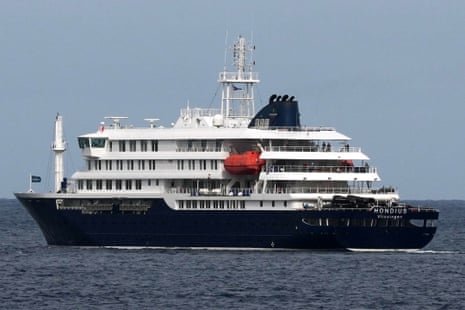
UK Passengers on Hantavirus-Affected Cruise Ship Cleared to Fly Home After Health Screening in Tenerife
Authorities confirm evacuation plans after medical checks on board and ashore, as public health protocols focus on containment and safe repatriation
A coordinated public health and transport response is underway after British passengers aboard a cruise ship linked to a suspected hantavirus concern were cleared for onward travel following medical screening in Tenerife.
The operation reflects a structured effort by health and maritime authorities to manage potential infectious disease exposure while minimizing disruption to international travel.
What is confirmed is that passengers from the vessel underwent health screening after concerns emerged about possible hantavirus exposure.
Hantavirus is a group of viruses typically transmitted to humans through contact with rodent urine, droppings, or saliva, and in some cases can lead to severe respiratory illness.
The cruise ship, operating in European waters, became the focus of attention after reports of illness among passengers triggered precautionary containment procedures.
Authorities in Tenerife conducted assessments of passengers before allowing onward travel arrangements.
British nationals on board are now being prepared for repatriation flights to the United Kingdom, with public health officials coordinating with aviation and maritime operators to ensure controlled movement and continued monitoring where necessary.
The screening process is designed to identify symptomatic individuals and reduce the risk of further transmission during travel.
The key issue is risk management rather than confirmed widespread infection.
Health agencies are treating the situation as a precautionary containment scenario, which is standard practice when dealing with diseases that can have delayed symptom onset or uncertain exposure pathways.
In such cases, authorities prioritize layered screening, isolation if required, and structured repatriation rather than immediate mass evacuation without assessment.
Cruise ship environments present specific challenges for infectious disease control due to high-density living conditions, shared ventilation systems, and rapid passenger movement between jurisdictions.
As a result, even limited suspected exposure can trigger broad precautionary responses involving multiple national health authorities and transport operators.
The situation has also highlighted the logistical complexity of managing health incidents at sea involving multinational passengers.
Coordination between port authorities, airline operators, and public health agencies is required to ensure that screening results are acted upon consistently and that travel restrictions are applied proportionately.
For passengers cleared to travel, repatriation flights from Tenerife to the United Kingdom are being arranged under medical oversight.
Individuals who require further observation or who exhibit symptoms are subject to separate protocols, which may include isolation or delayed travel depending on clinical assessment.
The broader implication is the continued sensitivity of global travel networks to infectious disease alerts, even when confirmed case numbers remain limited.
The response to the hantavirus concern demonstrates how quickly maritime and aviation systems can shift into precautionary mode, prioritizing containment and controlled movement over standard passenger flow.
As the repatriation process proceeds, health authorities are maintaining monitoring protocols to ensure that any emerging cases are identified early, while passengers cleared to travel return to the United Kingdom under structured public health supervision.
The operation reflects a structured effort by health and maritime authorities to manage potential infectious disease exposure while minimizing disruption to international travel.
What is confirmed is that passengers from the vessel underwent health screening after concerns emerged about possible hantavirus exposure.
Hantavirus is a group of viruses typically transmitted to humans through contact with rodent urine, droppings, or saliva, and in some cases can lead to severe respiratory illness.
The cruise ship, operating in European waters, became the focus of attention after reports of illness among passengers triggered precautionary containment procedures.
Authorities in Tenerife conducted assessments of passengers before allowing onward travel arrangements.
British nationals on board are now being prepared for repatriation flights to the United Kingdom, with public health officials coordinating with aviation and maritime operators to ensure controlled movement and continued monitoring where necessary.
The screening process is designed to identify symptomatic individuals and reduce the risk of further transmission during travel.
The key issue is risk management rather than confirmed widespread infection.
Health agencies are treating the situation as a precautionary containment scenario, which is standard practice when dealing with diseases that can have delayed symptom onset or uncertain exposure pathways.
In such cases, authorities prioritize layered screening, isolation if required, and structured repatriation rather than immediate mass evacuation without assessment.
Cruise ship environments present specific challenges for infectious disease control due to high-density living conditions, shared ventilation systems, and rapid passenger movement between jurisdictions.
As a result, even limited suspected exposure can trigger broad precautionary responses involving multiple national health authorities and transport operators.
The situation has also highlighted the logistical complexity of managing health incidents at sea involving multinational passengers.
Coordination between port authorities, airline operators, and public health agencies is required to ensure that screening results are acted upon consistently and that travel restrictions are applied proportionately.
For passengers cleared to travel, repatriation flights from Tenerife to the United Kingdom are being arranged under medical oversight.
Individuals who require further observation or who exhibit symptoms are subject to separate protocols, which may include isolation or delayed travel depending on clinical assessment.
The broader implication is the continued sensitivity of global travel networks to infectious disease alerts, even when confirmed case numbers remain limited.
The response to the hantavirus concern demonstrates how quickly maritime and aviation systems can shift into precautionary mode, prioritizing containment and controlled movement over standard passenger flow.
As the repatriation process proceeds, health authorities are maintaining monitoring protocols to ensure that any emerging cases are identified early, while passengers cleared to travel return to the United Kingdom under structured public health supervision.