US–UK–Venezuela Operation Transfers 13.5kg of Enriched Uranium in Rare Nuclear Security Mission
International agencies confirm removal of reactor fuel from Caracas research facility in a tightly coordinated transport operation to the United States
The transfer of nuclear material from Venezuela to the United States is being driven by an international nuclear security operation involving the United States, the United Kingdom, Venezuela, and the International Atomic Energy Agency, focused on removing a stock of enriched uranium from a long-unused research reactor.
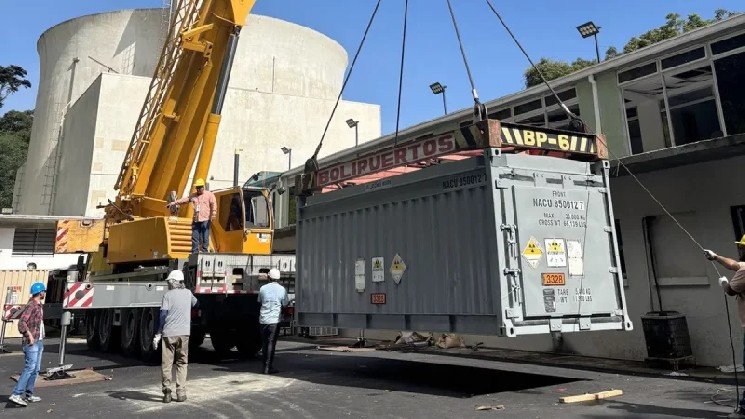
What is confirmed is that approximately 13.5 kilograms of uranium enriched to just over twenty percent uranium-235 was removed from the RV-1 research reactor in Venezuela.
The reactor, located at a scientific institute near Caracas, had been out of active service for decades.
The material was packed under international safeguards, transported overland to a port, and then shipped by sea to the United States, where it is expected to be processed for civilian nuclear applications.
The operation was conducted jointly by technical teams from the United States National Nuclear Security Administration, Venezuelan scientific authorities, and British nuclear transport specialists, with monitoring and verification support from the International Atomic Energy Agency.
The uranium is understood to have originated from fuel used in the reactor during its operational period, which ended in the early 1990s.
The key issue is not weapons development in Venezuela, but nuclear material security.
Uranium enriched above natural levels can, depending on enrichment and quantity, be used in research reactors and, in higher concentrations, may also raise proliferation concerns.
In this case, officials involved in the operation have characterized the material as legacy fuel no longer needed for any active Venezuelan program.
The transport itself was carried out under tightly controlled conditions.
The material was sealed in a secure cask, moved under armed escort to a coastal port, and transferred to a specialized nuclear transport vessel.
It then traveled to a U.S. Department of Energy facility in South Carolina for downblending, a process that reduces enrichment levels so the material can be repurposed for civil nuclear energy use.
The broader context is a growing international practice of removing highly or moderately enriched uranium from research reactors in countries that no longer operate them.
Similar operations have previously taken place in multiple regions under multilateral nuclear security agreements, aimed at reducing the risk of theft, diversion, or misuse of nuclear material.
The development also reflects a notable shift in diplomatic engagement between Washington and Caracas, with the operation requiring active cooperation between the two governments and technical coordination with European partners.
While framed publicly as a non-proliferation measure, it also signals expanded technical contact in a historically strained bilateral relationship.
Once the material arrives in the United States, it will enter a processing chain designed to convert it into low-enriched uranium suitable for civilian reactors.
The removal leaves the Venezuelan facility without remaining enriched fuel, effectively closing out its nuclear research reactor’s fuel cycle and eliminating any stored uranium stock at the site.
What is confirmed is that approximately 13.5 kilograms of uranium enriched to just over twenty percent uranium-235 was removed from the RV-1 research reactor in Venezuela.
The reactor, located at a scientific institute near Caracas, had been out of active service for decades.
The material was packed under international safeguards, transported overland to a port, and then shipped by sea to the United States, where it is expected to be processed for civilian nuclear applications.
The operation was conducted jointly by technical teams from the United States National Nuclear Security Administration, Venezuelan scientific authorities, and British nuclear transport specialists, with monitoring and verification support from the International Atomic Energy Agency.
The uranium is understood to have originated from fuel used in the reactor during its operational period, which ended in the early 1990s.
The key issue is not weapons development in Venezuela, but nuclear material security.
Uranium enriched above natural levels can, depending on enrichment and quantity, be used in research reactors and, in higher concentrations, may also raise proliferation concerns.
In this case, officials involved in the operation have characterized the material as legacy fuel no longer needed for any active Venezuelan program.
The transport itself was carried out under tightly controlled conditions.
The material was sealed in a secure cask, moved under armed escort to a coastal port, and transferred to a specialized nuclear transport vessel.
It then traveled to a U.S. Department of Energy facility in South Carolina for downblending, a process that reduces enrichment levels so the material can be repurposed for civil nuclear energy use.
The broader context is a growing international practice of removing highly or moderately enriched uranium from research reactors in countries that no longer operate them.
Similar operations have previously taken place in multiple regions under multilateral nuclear security agreements, aimed at reducing the risk of theft, diversion, or misuse of nuclear material.
The development also reflects a notable shift in diplomatic engagement between Washington and Caracas, with the operation requiring active cooperation between the two governments and technical coordination with European partners.
While framed publicly as a non-proliferation measure, it also signals expanded technical contact in a historically strained bilateral relationship.
Once the material arrives in the United States, it will enter a processing chain designed to convert it into low-enriched uranium suitable for civilian reactors.
The removal leaves the Venezuelan facility without remaining enriched fuel, effectively closing out its nuclear research reactor’s fuel cycle and eliminating any stored uranium stock at the site.