London Daily

Focus on the big picture.
Tuesday, Sep 22, 2026

UK appoints vaccines minister to oversee coronavirus inoculations

UK appoints vaccines minister to oversee coronavirus inoculations

Prime Minister Boris Johnson said Conservative MP Nadhim Zahawi will oversee the country’s biggest vaccine programme in decades.

The British government appointed a vaccines minister on Saturday as it prepares to inoculate millions of people against the coronavirus, potentially starting within days.

Prime Minister Boris Johnson said Conservative MP Nadhim Zahawi will oversee the country’s biggest vaccine programme in decades.

The UK medicines regulator is currently assessing two vaccines – one developed by Pfizer and BioNTech, the other by Oxford University and AstraZeneca – to see if they are safe and effective. The Guardian newspaper reported that hospitals have been told they could receive the first doses of the Pfizer vaccine the week of December 7, if it receives approval.

The UK says frontline health care workers and nursing home residents will be the first to be vaccinated, followed by older people, starting with those over age 80.

Britain has ordered 40 million doses of the Pfizer/BioNTech vaccine, enough for 20 million people, and 100 million doses of the Oxford/AstraZeneca vaccine.

In all, the UK government has agreed to purchase up to 355 million doses of vaccine from seven different producers, as it prepares to vaccinate as many of the country’s 67 million people as possible.

Decisions about which, if any, vaccines to authorise will be made by the independent Medicines and Healthcare Products Regulatory Agency.

Pfizer and BioNTech say their vaccine is 95% effective, according to preliminary data. It must be stored at ultra-cold temperatures of around minus 70 degrees Celsius (minus 94 Fahrenheit).

The Oxford-AstraZeneca vaccine can be stored at conventional refrigerator temperatures, and is also cheaper than its main rivals. But some scientists have questioned gaps in its reported results.

Oxford and AstraZeneca reported this week that their vaccine appeared to be 62% effective in people who received two doses, and 90% effective when volunteers were given a half dose followed by a full dose. They said the half dose was administered because of a manufacturing error, and they plan a new clinical trial to investigate the most effective dosing regimen.

The British government hopes a combination of vaccines and mass testing will end the need for restrictions on business and everyday life it imposed to curb the spread of the coronavirus. Britain has had Europe’s deadliest Covid-19 outbreak, with more than 57,000 confirmed virus-related deaths.

The prime minister said this week that officials hope to inoculate “the vast majority of the people who need the most protection by Easter.” But he warned that “we must first navigate a hard winter” of restrictions.
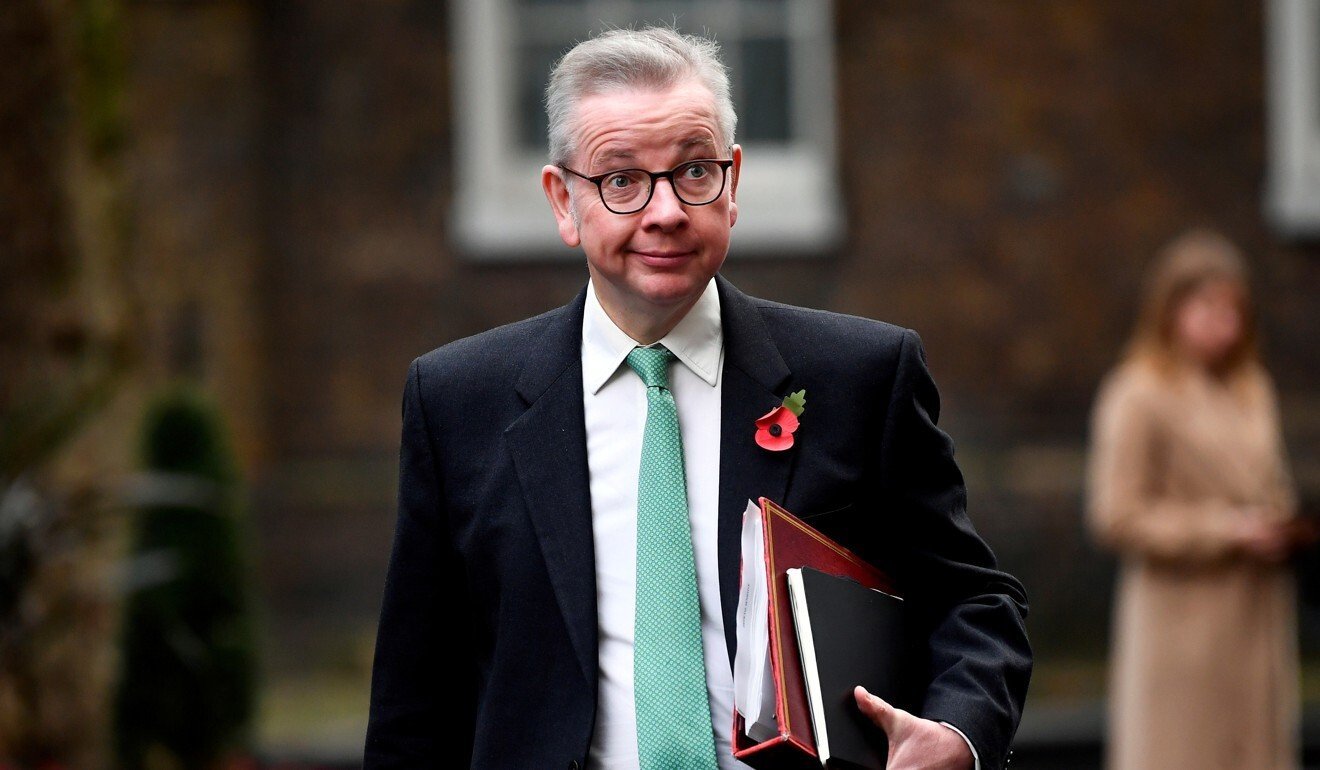

British cabinet minister Michael Gove said restrictions were ‘grimly’ necessary to avoid the health system being overwhelmed this winter.


A four-week national lockdown in England is due to end on Wednesday, and will be replaced by a three-tiered system of regional measures that restrict business activity, travel and socialising. The vast majority of the country is being put into the upper two tiers.

The restrictions have sparked protests, with police arresting dozens of people at an anti-lockdown demonstration in London on Saturday.

Several bottles and smoke bombs were thrown as anti-mask and anti-vaccine demonstrators scuffled with officers in the city’s West End shopping district. The Metropolitan Police force said more than 60 people were arrested, and the number was expected to rise.

Johnson also faces opposition to the measures from dozens of his own Conservative Party’s politicians, who say the economic damage outweighs the public health benefits.

Bur cabinet minister Michael Gove said the restrictions were “grimly” necessary to avoid the health system being overwhelmed this winter.

Writing in The Times newspaper, Gove said there are currently 16,000 coronavirus patients in British hospitals, not far below the April peak of 20,000. A rise in infections would mean coronavirus patients would “displace all but emergency cases. And then even those,” he said.

“If, however, we can keep the level of infection stable or, even better, falling, and hold out through January and February, then we can be confident that vaccination will pull the plug on the problem,” Gove wrote.

Newsletter

Related Articles

0:00
0:00
Close
Michelin Guide Faces Industry Questions Over Restaurant Inspection Coverage
English Woodlands Face Renewed Weather Stress From Dry Conditions and Strong Winds
Research Finds Extensive Alcohol, Gambling and Unhealthy Food Branding During 2026 World Cup
Five Charged After Newborn Baby Dies From Stab Wounds in Sheffield
BT Could Reap £2 Billion From Recycling Copper as Full-Fibre Network Expands
FCA Urges Young Adults to Trace £1.5 Billion in Unclaimed Child Trust Funds
Reform UK Names Helen Jenner as New Leader in Wales After Dan Thomas Steps Down
Resolution Foundation Calls for Broad-Based Tax Rises to Fund Higher UK Defence Spending
Ed Davey Calls for Global Treaty to Halt Development of Super-Intelligent AI
Scotland Consults on Legal Price Caps for Essential Foods
NHS Productivity Reforms Could Prevent More Than 20,000 Early Deaths a Year, Report Says
United Kingdom and ASEAN Deepen Trade and Investment Cooperation
United Kingdom Deploys RAF Refuelling Support to Saudi Arabia After Houthi Attacks
UK Fiscal Headroom Shrinks as Higher Borrowing Costs Complicate Autumn Budget
UK Public Borrowing Jumps to £18.3 Billion in August, Raising Pressure Before Budget
Andy Burnham Reaffirms UK Net-Zero Target With £30 Million Community Energy Fund
Scottish Labour Leader Backs Rosebank and Jackdaw North Sea Projects
UK Consumer Confidence Falls to Three-Year Low
UK Diesel Prices Approach £2 a Litre as Global Supply Shortages Intensify
Chiltern Railways Returns to Public Ownership as UK Rail Nationalisation Advances
British Museum Faces Questions Over Peter Thiel’s Private Bayeux Tapestry Viewing
Earl Spencer Memoir Excerpts Renew Public Debate Over Diana’s Death
Liberal Democrats Gather in Brighton for Autumn Conference
Mothercare Shares Plunge as Middle East Store Closures Threaten Long-Term Solvency
Kent Police Treat Folkestone Hotel Fire as Suspicious
Caribbean Governments Advance Reparations Campaign Seeking Engagement With Britain
Scottish Labour Leader Backs Rosebank and Jackdaw North Sea Projects
FCA Urges Young Adults to Trace £1.5 Billion in Unclaimed Child Trust Funds
UK Competition Regulator Opens Inquiry Into McCormick-Unilever Foods Deal
Public Inquiry Into Tees, Esk and Wear Valleys Mental Health Failings Set to Begin
Nigel Farage Looks to US Immigration Enforcement Model for UK Border Policy
Chiltern Railways Moves Into Public Ownership
Security Review Raises Concerns Over Sensitive UK Police Data Stored on Microsoft Cloud
Burnham Government Warns of Difficult Autumn Budget as Fiscal Headroom Narrows
Bank of England Holds Rates at 3.75% as Inflation Rises to 3.1%
Ed Sheeran Tour Faces Backlash After Macklemore Is Removed Over Pro-Palestinian Remarks
Vandalism of Traffic Cameras Intensifies Across Parts of England
Nearly 300 Evacuated as Fire Hits Grand Burstin Hotel in Folkestone
King Charles Warns AI Executives About Risks From Uncontrolled Technology
Church of England Apologises for Role in Historical Forced Adoption Practices
UK Debate Over Online Speech Intensifies After Arrest Figures Draw Scrutiny
Oxfordshire Village Holds Symbolic Independence Vote Over Asylum Accommodation Plan
Nigel Farage and Richard Tice Sue National Crime Agency Over Alleged Banking Data Leaks
Apple Introduces Stricter Age Checks for UK Accounts
BBC Cash Reserves Fall 66% to £125 Million as Broadcaster Restructures
McLaren Announces £500 Million UK Investment and Plans 1,000 Jobs
Green Party Wins Historic Gorton and Denton By-Election as Labour Falls to Third
Burnham Government Prepares October Budget Under Growing Fiscal Pressure
UK Energy Suppliers Pull Fixed-Price Deals as Wholesale Markets Turn More Volatile
Bank of England Holds Rates at 3.75% as Middle East Energy Shock Raises Inflation Risks
×