London Daily

Focus on the big picture.
Tuesday, Jul 14, 2026

Tube passengers may be able to stream World Cup Final on Underground 4G

Tube passengers may be able to stream World Cup Final on Underground 4G

The exact launch date could be ready in time for the final on December 18

Tube passengers may be able to stream the World Cup Final on their smartphones while deep underground, it can be revealed.

The roll-out of 4G wifi on the London Underground is due to hit a major landmark by the end of next month, when a number of stations and tunnels on the Northern and Central lines will be the first in central London to be connected.

The exact launch date is being kept under wraps but it is understood it could be ready in time for the final on December 18. Stations previously earmarked as being the first to benefit include Euston, Bank and Oxford Circus.

The Standard has been given behind-the-scenes access to the work being done to install super-fast wifi to the subterranean sections of the Underground.

The £1bn-plus investment is being carried out by BAI Communications under a 20-year deal that will deliver an annual income to Transport for London. Passengers will be able to make voice calls, text, browse the web and stream movies and TV throughout their journey, at no additional cost under their mobile contract.

Ken Ranger, chief operating office of BAI UK, said: “You will be able to use your phone exactly as you use it above ground, below ground.
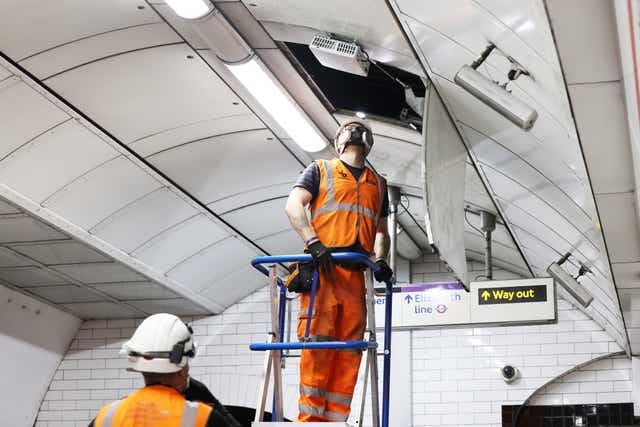

The work is ongoing

“You will be able to talk to your loved ones, to stay connected, for entertainment, if you are running late from the office and you can’t get hold of your partner or child and know you can communicate with somebody.”

BAI began work last year and will complete all 137 below-ground stations and their interlinking tunnels – plus those on the Elizabeth line – by the end of next year.

More than 500 people are working each night to install more than 1,200 miles of cabling, antennae and radio receivers. All phone operators will be able to connect into the “neutral” network being laid by BAI.
Skiparrow
Sponsored Ad
Up next
Capital city quiz
Apester Logo
Skiparrow
Sponsored Ad
Up next
Capital city quiz
Apester Logo

Much of the equipment has to be fitted into the tightest of spaces, or hidden behind panelling in passenger tunnel walkways. Engineers have no more than 3.5 hours a night, between the last trains running around 1am and the Tube restarting after 5am.

The technology, which links with 10 “data centres” at secret locations around the capital, is future-proofed to enable later upgrades to 5G. A network of cables is also being laid to create a “full-fibre spine for London”.

The roll-out follows the 2020 trial of 4G on the eastern end of the Jubilee line.

BAI already operates 4G networks on the New York, Toronto and Hong Kong subways.

Matthew Griffin, head of commercial telecoms at TfL, said 4G would provide a “seamless” connection for passengers.

“You can be connected as you walk into a station, walk through the station, take a Tube, change Tubes and then walk out of the station into the street, and your call will be connected at all times,” he said.

“Our plan is to start rolling it out very soon - hopefully some stations by the end of the year, and a really big roll-out in 2023, when a lot of people’s journeys will be covered. We will finish the whole thing off by the end of 2024 - the very hard to reach areas.”

He doubted many passengers would make calls between stations – due to the noise levels from the speed of the Tube.

“My personal view is that it is quite noisy and difficult,” he said. “I would be uncomfortable doing it.

“There will be some people that do it but I think it’s mainly going to be a data and entertainment use - streaming videos, WhatsApp messages. That mirrors how people use their phones above ground. The use of data is increasing a lot, whereas voice is declining.”


Newsletter

Related Articles

0:00
0:00
Close
UK Prime Minister Keir Starmer Offers Condolences Following Death of Qatar’s Father Amir
UK Regional Innovation Policy Focuses on Research Clusters Across Scotland, Wales, and Northern England
UK Corporate Transparency Rules Set to Become More Strict Under Modern Slavery Reform Plans
UK Civil Service Estate Strategy Shifts Government Activity Away From London
UK Strengthens National Security Powers Through New Threat Designations
Greater Manchester Police Conduct Drink and Drug Driving Operations After Football Events
UK Government Advances Darlington Economic Campus With Construction Milestone
UK Authorities Increase Football-Related Security Operations After Tournament Fixtures
UK Invests Fifty-One Million Pounds in National Cryogenics Facility and Regional Innovation Hubs
UK Moves Toward Tougher Modern Slavery Reporting Rules With Corporate Penalties
UK Government Reports Forty-Three Million Pounds in Savings From Office Estate Reform
UK Government Expands Civil Service Regional Strategy With Manchester and Darlington Campus Projects
UK Designates Iran’s Islamic Revolutionary Guard Corps as National Security Threat
United Kingdom Financial Markets Monitor Business Response to Economic Policy Changes
Scottish Renewable Energy Expansion Highlights Need for Faster Grid Development
Wales and Regions Strengthen Focus on Economic Development Through Tourism and Investment
Retail Industry Warns High Street Businesses Remain Under Pressure
Police Chiefs Highlight Growing Challenges Managing Protests and Public Order
Agriculture Leaders Seek Clarity on Post-Brexit Farming Support and Environmental Rules
Transport Unions Warn of Further Industrial Action Over Pay and Working Conditions
Welsh Tourism Sector Reports Strong Growth Driven by Domestic and International Visitors
National Infrastructure Review Gains Support as Leaders Seek Faster Project Delivery
Financial Markets Assess Impact of United Kingdom Corporate Tax Policy Changes
Northern Ireland Assembly Debates Cross-Border Trade and Infrastructure Cooperation Plans
Government Opens Consultations on Housing Reform and Planning System Changes
Scottish Government Faces Pressure to Accelerate Offshore Wind and Grid Expansion
National Energy System Operator Warns Grid Investment Is Needed for Future Electricity Demand Growth
United Kingdom Research Council Invests in Artificial Intelligence and Biotechnology Innovation Hubs
United Kingdom Expands Oversight of Skilled Worker Visa Sponsors Amid Migration Debate
Cross-Party MPs Call for National Infrastructure Strategy Review to Accelerate Economic Growth
Prime Minister Announces One Billion Pound NHS Funding Package Ahead of Winter Pressures
Bank of England Signals Cautious Approach to Interest Rates as Inflation Remains Above Forecasts
World Cup Visitors Turn American Big-Box Stores Into Souvenir Stops
Netflix Weighs Always-On Channels, Bundles and Short-Form Video
Passenger Is Pulled Partly Outside Ryanair Jet After Window Fails Mid-Flight
Innovation-led growth strategy
Public service reform pressure
Defence and industrial security
Labour leadership transition and economic reset
Northern England Pushes for Greater Influence in Britain’s Future Economic Model
UK Technology Strategy Focuses on Life Sciences, Digital Innovation and Research Investment
Britain and United States Maintain Focus on Pharmaceuticals Cooperation and Industrial Growth
UK Public Services Face Continued Pressure as Government Promises Visible Improvements
Regional Economic Power Becomes Key Theme in Britain’s Next Political Phase
Britain Expands Support for Small Businesses as Firms Seek Better Access to Finance
UK Economy Remains Central Political Challenge as Cost of Living and Growth Concerns Persist
National Health Service Introduces New Workplace Reviews to Improve Conditions for Healthcare Staff
UK Life Sciences Sector Secures More Than Three Billion Pounds in Investment to Support Innovation
Britain Strengthens Defence Strategy as Security Concerns Reshape Military and Industrial Policy
Andy Burnham Promises Stronger UK Defence Industry and Expanded Domestic Production
×