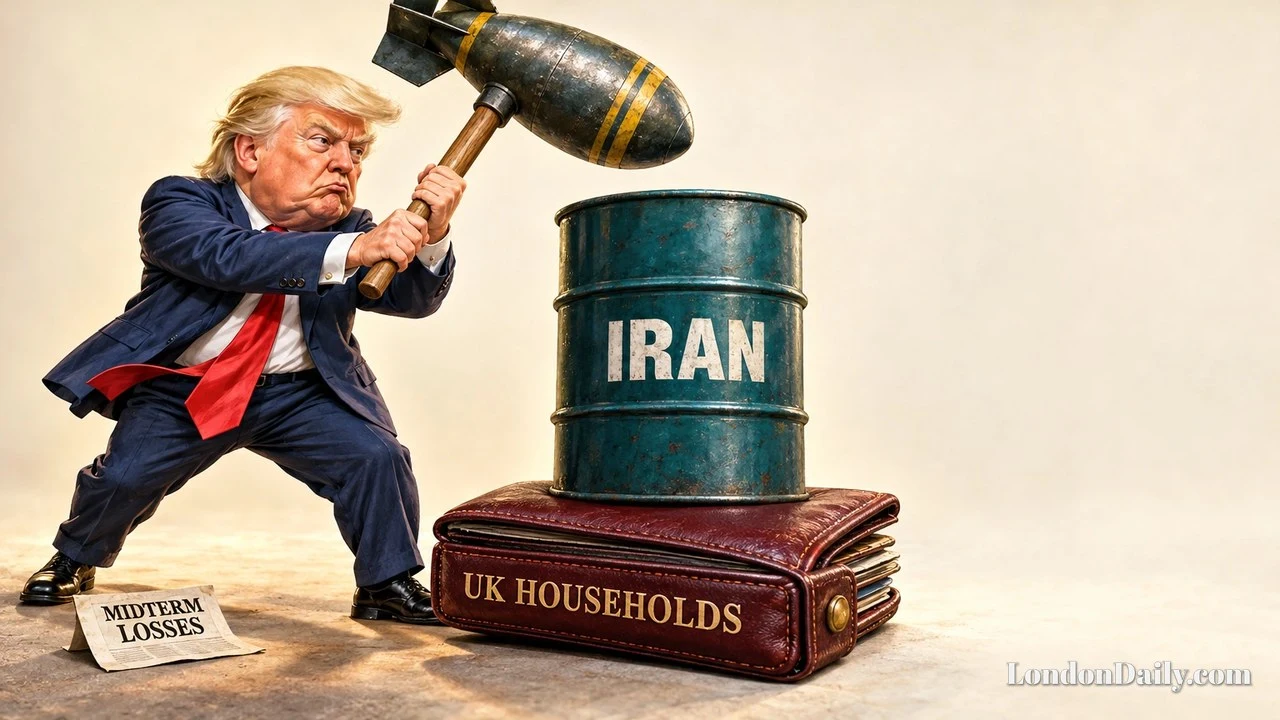
Donald Trump has threatened a heavier military assault on Iran following Republican losses in the US midterm elections, while Tehran has warned of a larger response and an Iranian parliamentarian has threatened European countries that allow American aircraft to launch attacks from their bases.
For London, the potential consequences extend beyond security. An escalation could drive up oil prices, adding pressure to energy bills, petrol prices, food and other household costs. Those are risks of a widening conflict, not established consequences of the election result.
“We have to do something large,” Trump said, adding that action could involve a “heavy hit”. Iran’s Supreme Leader Mojtaba Khamenei responded that, if America struck again, Iran’s response “will expand to an even greater magnitude”.
Ahmad Bakhshayesh Ardestani, a member of the Iranian Parliament’s security committee, said European countries would be targeted with missiles if they allowed US planes to use their bases to attack Iran. His warning was conditional; it was not a specific announcement of an attack on London.
Iran has also been accused of responsibility for a security incident at the US base at RAF Fairford. Andy Burnham has blamed Tehran, but that attribution remains an allegation.
Trump initially adopted a more conciliatory tone after the election losses, praising the Democrats’ campaign while criticising Republicans. He also signalled his willingness to use the presidential veto as he faces political gridlock in Washington. Lord Sadiq Khan criticised him after the Republican defeats.
The political and military pressures pull in different directions. Domestic losses could weaken Trump’s negotiating position and increase the appeal of securing an agreement he could present as an achievement. Intensifying air strikes might be intended to strengthen his leverage before fresh talks, but that remains a possible strategy rather than a declared plan.
Tehran’s stated response points to the competing risk: military pressure intended to bring negotiations closer could instead widen the fighting. For households in America, Britain and elsewhere already struggling with living costs, a prolonged conflict would also make relief harder to secure.








Join the conversation