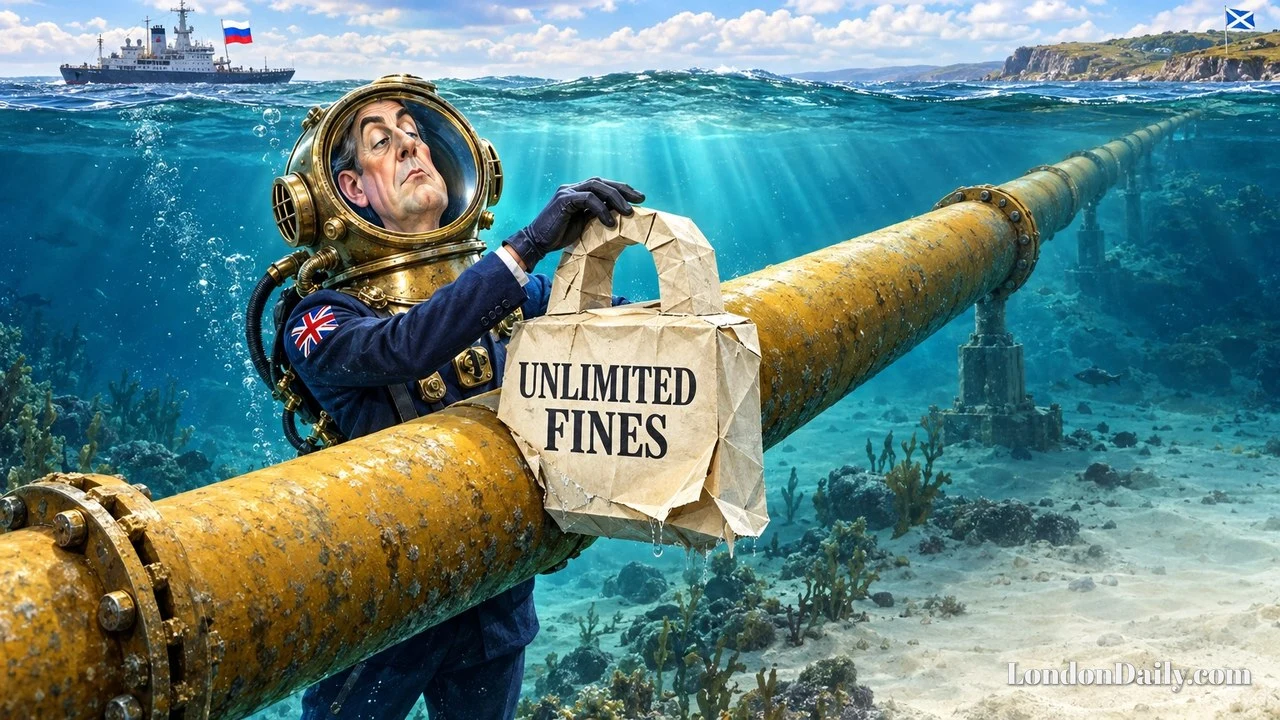
The Conservatives have urged ministers to make critical national infrastructure status for Scotland’s offshore energy assets a priority, following reports of Russian vessels lingering over pipelines that supply gas to St Fergus in Aberdeenshire.
A letter to the Labour UK Government identifies the Flags and Frigg UK pipelines and calls for stronger protection, deterrence against hostile states and an assessment of alternative gas supplies. It is signed by shadow Scottish secretary Harriet Cross, shadow defence secretary James Cartlidge and shadow energy security secretary Andrew Bowie.
Cross said millions of households and businesses depended on the pipelines, warning that disruption could have catastrophic, lasting consequences. Citing threats from Russia and China, she said: “Energy security is national security”. The reported vessel activity is the basis for the warning, rather than an established act of sabotage.
The dispute extends beyond protecting pipelines to defence spending and domestic energy production. Cartlidge cited sightings of Russian and Chinese vessels in British waters and criticised Labour for failing in last week’s Budget to commit to spending 3% of GDP on defence, arguing that delay denied the armed forces certainty.
Bowie accused Labour and the SNP of undermining the energy industry. He argued that refusing to back Rosebank and banning new oil and gas licences threatened energy security, thousands of skilled jobs and billions of pounds of investment.
The UK Government said national security was its top priority. A spokesperson cited nearly £300 billion for defence over four years, described as the biggest sustained increase since the Cold War. Security and resilience legislation announced last month would expose subsea pipeline and cable saboteurs to imprisonment and unlimited fines. The Government said it continued working closely with the sector, but its response did not explicitly address the requested infrastructure designation.
Scottish energy minister Stephen Gethins, sanctioned by Russia for opposing Vladimir Putin’s actions, also demanded stronger protection, but challenged UK defence priorities. He argued that hundreds of billions spent on nuclear weapons had displaced investment against more immediate threats.
Gethins said scrapping the maritime patrol fleet and basing no offshore patrol vessel, frigate or destroyer in Scotland left its coastline exposed and required ships to travel from England’s south coast. He cited the now Chancellor’s earlier resignation as defence secretary and questioned when promised investment would arrive.
He argued that an independent Scotland would prioritise its waters and shores, contribute to collective defence through EU and Nato membership, and strengthen European co-operation. He noted that most Nato members did not host nuclear weapons and contrasted Canada’s participation in the EU’s Security Action for Europe programme with Britain’s limited third-party status.








Join the conversation