London Daily

Focus on the big picture.
Sunday, Jul 19, 2026

Texas Is Ending Its Mask Mandate

Texas Is Ending Its Mask Mandate

"It is now time to open Texas 100%," Gov. Greg Abbott said Tuesday.

Texas Gov. Greg Abbott announced Tuesday that he is ending the statewide mask mandate despite warnings from federal health officials that lifting coronavirus safety measures now may lead to another spike in cases and deaths.

“It is now time to open Texas 100%," Abbott said to cheers and applause at a restaurant in Lubbock. "Everybody who wants to work should have that opportunity. Every business that wants to be open should be open."

Under a new executive order that the governor said "rescinds most of" the orders he has issued during the pandemic, all businesses will be allowed to open at full capacity starting March 10. Abbott said Texas is at the point where statewide mandates are no longer necessary to combat COVID-19.

"To be clear, COVID has not, like, suddenly disappeared," Abbott said, arguing that individuals still have a responsibility to follow health protocols. "Personal vigilance to follow the safe standards is still needed to contain COVID. It’s just that now state mandates are no longer needed."

The announcement was swiftly criticized by Democrats in Texas and elsewhere as a "dangerous" and "reckless" decision that will put lives at risk.

“What Abbott is doing is extraordinarily dangerous," Gilberto Hinojosa, chair of the Texas Democratic Party, said in a statement. "This will kill Texans. Our country’s infectious disease specialists have warned that we should not put our guard down even as we make progress towards vaccinations."

California Gov. Gavin Newsom called the move "absolutely reckless."
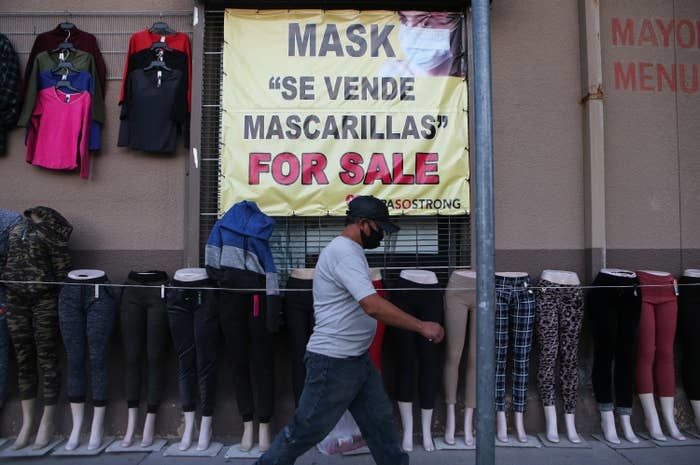
A man walks past a shop in El Paso in November.


Just last week, the US passed the unimaginable milestone of half a million people who have died from COVID-19. The decline in cases has now appeared to plateau.

In recent days, top health officials have warned against abandoning the measures implemented to slow the spread of the coronavirus even as the vaccine rollout speeds up in the US.

"With these statistics, I am really worried about more states rolling back the exact public health measures we have recommended to protect people from COVID-19," Dr. Rochelle Walensky, director of the CDC, said during a White House briefing Monday. "At this level of cases with variants spreading, we stand to completely lose the hard-earned ground we have gained."

Last month, the CDC formally endorsed double-masking to make face coverings fit better as more infectious COVID-19 variants spread across the country. Federal health officials have emphasized the importance of maintaining mask-wearing until most of the population is vaccinated. Masks are currently mandated on planes, buses, trains, and other forms of public transit, as well as at airports and stations.

Despite the changes to statewide mandates, Abbott said businesses will be able to enact their own safety measures to combat the spread of the coronavirus. However, county judges will not be allowed to enact penalties against people who don't wear a mask. Counties in Texas may also impose their own restrictions, he said, but all businesses must be permitted to operate at a minimum of 50% capacity.

Texas joins a handful of states that have reversed their mask mandates. Several states never implemented a mandate at all.

Mississippi Gov. Tate Reeves also repealed his state’s mask mandate Tuesday, saying case numbers “have fallen to the point where no county meets the original criteria for a mask mandate.”

“I am replacing our current orders with recommendations,” Reeves said in a statement. “Everyone should continue to listen to [State Health Officer Thomas] Dobbs and other health advisors for the best possible wisdom regarding how you can personally stem any risk of catching COVID.”

Under the executive order signed by Reeves, only indoor arenas need to limit capacity to 50% and face coverings are still required in schools.

Newsletter

Related Articles

0:00
0:00
Close
Brothers Andrew and Tristan Tate Who Turned "Toxic Masculinity" Into a Brand Arrested in Miami as Britain Seeks Their Extradition
Trump Administration Pressures Banks to Restrict Financial Access for Undocumented Immigrants
Passenger Bound for Germany Refused to Sit Beside a Woman on a Plane — Then Slapped a Flight Attendant
Ukraine’s Leadership Rift Spills Into the Streets as Protesters Target Army Chief
Ukrainian Drone Barrage Kills Eight and Strikes Russian Logistics Network
Key Trends to Watch
Financial Conduct Authority Warns Cloud and Digital Risks Are Becoming a Financial Priority
Jeffrey Donaldson Appeals Sexual Abuse Conviction as Democratic Unionist Party Opens Review
Welsh Health Authorities Launch Emergency Meningitis Vaccination Programme for Students
Scottish Business Activity Falls for Third Month as Companies Face Rising Costs
Bank of England Regulators Demand Better Access to Digital Banking Services
United Kingdom Cuts Bilateral Aid to Several African Countries by Up to Ninety Per Cent
United Kingdom Introduces Tougher Deportation Rules After Rochdale Exploitation Scandal
NHS England Launches Wearable Technology Plan to Reduce Sepsis Deaths
Amazon Web Services Billing Error Sends Trillion-Dollar Invoices to British Companies
Bank of England Takes Direct Regulatory Role Over Major Global Cloud Providers
Extreme Summer Heat Drives Record Fire Risk and Rising Deaths Across Britain
United Kingdom Nationalisation of British Steel Sparks Diplomatic Dispute With China
United Kingdom Economy Shows Weak Growth Ahead of Major Autumn Budget
Andy Burnham Set to Become United Kingdom Prime Minister After Labour Leadership Victory
The Ten World Cup Finals That Defined Football History
Smartphones Are Getting More Expensive, Sales Are Collapsing, and Even Apple Admits: "Prices Will Rise"
The Monaco Bombing Has Become a Test of Ukraine’s Intelligence Accountability
Leadership Change and Strategic Rivalry Redraw the Political Map
Energy Risk, Uneven Growth and the New Geography of Global Capital
The AI Race Enters Its Infrastructure Era
Security and resilience remain long-term national priorities
Britain balances growth ambitions with public finance pressures
Regional devolution becomes a defining theme of the next Labour era
Industrial strategy returns to the centre of British economic policy
Political Instability Remains a Challenge for UK Investment Confidence
Brexit Economic Debate Continues as Public Concerns Over Long-Term Impact Remain
UK Climate Risks Rise as Met Office Warns Extreme Weather Is Becoming More Common
Housing Shortages and Regional Inequality Become Key Priorities Under Incoming Labour Leadership
National Health Service Reform Remains One of Britain’s Biggest Political Challenges
Bank of England Remains at Centre of UK Economic Debate Over Inflation and Growth
UK Economy Shows Recovery Signs but Households and Businesses Remain Under Pressure
Britain Deepens European Defence Cooperation as NATO Allies Seek Stronger Security Capabilities
United Kingdom Expands Sanctions Against Russian Cyber Networks Over Security Threats
UK Industrial Strategy Faces Test After Government Takes Control of British Steel
British Businesses Seek Policy Clarity as Andy Burnham Prepares to Lead Labour Government
Andy Burnham’s Labour Leadership Signals Major Shift Toward Regional Power and Devolution
British Steel Nationalisation Creates New UK-China Tensions Over Control of Strategic Industry
For 36 Years, He Scammed About 300 Luxury Hotels — Until He Was Caught
England's World Cup Exit Expected to Cost Hospitality and Retail £334 Million
Former ICC Prosecutor Aide Speaks Publicly About Allegations Against Karim Khan
Opposition Raises Questions Over June Heatwave Power Grid Pressures
Mastercard Explores Sale of Majority Stake in UK Payments Operator Vocalink
Boeing Forecasts Global Commercial Aircraft Fleet Will Double by 2045
London GP Surgeries Receive £18 Million to Expand Primary Care Capacity
×