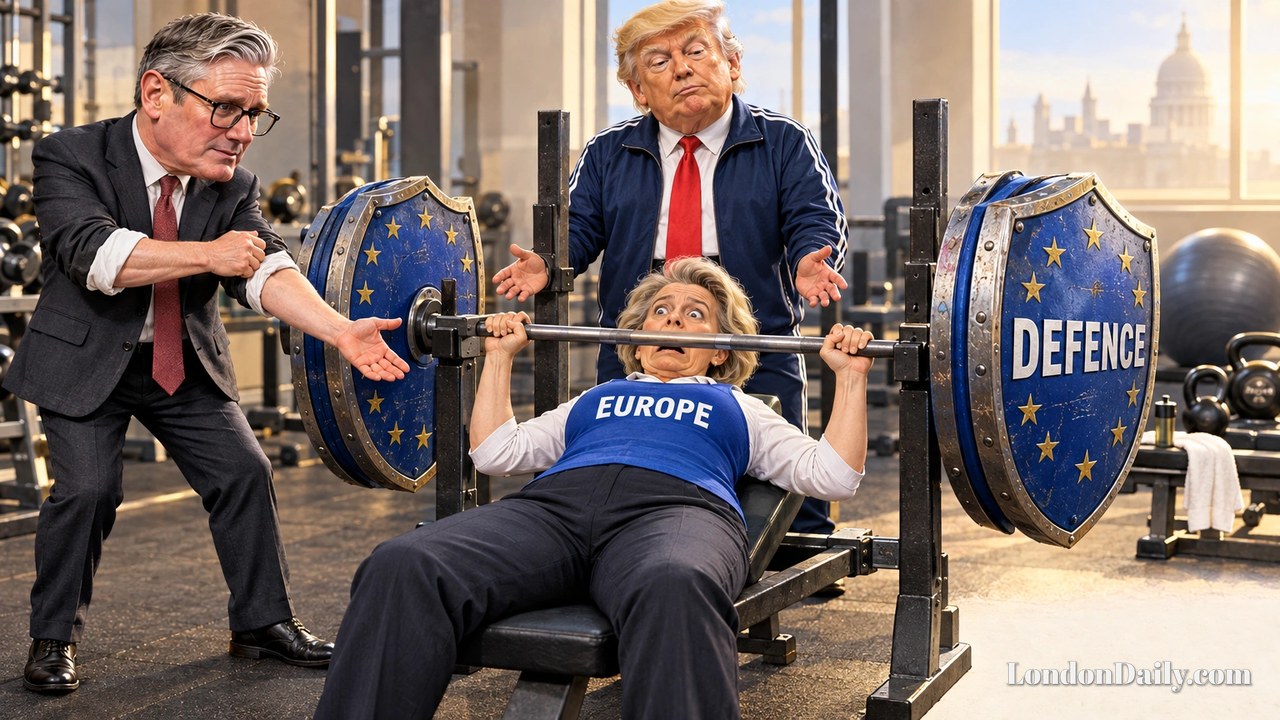
Keir Starmer has urged Britain to deepen its economic and security ties with Europe, arguing that changes in the American relationship will outlast Donald Trump’s presidency and require European countries to take greater responsibility for their own defence.
In his first significant political intervention since leaving No 10 in July, the former prime minister accused European leaders of twice failing to prepare for foreseeable developments: Russia’s attack on Ukraine and Trump’s insistence that Washington would no longer finance European security.
“A stronger Europe is vital and the UK must be at the heart of it,” he said at the British Irish Chamber of Commerce on Friday. “We have to catch up.”
Starmer’s argument was not that Britain should abandon its American alliance. He stressed the continuing importance of military, security and intelligence co-operation, while warning against expecting relations to return to their previous footing after Trump leaves office.
“This is about responding to a permanent change of affairs, not an aberration of the Trump presidency. Things will not go back to the way they were before.”
That assessment underpins his call for a common European security framework extending beyond the EU. He argued that countries on Europe’s periphery were central to its defence, citing Britain’s nuclear capability, leading Nato role, next-generation fighter jet programme and pledge to work with European allies to guarantee Ukraine’s security.
Starmer spoke after meetings in Dublin with senior business figures and politicians, including the taoiseach, Micheál Martin, with whom he established the annual UK-Ireland summit. He highlighted British and Irish participation in the coalition of the willing supporting Ukraine.
His position also reaches beyond defence. Before stepping down, he argued that Brexit had done “deep damage” to Britain’s economy and called for more ambitious economic and security co-operation. Three months before his departure, amid Trump’s war with Iran and threats to withdraw from Nato, he described Europe as a “partnership for a dangerous world we must navigate together”.
His successor, Andy Burnham, has promised to be “bolder” about EU ties. Next month’s EU-UK summit will focus on agreements covering food standards, energy and youth mobility. Burnham also wants a public debate on a closer relationship after the next election.
At a meeting of European defence ministers in Paris this week, Defence Secretary Wes Streeting described support for Ukraine as “united and unwavering”. The immediate agenda therefore includes both practical economic agreements and security co-operation; the broader relationship Starmer advocates remains a political ambition rather than a settled arrangement.








Join the conversation