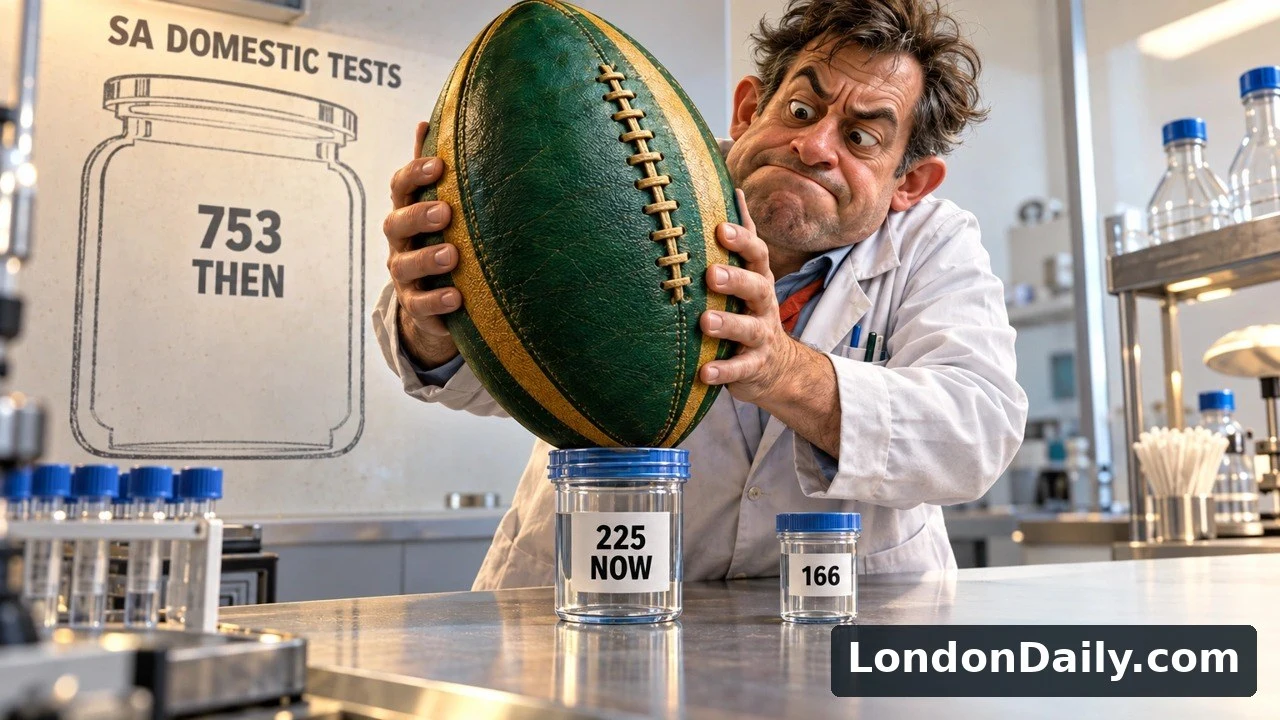
South Africa’s anti-doping agency conducted 225 rugby union tests in the year ending 31 March, fewer than a third of the 753 recorded a decade earlier, despite an increase from 166 the previous year.
The South African Institute for Drug-Free Sport (Saids) figures contrast with testing by UK Anti-Doping in England, Scotland and Wales, which rose from 982 to 1,295 over the same period.
World Anti-Doping Agency (Wada) data separately show a more than sixfold decline in testing in South Africa between 2015 and 2024. The fall coincided with the Springboks’ 2019 and 2023 World Cup victories; it does not establish a connection between reduced testing and sporting success. South Africa subsequently won successive Rugby Championships and qualified to face France in Sunday’s inaugural Nations Championship final at the Allianz Stadium.
Wada recorded 89 South African rugby doping violations between 2015 and 2024, the highest national total and about 20 per cent worldwide. Those figures measure established violations, not the prevalence of undetected doping.
World Cup winners S’busiso Nkosi and Elton Jantjies received three- and four-year bans respectively in 2024. In May, Asenathi Ntlabakanye received an 18-month ban, becoming the third current or former Springbok suspended for a prohibited substance since the 2023 title, and all but ruling him out of next year’s World Cup.
Eight weeks later, an adverse finding for an anabolic steroid emerged involving Sharks prop Kai Pratt, a South Africa Under-20 player called to a Springbok alignment camp in early March. Saids chief executive Khalid Galant said Pratt had requested B-sample testing. At the latest update, no hearing or decision had followed; the allegation remained unresolved.
Galant previously attributed declining testing to laboratory disruption. Africa’s only Wada-accredited laboratory, in Bloemfontein, was suspended in March 2024 and lost accreditation in May last year after failing to resolve breaches of laboratory standards. Sanctions between May 2016 and September 2018 had also coincided with a two-thirds testing decline.
Samples now go to Doha or Gent, increasing costs. Galant described government funding as “fairly static” and said the rugby union’s annual voluntary contribution had been 150,000 rand (£6,835).
These national figures exclude World Rugby’s separate programme. It says South African players face year-round testing, including home visits and competition checks, and overseas sample shipment is acceptable under Wada guidelines. It withheld country-specific totals, citing protection of intelligence-led testing. Its 2,182 worldwide tests in 2024 were the lowest since 2015 outside the Covid years of 2020–21.
Without that national breakdown, the figures establish a substantial contraction in domestic testing, but not the complete testing coverage of South African players.








Join the conversation