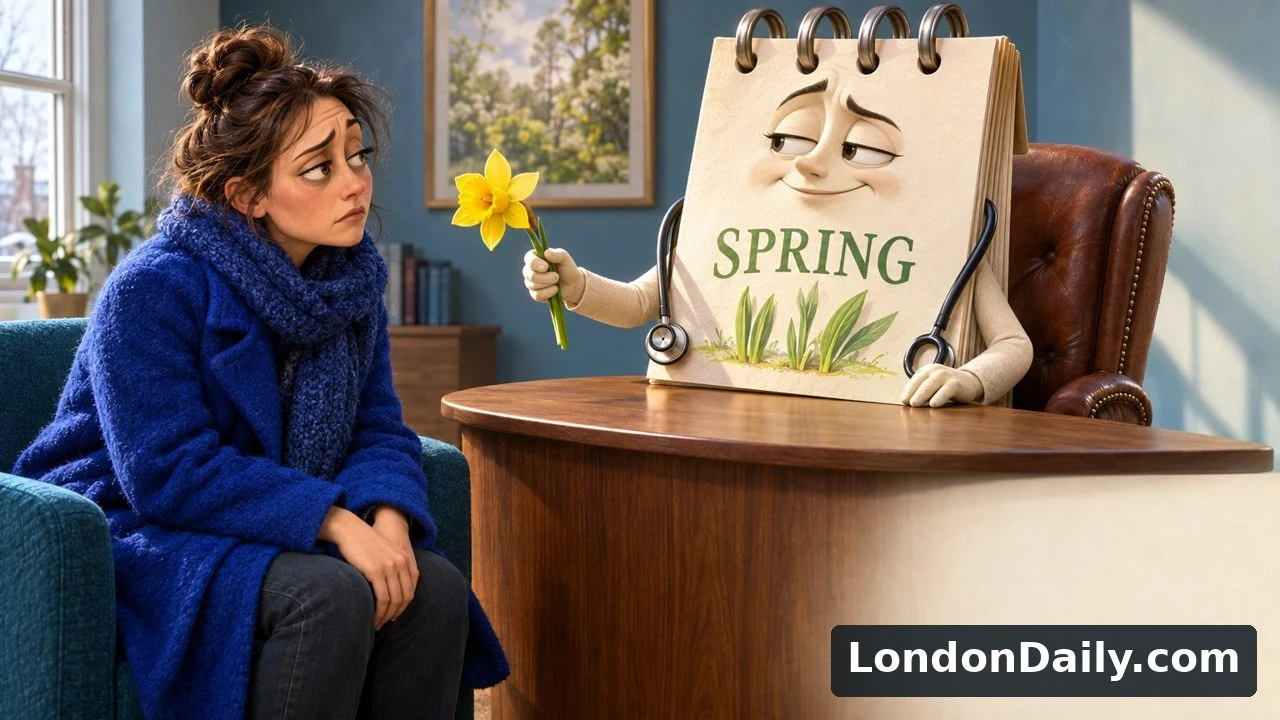
Seasonal affective disorder (SAD) should not be dismissed because symptoms may lift in spring, says neuropsychologist Dr April Thames, who recommends professional help when depression lasts two weeks or longer, disrupts daily life or progressively worsens.
SAD is a form of depression, usually occurring in winter and easing in summer. The NHS says a less common pattern brings symptoms during summer instead. The distinction from milder seasonal mood changes matters: months of depression can affect health, relationships and quality of life even if improvement is expected.
Dr Imren Sterno, head of mental health at AXA Health Insurance, cites Royal College of Psychiatry research estimating that about two million people in the UK experience SAD each winter. Approximately one in three report milder seasonal mood changes, often called the ‘winter blues’, which do not meet the threshold for clinical SAD.
Symptoms listed by the NHS include low mood, loss of interest in usual activities, guilt, worthlessness or hopelessness, irritability or restlessness, and difficulty concentrating. People may eat more, feel hungrier, sleep longer and remain tired. Thoughts of self-harm or suicide can also occur.
The causes are not fully understood. Reduced sunlight may disrupt circadian rhythms, the body’s internal sleep–wake clock. Thames, a professor of psychiatry at UCLA, says researchers have also identified seasonal changes in serotonin and melatonin activity, though the mechanisms remain unclear. Less exercise, reduced time outdoors and social isolation can worsen depressive symptoms in vulnerable people.
Thames says women, younger adults, people with a personal or family history of depression, and those living farther from the equator face greater risk. Differences in sensitivity to light and body-clock changes suggest an interaction between biological vulnerability and the environment, rather than simply a response to gloomy weather.
Sterno recommends going outdoors within an hour of waking where possible, taking lunchtime walks and sitting near windows. Regular waking, sleeping and meal times, scheduled activities and small, frequent social connections may also help.
The NHS lists light therapy as a treatment option. Its advice is to choose a UV-free lamp or light box with a UKCA or CE mark, bright enough for treatment, with 10,000 lux the standard, and follow the manufacturer’s instructions.
Thames cautions against postponing treatment simply because spring is coming. For anyone distressed or struggling to cope, Samaritans offers confidential support on 116 123 in the UK and Republic of Ireland. In the United States, the free, confidential 988 Suicide and Crisis Lifeline is available by call or text around the clock.








Join the conversation