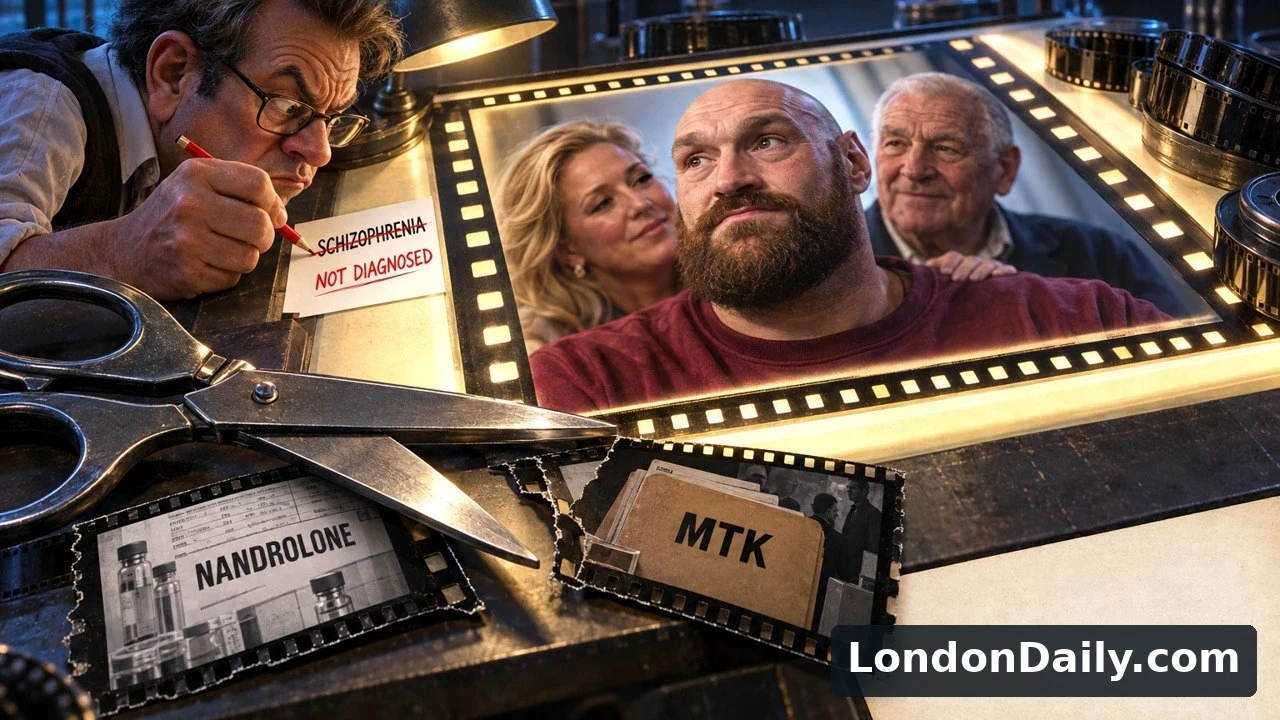
Netflix has amended its new Tyson Fury documentary on the eve of release to clarify that the former two-time world heavyweight champion has never received a schizophrenia diagnosis, after comments by his wife Paris initially suggested otherwise.
The correction makes an important distinction in a film containing detailed accounts of Fury’s mental ill health. He discusses bipolar disorder, hospitalisation during his 2016 absence from boxing, hearing voices and having a “full-on conversation with the radio”. Paris subsequently clarified that he had not been medically diagnosed with schizophrenia.
Directed by Lucy Wilcox, the 90-minute documentary Tyson Fury premieres on 27 November. It draws on archive footage and interviews with Fury, Paris and his father John. Wilcox interviewed the boxer in nine three-hour sittings and describes the film as a “story about family, ultimately”, explaining her decision not to include outside interviewees.
John recounts telling a young Tyson that he had secretly maintained two families. The film also covers his imprisonment for gouging out another man’s eye. Reflecting on his son’s return to boxing in 2017, he says: “That’s what I call a man – not what I’ve been.”
The family’s losses receive substantial attention, including the withdrawal of life support from Fury’s uncle and trainer Hughie, and Paris’s three miscarriages. After one miscarriage, Tyson brought the baby home and buried them in the garden with his brothers’ help. He describes shutting away his grief.
Fury’s struggles with alcohol, drugs, weight gain and suicidal thoughts form the background to his comeback, culminating in his first Deontay Wilder fight in 2018, when he rose from a final-round knockdown.
That account nevertheless leaves gaps. The film omits his failed test involving the anabolic steroid nandrolone, which some boxing followers question as a possible factor in his decline; that causal connection is not established here. It also excludes his links to MTK Global, whose boss Daniel Kinahan was a suspected Irish crime lord. Wilcox says both subjects were discussed and would have remained had the production stayed a series rather than being reduced from a six-hour project.
The documentary does address criticism of Fury’s sexist and homophobic comments. Wilcox rejects those descriptions of his character, while saying he doubles down when challenged. Her stated aim was to understand him. The resulting distinction matters: an intimate family account offers access to private experience, but is not a comprehensive examination of his career.








Join the conversation