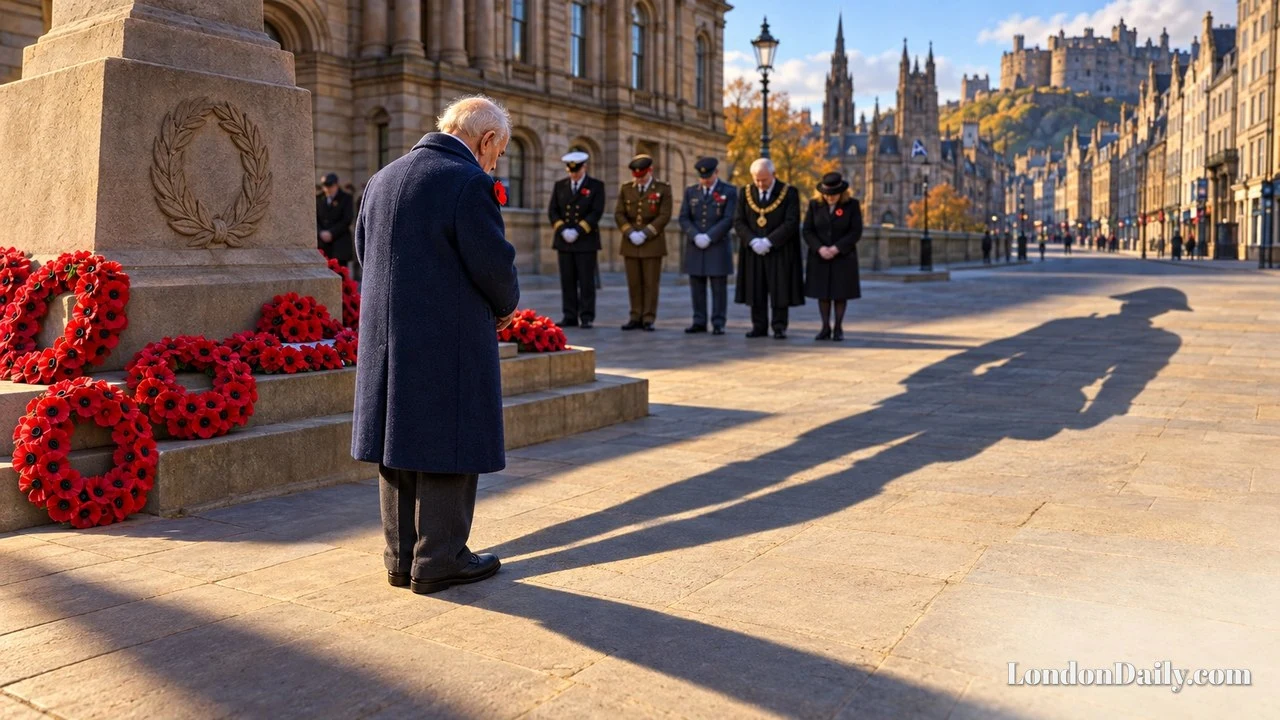
Scotland observed a two-minute silence at 11am on Remembrance Sunday, with 100-year-old Second World War veteran George McLeod among those attending the main ceremony in Edinburgh. The commemorations came around a week after the death of Charlie Horne, one of Scotland’s last surviving D-Day veterans.
A military parade marched from Edinburgh Castle down the Royal Mile, led by the RAF Central Scotland Pipes and Drums, before the annual service outside the city chambers. Poppy wreaths were laid at the Stone of Remembrance by Scottish Secretary Douglas Alexander, Edinburgh Lord Provost Robert Aldridge and the Scottish chiefs of the three Armed Forces services.
Mr McLeod, formerly of the 4th Battalion, the King’s Own Scottish Borderers, served in the Netherlands during the Second World War. Commemorations also took place elsewhere across Scotland.
Ahead of the Edinburgh service, First Minister John Swinney paid tribute to Mr Horne, who died aged 100. He had served aboard a minesweeping vessel off Omaha Beach during D-Day.
Mr Swinney recalled the “extraordinary privilege” of meeting him at the Normandy commemorations in 2024. He described Mr Horne as joyful and buoyant, and said his family were immensely proud of his contribution.
“Although these events are a long time ago, we should never forget their significance,” Mr Swinney said. “Because our freedom today is rested upon those sacrifices that were made all those years ago.”
The First Minister, who attended the ceremony, linked remembrance of those killed in conflict with appreciation for personnel serving today. He said an increasingly conflicted world required the Armed Forces’ enduring commitment to keeping people safe.
Mr Alexander’s tribute also extended to veterans, serving personnel and the families supporting them. He said the debt owed to those who had served “can never be fully repaid” and reaffirmed the UK Government’s commitment to the Armed Forces.
The presence of Mr McLeod and the tributes to Mr Horne gave the national act of remembrance a particular connection to those who served during the Second World War.








Join the conversation