London Daily

Focus on the big picture.
Monday, Jul 13, 2026

School Covid absences rise two-thirds in fortnight

School Covid absences rise two-thirds in fortnight

The number of pupils absent from England's state schools rose by two-thirds to 204,000 in the fortnight to Thursday, 30 September.

Department for Education figures show 2.5% of pupils were out of school for Covid-related reasons on this day.

The figures are the second batch of fortnightly statistics to be published since schools returned with much reduced Covid safety mitigations.

The government said it was trying to maximise time spent in the classroom.

Overall, one in 10 pupils were absent, for Covid-related and other reasons, but in secondary schools, one in seven or 13.7% of pupils were out of school.

Absence rates in the autumn before the Covid pandemic were more like 4.5%.

Face-to-face education


The DfE says its measures strike a balance between protecting health and allowing young people to experience normality.

A spokesperson said: "We are working with parents and school and college staff to maximise students' time in the classroom - encouraging uptake of testing and the vaccine for 12-15-year-olds, and contracting specialist attendance advisers to work on strategies to improve attendance where problems are identified.

"If there are particularly high Covid case rates in a school or college, local directors of public health may advise they reintroduce additional temporary measures such as increased testing or face coverings - but face-to-face education should be prioritised."

They added that attendance advisers were being recruited to work with some local authorities and trusts to support their approach to attendance.

Under the current rules, neither close contacts of confirmed Covid cases nor bubble groups have to go home and isolate - only those pupils who test positive.

Nonetheless, teachers have been warning anecdotally of further disruption to education as case numbers in schools continue to rise.

The DfE statistics showed:

*  102,000 pupils (1.3%) had a confirmed case of Coronavirus, up 72%, from 59,000 the last time the figures were released, on 16 September
*  84,000 pupils (1.0% of pupils) were absent with a suspected case of Covid
*  5,000 were absent because of restrictions to manage a Covid outbreak
*  2,000 were absent because of Covid-related school closures
*  11,000 were isolating for other reasons

Are schools back to normal? Not quite
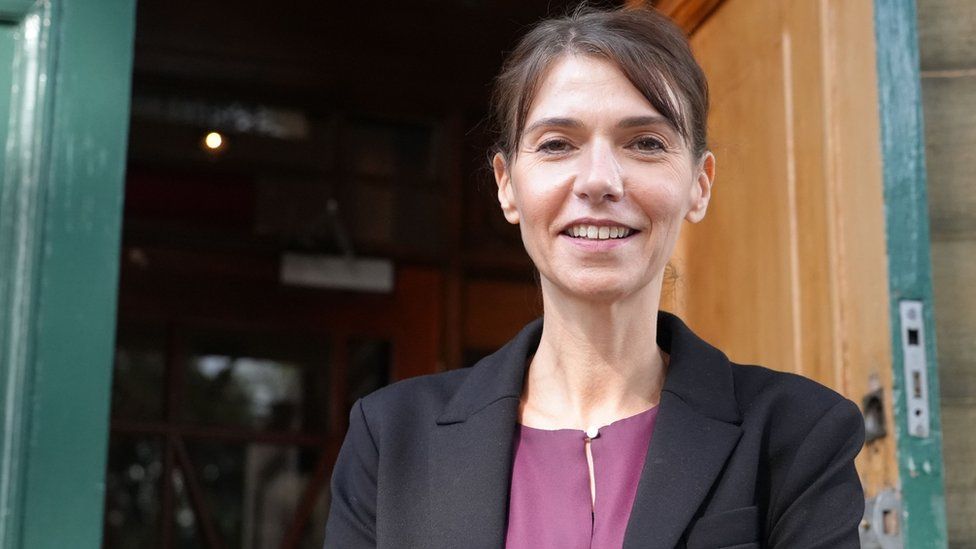
It feels normal but is not, deputy head Liz Lord says

It looks like a normal scene in a school playground - pupils arriving with their heavy rucksacks and friends chatting in little groups.

But behind the apparent normality at Honley High School, in Kirklees, West Yorkshire, as in many schools, Covid cases are rising fast. Between the first week of term and the third, cases rose eightfold, to 156.

"It feels like a normal school again," Deputy head teacher Liz Lord says. "But at the same time, we're dealing with, unfortunately, a rise in the number of Covid cases.

"It causes concern and it causes worry. The number of school Covid cases is higher than it was in the summer.

"But it hasn't got the same level of disruption, because we're not sending kids around the person who is ill home to self-isolate any more."

Association of School and College Leaders general secretary Geoff Barton said he was writing urgently to new Education Secretary Nadhim Zahawi to ask what action he would be taking.

"These grim statistics show a big increase in the number of pupils out of school as a result of the continuing havoc caused by Coronavirus," he said.

"We are hearing from schools where there are 10% or more of pupils absent and where staff are also off work because of the virus.

"Teaching and learning is very difficult in these circumstances and it is clear that the educational disruption of the past 18 months is far from being over."

The National Association of Head Teachers is particularly concerned about the rule siblings of confirmed cases do not have to isolate.

General secretary Paul Whiteman said: "School leaders want the government to revisit its guidance, particularly when it comes to contact tracing and self-isolation.

"No-one wants to see a child miss any time off school but there is a real risk that the current policy is inadvertently leading to more children missing school in the long run."

Newsletter

Related Articles

0:00
0:00
Close
World Cup Visitors Turn American Big-Box Stores Into Souvenir Stops
Netflix Weighs Always-On Channels, Bundles and Short-Form Video
Passenger Is Pulled Partly Outside Ryanair Jet After Window Fails Mid-Flight
Innovation-led growth strategy
Public service reform pressure
Defence and industrial security
Labour leadership transition and economic reset
Northern England Pushes for Greater Influence in Britain’s Future Economic Model
UK Technology Strategy Focuses on Life Sciences, Digital Innovation and Research Investment
Britain and United States Maintain Focus on Pharmaceuticals Cooperation and Industrial Growth
UK Public Services Face Continued Pressure as Government Promises Visible Improvements
Regional Economic Power Becomes Key Theme in Britain’s Next Political Phase
Britain Expands Support for Small Businesses as Firms Seek Better Access to Finance
UK Economy Remains Central Political Challenge as Cost of Living and Growth Concerns Persist
National Health Service Introduces New Workplace Reviews to Improve Conditions for Healthcare Staff
UK Life Sciences Sector Secures More Than Three Billion Pounds in Investment to Support Innovation
Britain Strengthens Defence Strategy as Security Concerns Reshape Military and Industrial Policy
Andy Burnham Promises Stronger UK Defence Industry and Expanded Domestic Production
UK Government Faces Difficult Spending Choices as Labour Leadership Transition Approaches
Rachel Reeves Warns Andy Burnham of Immediate Economic Challenges After Expected Leadership Change
Andy Burnham Prepares to Lead UK Government With Plans for Regional Power Shift and Economic Reset
Government Creates Emergency Support Scheme for Financially Struggling Universities
United Kingdom Replaces Traditional Farm Subsidies With Payments Linked to Environmental Performance
National Grid Reports First Week of Electricity Generation Without Fossil Fuels
United Kingdom Financial Regulator Introduces Tougher Capital Rules for Cryptocurrency Exchanges
Belfast Harbour Expands Operations to Attract Investment Through United Kingdom and European Union Market Access
Scottish Government Threatens Legal Challenge Over Westminster Cuts to North Sea Transition Funding
United Kingdom Accelerates Trans-Pennine High-Speed Rail Project Linking Northern Cities
United Kingdom Secures Ten Billion Pound Investment for Cambridge Quantum Computing Campus
Port Talbot Steelworks Wins Support for Green Hydrogen Transition and Protection of Industrial Jobs
United Kingdom Sends Royal Navy Carrier Strike Group to Indo-Pacific as Regional Security Focus Expands
National Health Service Expands Artificial Intelligence Diagnostics Across England to Reduce Screening Backlogs
United Kingdom Launches Fifty Billion Pound Infrastructure Fund to Accelerate Housing and Construction
UK Medical Chiefs Update Health Guidance to Promote Everyday Physical Activity
Office of Communications Keeps Wikipedia Under Review Under UK Online Safety Rules
UK Defence Ministry Expands Deep-Strike Capability Through Precision Missile Programme
Russell Group Universities Warn Funding Cuts Could Damage NHS Workforce Training
UK Parliament Calls for National Emergency Broadcast as Heatwave Conditions Intensify
UK and Netherlands Strengthen Naval Cooperation With New Amphibious Defence Partnership
UK Defence Ministry Joins International Missile Programme With One Hundred and Ninety Million Pound Investment
Bank of England Warns Middle East Conflict and AI Risks Could Pressure UK Economy
UK Government Introduces New Rules to Limit Foreign Influence in Political Donations
UK and France Prepare Naval Mission to Protect Shipping Through Strait of Hormuz
United States Pressures UK to Increase Defence Spending at NATO Summit
Bank of England Warns Artificial Intelligence Investment Boom Could Create Financial Stability Risks
Bank of England Begins Direct Oversight of Critical Technology Providers Supporting UK Finance
Andy Burnham Set to Become UK Prime Minister After Labour Leadership Race Clears Path to Downing Street
Scottish Fishing Industry Calls for Emergency Support Amid Rising Costs
UK Supports Stronger European Response to Russian Actions in Ukraine
Devon and Cornwall Police Release Suspect in Ann Widdecombe Murder Investigation
×