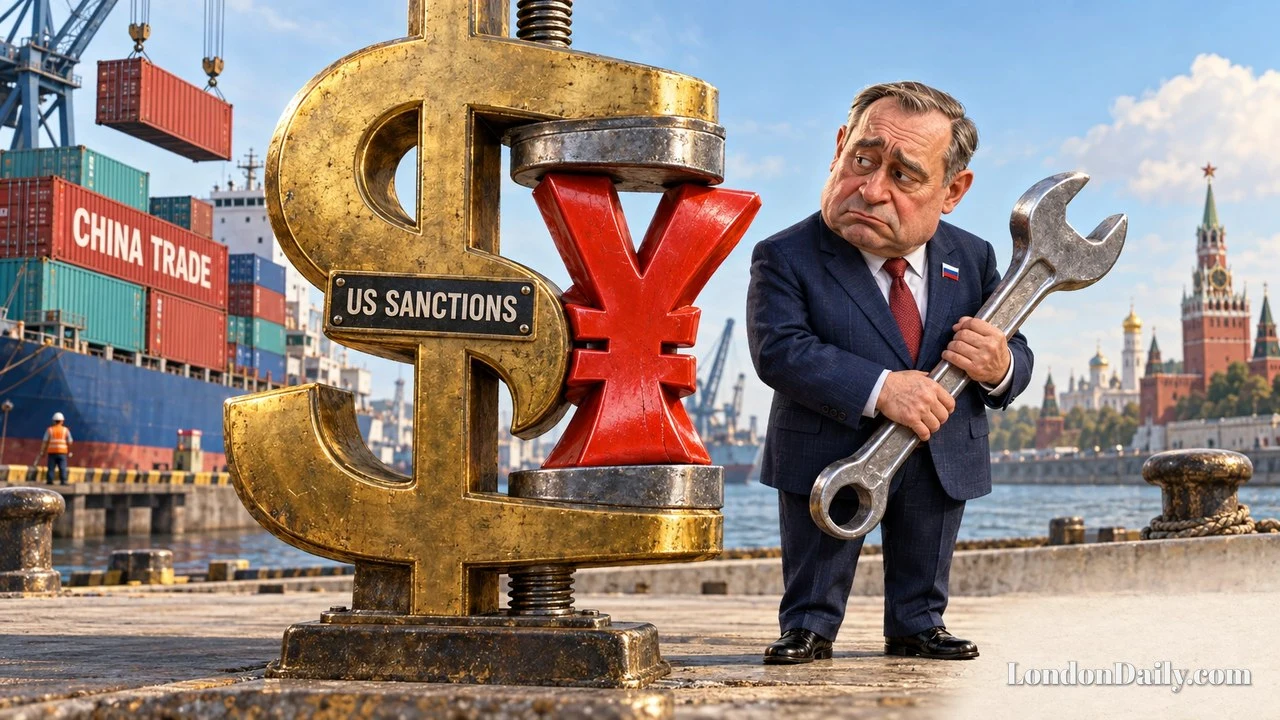
Russia has effectively abandoned its attempt to replace the dollar with China’s yuan under pressure from US secondary sanctions, despite expanding trade with China.
The latest Russian central bank figures show that the yuan’s share of payments for Russian exports has fallen in 2026 to 22%, half its mid-2024 peak. That peak coincided with the widening of US secondary sanctions.
Russia now receives roubles for 69% of its exports to Asia. The two figures cover different markets: the yuan share relates to Russian exports overall, while the rouble figure concerns exports to Asia specifically.
The striking distinction is between trade and payment: growing commerce with China has not sustained the yuan’s share of Russian export receipts. Russia’s experience illustrates the difficulty of establishing an alternative global currency when sanctions pressure persists.
The retreat from the yuan does not, by itself, establish a return to the dollar. The figures show a reduced role for China’s currency and a substantial role for Russia’s own in Asian trade, rather than the emergence of a single replacement for the dollar.








Join the conversation