Russell Brand has told his trial that sexual consent is essential, as prosecutors challenged his account of encounters underlying charges brought by six women.
The media personality, 51, denies three counts of rape, three counts of sexual assault and one charge of attempted indecent assault. The allegations concern events between 1999 and 2009. He began giving evidence at Southwark Crown Court on Wednesday as his defence case opened.
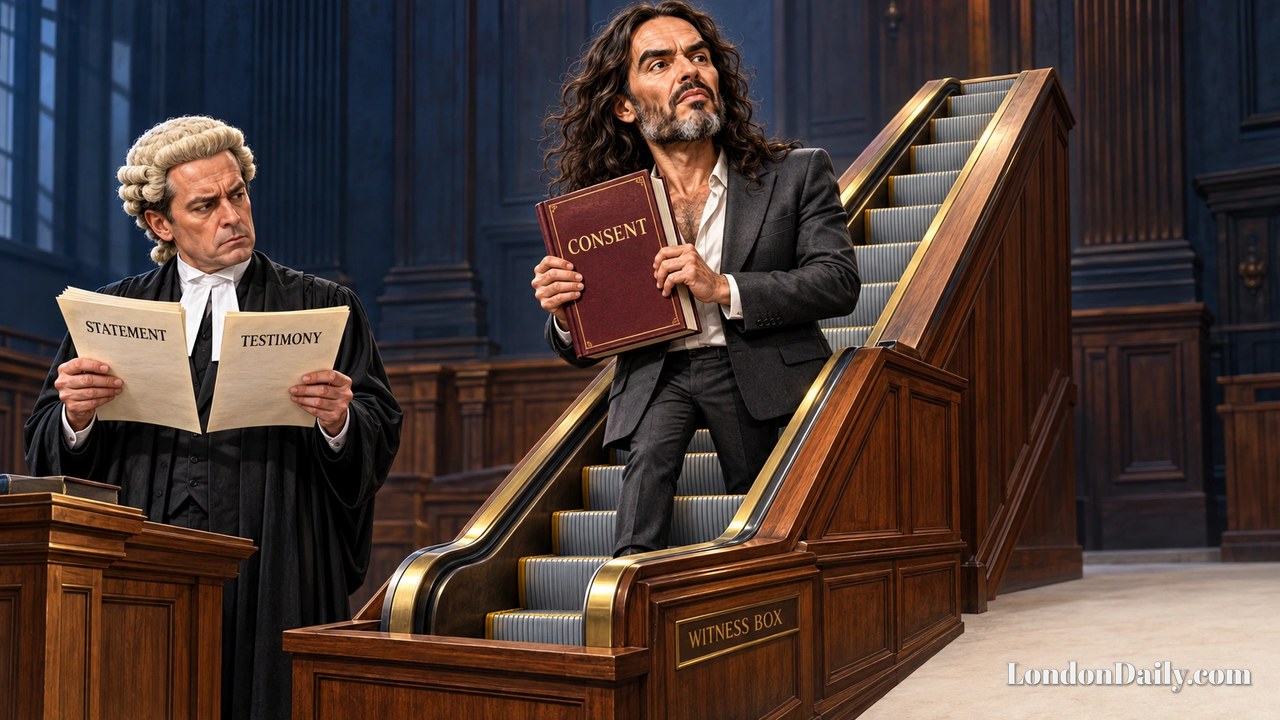
“Consent is fundamental, essential, necessary and indeed in many ways more important than sex itself,” he told the jury.
Prosecutor Riel Karmy-Jones KC challenged inconsistencies between his prepared police statement and his testimony. Brand acknowledged discrepancies in small details, attributing them to “escalating recollection” during what he described as a deeply traumatic period. He rejected her suggestion that his memory was selective.
Brand accepted that he had allowed fame to facilitate sexual access and said that was wrong. He described his past behaviour as persuasive, seductive and reckless, but rejected the prosecution’s suggestion that he had been prepared to go to any lengths.
The disputed encounters include an alleged rape at the Labour Party conference in Bournemouth in 1999. Brand recalled meeting the complainant but denied rape. Challenged over whether he cared about her willingness to have sex, he said he cared “very much”, adding: “I know what no means.”
A second woman alleges that he grabbed her breasts, dragged her into a toilet and raped her at a London bar in 2004. Brand denied grabbing or forcing her and denied oral penetration, while recalling going into the toilet with her.
An MTV employee alleges that he tried to drag her into a workplace toilet in 2001 before she escaped. He denied intending a non-consensual encounter.
Another complainant alleges anal rape. Brand recalled a sexual encounter after his 2009 Hammersmith Apollo show and said they later had consensual sex at his Hampstead home. He denied anal rape and denied that she asked him to stop.
Brand denied pretending to be gay while pursuing women, after one complainant said she had assumed he was gay and felt sexually safe with him. He acknowledged a youthful obsession with sex but denied setting a target of sleeping with 5,000 women.
He described the impact of a Channel 4 documentary as “devastating” and said no friends or acquaintances had agreed to testify for him. He also claimed that, following the documentary and a newspaper investigation, he was barred from staying with his son during open-heart surgery at Great Ormond Street Hospital.
Brand agreed that he blamed Dispatches for the allegations and strongly disputed that the media had treated him fairly. His account remains contested by the prosecution.








Join the conversation