

Royal Mail acknowledges policy breaches in monitoring postal worker speed and admits prioritising parcels
Tracking data has been used in 16 disciplinary cases, Royal Mail chief executive Simon Thompson told the MPs of the Business, Energy and Industrial Strategy (BEIS) committee. Parcels are prioritised over letters during industrial action and "recovery" times, executives said.
The head of Royal Mail has acknowledged policy breaches in monitoring postal workers' delivery speed.
The Royal Mail chief executive, Simon Thompson, reappeared before the Business, Energy and Industrial Strategy (BEIS) committee after being asked to clarify statements.
Images shown at the committee on Wednesday showed a bar chart comparing individual postal workers' stop times while delivering and a map with yellow dots that display postal workers' dwell time. The longer a postal worker stands still the bigger the dots become.
Mr Thompson said the data was not used for performance management and is not available in real time. The information is used to ensure workloads are "balanced and even" in order to be fair, he added.
When questioned further on the yellow dots measuring dwell time Royal Mail executives said they would check whether there is an alarm that sounds after a minute of a postie standing still.
"So, to the best of my knowledge, that's not the case. Given I am under oath I would like to take the opportunity to check," said Ricky McAulay the operations development director at Royal Mail said.
"I don't believe so either but we'll check," Mr Thompson added.
Witnesses appearing before the committee were given advance notice of the images shown, chair of the committee Darren Jones said at the beginning of the session.
But data from posties' postal digital assistants (PDAs) has been used in 16 conduct cases, Mr Thompson told the committee.
"And the conduct case is a very severe and actually quite a rare occurrence," he said.
"And if that data is requested for that particular situation, then that has to be referred to a human resources professional before that information would be released."
MPs on the committee said they were sent hundreds of complaints and evidence, that called into question answers previously given by Mr Thompson.
During his last appearance, he denied knowledge of technology tracking employee deliveries. There had been allegations that staff were disciplined based on the data.
Mr Thompson told MPs he was "not aware of technology we have in place that tells people to work more quickly. I am not aware of that at all".
He also denied that it is Royal Mail policy to prioritise parcels over letters, something that could breach rules.
When originally asked if postal workers had been told to prioritise parcels over letters Mr Thompson said: "No, that is absolutely not true".
However, at the session on Wednesday - in response to evidence from posties across the country - he said parcels are prioritised over letters during periods of industrial action.
"It's not our policy but in realities of industrial action we have to apply a different policy," he said.
Mr McAulay had added that parcels were also prioritised "on the day of industrial action and in recovery".
This arrangement is publicised on the Royal Mail website and discussed with Ofcom, Mr Thompson said.
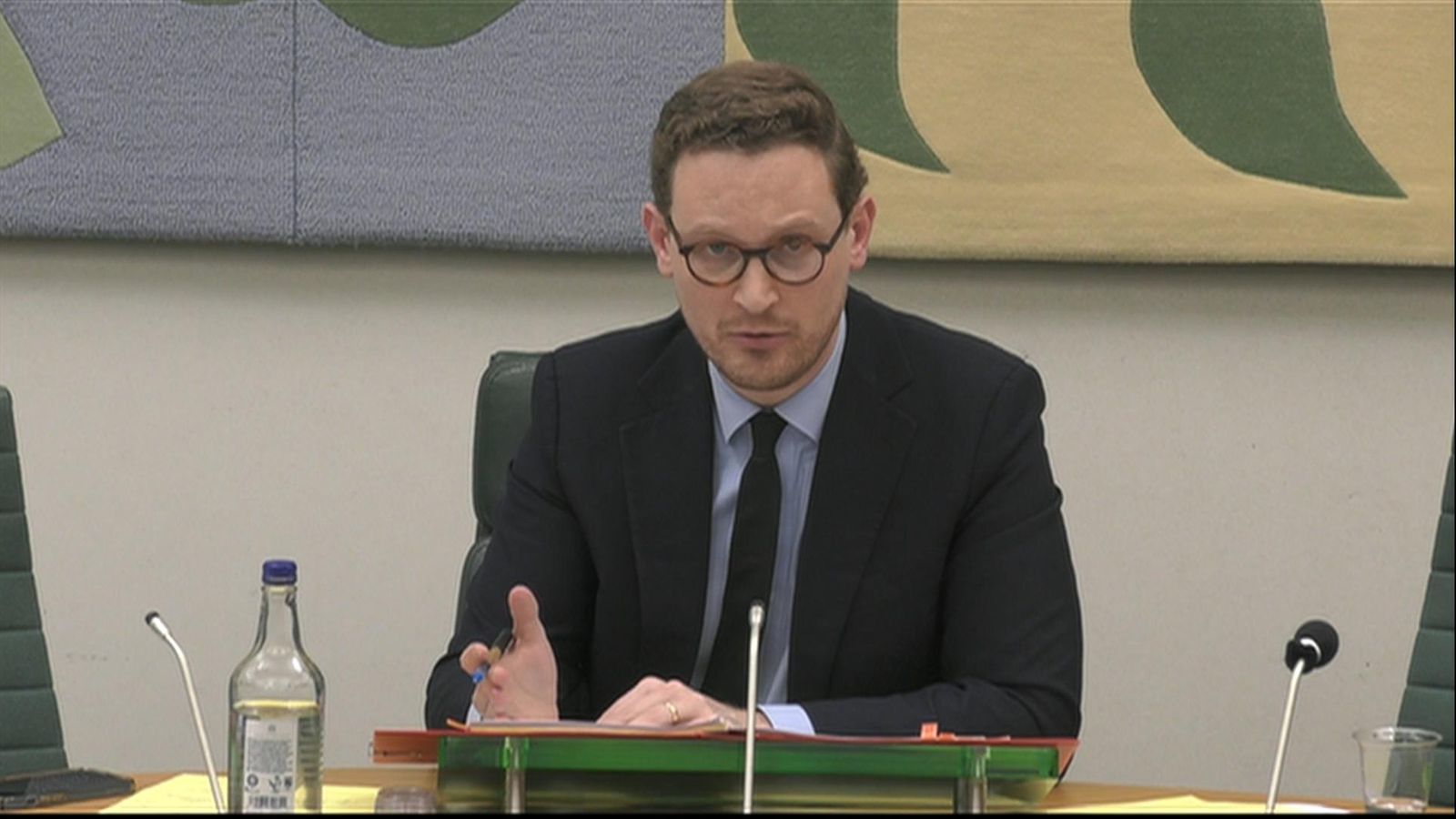
While officials at Royal Mail denied any change in sick pay policy, Mr Jones said he had copies of letters from the Royal Mail HR department to staff saying before during or after a period of industrial action staff were assumed not to be genuinely sick, unless they prove otherwise.
The letters say pay has been automatically deducted from people's pay slips as a result of absences.
There was an an increase in absences during and before industrial action, Mr Thompson said.
Roughly 10,000 absences were recorded during strike action, he said, and about 4% of people are challenging the fact that they didn't get sick pay. An absence due to sickness is treated as genuine and reasonable when an employee supplies a fit note.
Mr Jones suggested the policy was "just a way of being mean" to workers.
"It's a broader problem because GPs will say they didn't write fit notes for anything fewer than seven days of sick," Mr Jones said.
"And you're asking people to one, get an appointment with a GP, two get something that they're not normally willing to give and three to do that in such a timely fashion that they can get the pay when they get paid."
"I mean, you must recognise that this is very, very difficult for your workers to achieve?" he asked.
Mr Thompson said he disagreed.
Staff at Royal Mail - represented by the Communication Workers Union (CWU) - had engaged in 18 days of strike action during the second half of 2022 over pay, jobs and conditions, including on key shopping days over the Black Friday sales period in December.
That union revealed a fresh mandate for industrial action last week.
The estimated cost of industrial action has so far totalled £200m the Royal Mail parent company said.
International Distributions Services said 18 days of walkouts helped push the division to a £295m operating loss in the first nine months of its financial year to the end of December 2022.
The Royal Mail chief executive, Simon Thompson, reappeared before the Business, Energy and Industrial Strategy (BEIS) committee after being asked to clarify statements.
Images shown at the committee on Wednesday showed a bar chart comparing individual postal workers' stop times while delivering and a map with yellow dots that display postal workers' dwell time. The longer a postal worker stands still the bigger the dots become.
Mr Thompson said the data was not used for performance management and is not available in real time. The information is used to ensure workloads are "balanced and even" in order to be fair, he added.
When questioned further on the yellow dots measuring dwell time Royal Mail executives said they would check whether there is an alarm that sounds after a minute of a postie standing still.
"So, to the best of my knowledge, that's not the case. Given I am under oath I would like to take the opportunity to check," said Ricky McAulay the operations development director at Royal Mail said.
"I don't believe so either but we'll check," Mr Thompson added.
Witnesses appearing before the committee were given advance notice of the images shown, chair of the committee Darren Jones said at the beginning of the session.
But data from posties' postal digital assistants (PDAs) has been used in 16 conduct cases, Mr Thompson told the committee.
"And the conduct case is a very severe and actually quite a rare occurrence," he said.
"And if that data is requested for that particular situation, then that has to be referred to a human resources professional before that information would be released."
MPs on the committee said they were sent hundreds of complaints and evidence, that called into question answers previously given by Mr Thompson.
During his last appearance, he denied knowledge of technology tracking employee deliveries. There had been allegations that staff were disciplined based on the data.
Mr Thompson told MPs he was "not aware of technology we have in place that tells people to work more quickly. I am not aware of that at all".
Prioritising parcels
He also denied that it is Royal Mail policy to prioritise parcels over letters, something that could breach rules.
When originally asked if postal workers had been told to prioritise parcels over letters Mr Thompson said: "No, that is absolutely not true".
However, at the session on Wednesday - in response to evidence from posties across the country - he said parcels are prioritised over letters during periods of industrial action.
"It's not our policy but in realities of industrial action we have to apply a different policy," he said.
Mr McAulay had added that parcels were also prioritised "on the day of industrial action and in recovery".
This arrangement is publicised on the Royal Mail website and discussed with Ofcom, Mr Thompson said.
Sick pay
The letters say pay has been automatically deducted from people's pay slips as a result of absences.
There was an an increase in absences during and before industrial action, Mr Thompson said.
Roughly 10,000 absences were recorded during strike action, he said, and about 4% of people are challenging the fact that they didn't get sick pay. An absence due to sickness is treated as genuine and reasonable when an employee supplies a fit note.
Mr Jones suggested the policy was "just a way of being mean" to workers.
"It's a broader problem because GPs will say they didn't write fit notes for anything fewer than seven days of sick," Mr Jones said.
"And you're asking people to one, get an appointment with a GP, two get something that they're not normally willing to give and three to do that in such a timely fashion that they can get the pay when they get paid."
"I mean, you must recognise that this is very, very difficult for your workers to achieve?" he asked.
Mr Thompson said he disagreed.
Staff at Royal Mail - represented by the Communication Workers Union (CWU) - had engaged in 18 days of strike action during the second half of 2022 over pay, jobs and conditions, including on key shopping days over the Black Friday sales period in December.
That union revealed a fresh mandate for industrial action last week.
The estimated cost of industrial action has so far totalled £200m the Royal Mail parent company said.
International Distributions Services said 18 days of walkouts helped push the division to a £295m operating loss in the first nine months of its financial year to the end of December 2022.