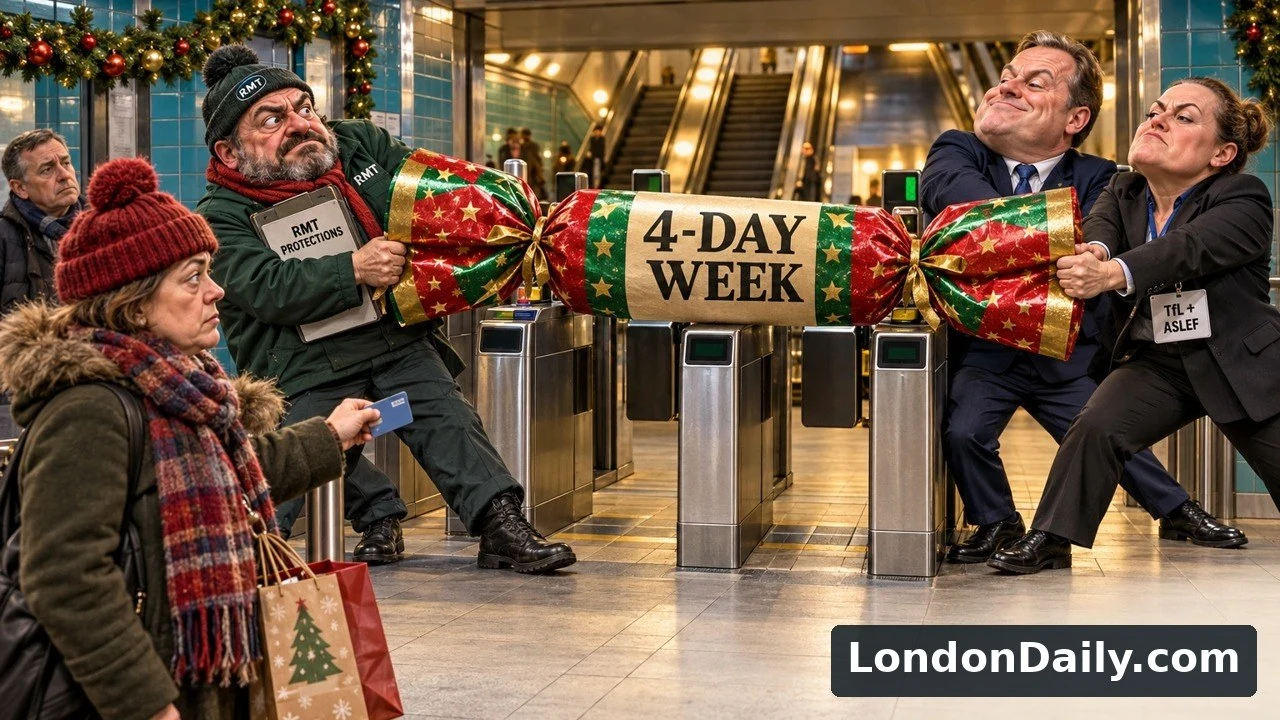
The RMT union plans seven further Tube strikes, including the final Saturday before Christmas, in a dispute over a proposed voluntary four-day working week for drivers. The next walkout is scheduled for 17 December 2026, with another on 19 December threatening disruption during a crucial shopping weekend.
The remaining dates are 4 and 6 January 2027, followed by 17, 23 and 25 February. If the action proceeds, it will affect the return to work after the festive break; the 23 February strike falls the day after London Fashion Week ends.
The first of eight planned strikes brought severe disruption on Thursday. The Metropolitan, Bakerloo and Piccadilly lines were partly suspended during the afternoon, while the Circle line had no service. Stations closed, platforms and carriages became overcrowded, and queues extended up escalators. Congestion spread across central London’s roads, while businesses lost revenue.
The Piccadilly line nevertheless operated into the evening, providing an end-to-end service despite Transport for London’s earlier warning that it would largely be closed. The strike ended at midday on Friday, but services were still struggling to recover hours later.
At the heart of the dispute is whether a shorter working week would improve conditions or weaken existing safeguards. RMT says the proposals would mean longer hours for drivers; TfL says participation would be voluntary and total working hours would fall.
RMT general secretary Eddie Dempsey said: “But there is nothing voluntary about a scheme that forces drivers to give up existing protections whether they work four days or five, and threatens those who refuse with displacement from their depots.”
The union acknowledged passengers’ frustration while citing concerns about working conditions, family life and public safety. Drivers whose views it shared raised fears of mental fatigue and burnout.
Rival union Aslef supports the proposals, describing the resulting conditions as the best in the country. London Underground’s director of customer operations, Nick Dent, apologised to passengers and businesses, but argued that drivers’ attendance during the strike demonstrated differing views within the workforce. He urged RMT to ballot members on proposals he said had changed significantly since the previous vote.
Strikes earlier in the year concerned the same issue, and Tuesday’s last-ditch talks failed to secure agreement. The unresolved question is not simply how many days drivers work, but what happens to their hours, protections and depot placements under the proposed arrangements.








Join the conversation