Business Secretary Jonathan Reynolds has said Britain needs a clearer understanding of the European Union’s political and economic direction before committing to a much closer relationship, exposing differences over how far a future rapprochement should go.
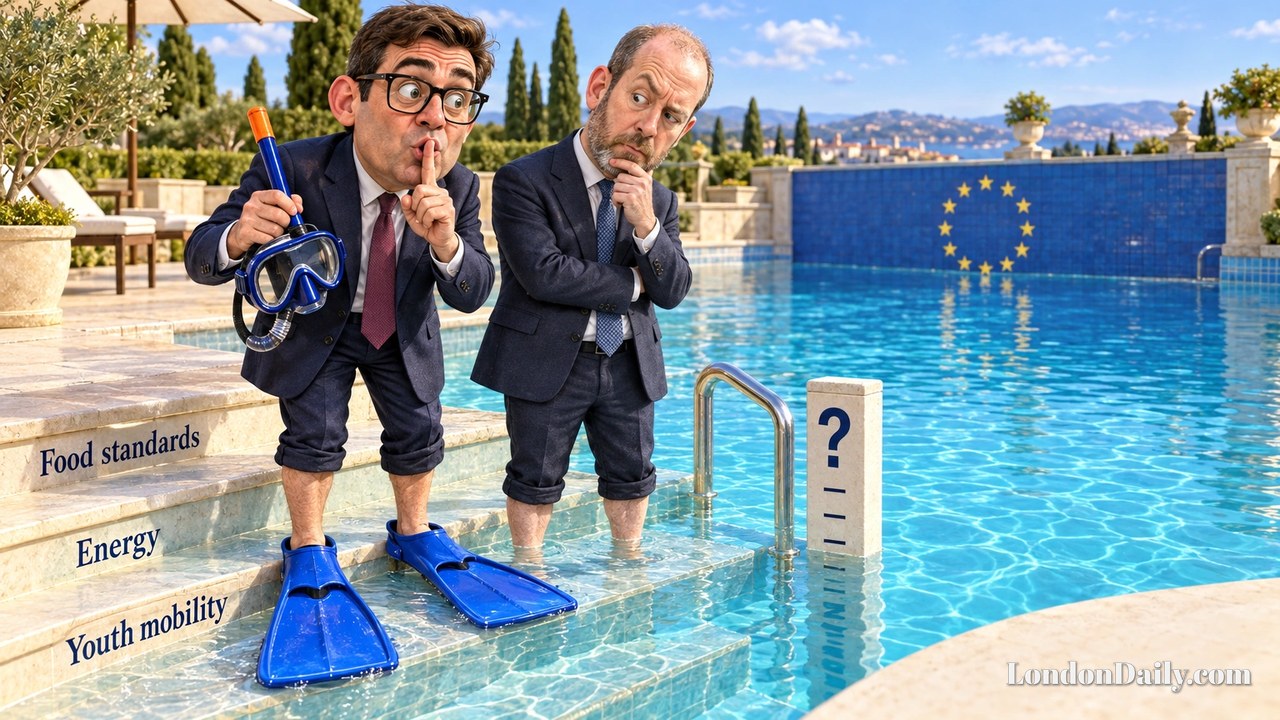
His caution comes as Andy Burnham calls for a public debate about closer ties after the next election. Burnham is due to attend a summit with the EU next month focused on agreements covering food standards, energy and youth mobility, initiatives which have strong cabinet support.
The longer-term choices are more contentious. Labour’s 2024 manifesto ruled out joining the single market or a customs union. A future manifesto could change those commitments, but Burnham has not specified what he wants it to propose. He says the public must ultimately decide, while expressing a wish to see Britain rejoin the EU in his lifetime. He has also indicated openness to seeking single-market membership in the next parliament.
Asked whether he shared Burnham’s hope of rejoining, Reynolds said: “I genuinely can’t answer that, because I don’t know what the future of the EU is”. He cited political currents in member states and questioned how the bloc would regulate technology and artificial intelligence, and how dynamic its economy would be.
Journalist Sophia Sleigh interpreted his remarks as referring to the rise of far-right populist parties and their potential to change and weaken the EU. Reynolds’s quoted comments did not name those parties. Although he was answering a question about membership, the concerns he raised would also be relevant to closer integration through the single market.
John Healey has separately questioned whether joining the single market would automatically improve growth. He stressed respecting the referendum result and making the best of the existing relationship, and said he did not expect Britain to rejoin the EU in his lifetime.
Burnham has sought to contain public disagreement, writing to ministers earlier this week to urge them to remain “disciplined” and not “advocate for specific options”. Agreement on practical measures at next month’s summit would therefore leave the larger question of Britain’s eventual relationship with the EU unresolved.








Join the conversation