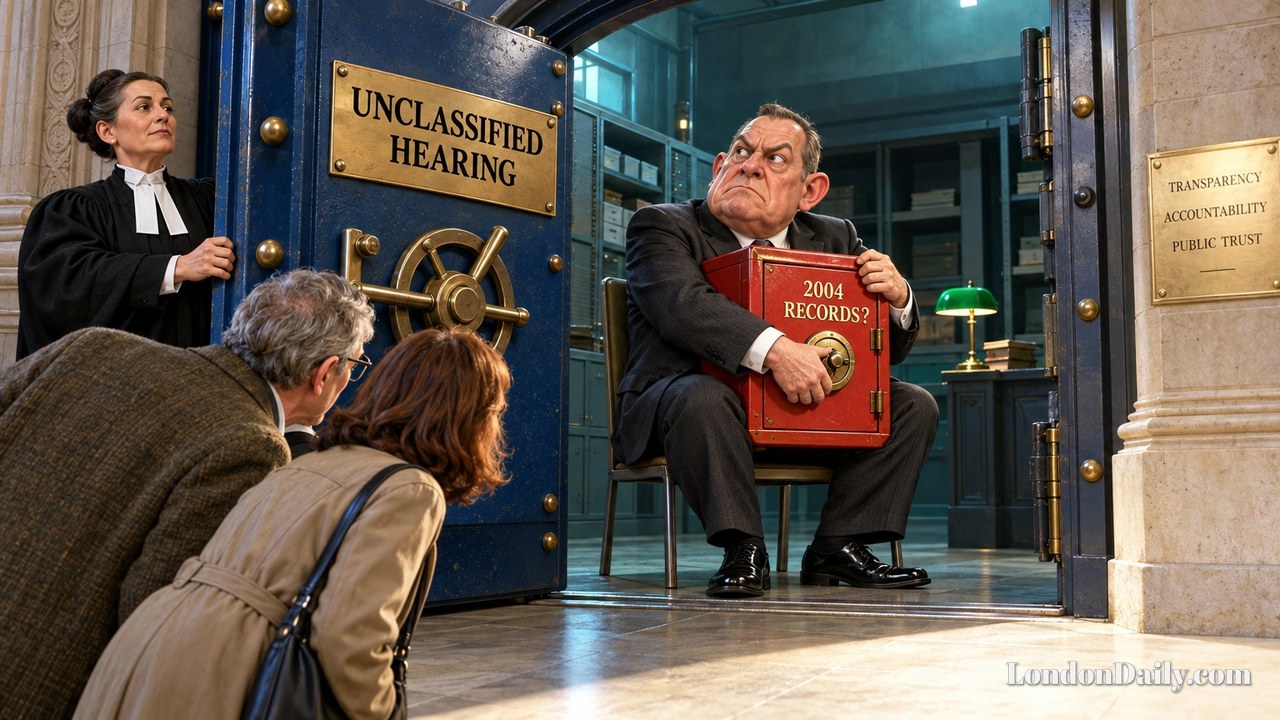
Former Australian senator Rex Patrick has won a ruling allowing public scrutiny of part of his challenge over secret records concerning the alleged bugging of Timor-Leste during oil and gas negotiations.
The Administrative Review Tribunal ruled on Friday that unclassified sections of a three-day hearing in late November must be held in public. The decision does not require documents to be released or their existence acknowledged. Classified evidence will remain behind closed doors.
Patrick is seeking cabinet records from 2004 held by the National Archives of Australia. The government neither confirms nor denies that the spying occurred or that relevant documents exist. The Australian Secret Intelligence Service argues that acknowledging records could damage national security and relations with other countries.
The Commonwealth sought to exclude the public and media even from unclassified proceedings, offering instead a transcript reviewed by the intelligence service. Deputy chief solicitor Justin Davidson said the stakes were “very high” and accidental disclosure would be almost impossible to guard against. He argued that public curiosity did not necessarily establish a public interest.
Tribunal deputy president Peter Britten-Jones rejected that reasoning, finding the officials sufficiently experienced to avoid disclosing secrets. “The risk of an inadvertent disclosure of certificated material is negligible,” he wrote. Senior intelligence official Ewan McMillan and foreign affairs official Michelle Chan are due to testify.
Patrick disputes the premise of continued secrecy. “Only Asis and Dfat think the operation is still a secret,” he said, also criticising the cost to taxpayers.
The reported operation involved listening devices planted in Timor-Leste government offices in 2004 to uncover negotiating positions and cabinet disagreements. The talks concerned the Greater Sunrise gasfields, with resources estimated at more than $50bn. Australia secured a 50/50 split in 2006, benefiting a Woodside-led multinational venture.
Patrick previously challenged redactions to cabinet papers from 2000. Their partial release revealed concern that Timor-Leste’s independence would invalidate Australia’s earlier 50/50 revenue-sharing agreement with Indonesia.
The spying affair emerged after former intelligence officer Witness K approached lawyer Bernard Collaery in 2013. Their efforts to assist Timor-Leste’s arbitration case in The Hague were followed by a raid on Collaery’s office and seizure of Witness K’s passport.
Timor-Leste withdrew its espionage claims in 2017 as a confidence-building measure; a new maritime border followed in 2018. Proceedings against Collaery were dropped in 2022.
In a 2019 affidavit, Timor-Leste’s president, Jose Ramos-Horta, argued that full disclosure would benefit relations rather than damage them. Whether the records can be acknowledged or released remains unresolved.








Join the conversation