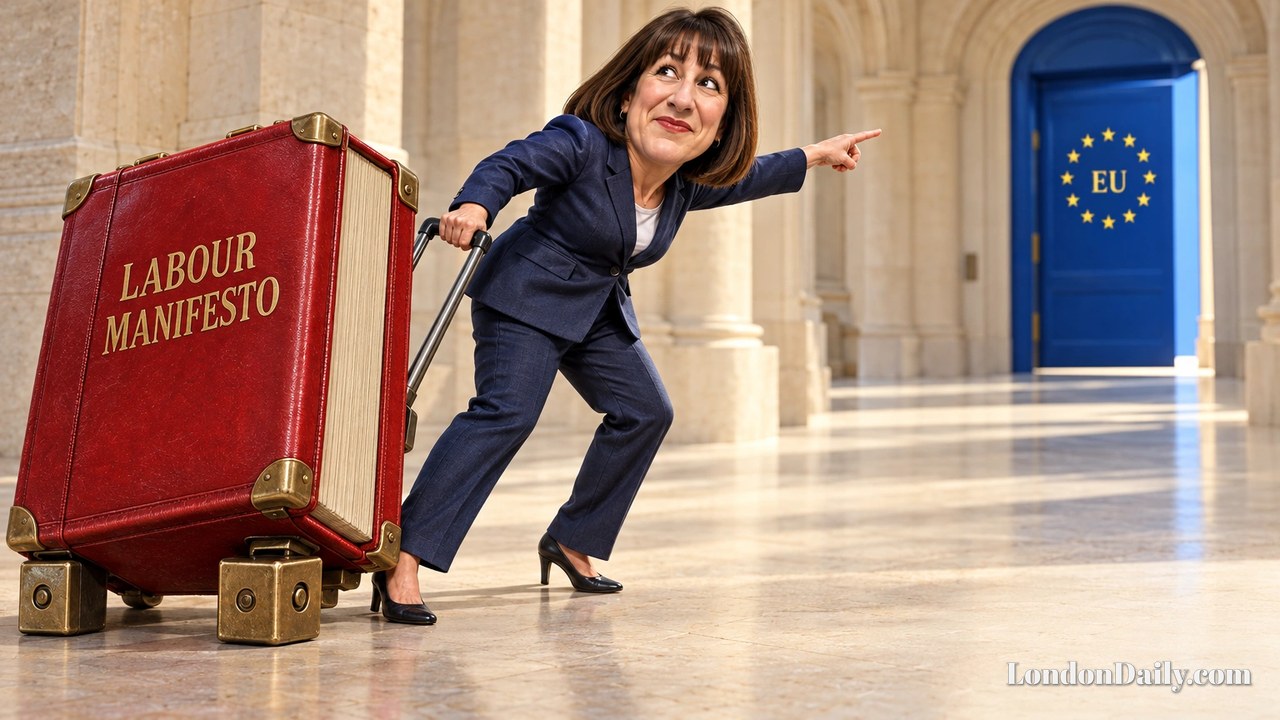
Former chancellor Rachel Reeves has argued that Britain’s future lies inside the European Union, reopening the question of membership despite Labour’s election commitment to remain outside the bloc and make Brexit work.
In her first major intervention since leaving the Treasury, Reeves welcomed debate about Britain’s relationship with Europe and argued that Brexit had left the country poorer, weaker and less secure. She said her pro-European instincts had never been in doubt within the Treasury.
Her position goes beyond Labour’s 2024 manifesto, which ruled out a return to free movement, single market membership or a customs union. Prime Minister Andy Burnham has called for an honest discussion about the future relationship, while saying any changes would require a mandate at a general election. The next election is due by 2029.
That distinction between debating closer ties and securing electoral authority is central to the political disagreement. The Conservatives say there is no desire to revisit the Brexit debate. Reform UK’s Nigel Farage argues that there is no mandate to pursue a closer relationship with the EU.
Reeves said supporters of rejoining must demonstrate tangible benefits and make a persuasive case, as well as choose the right next steps. Her immediate priorities concern specific agreements rather than a timetable for membership.
She hopes the forthcoming UK–EU summit will confirm a youth mobility scheme, which she said she had pressed for while in office. She also wants progress towards British entry into the Security Action for Europe scheme, known as SAFE.
Announced last March, SAFE forms part of the EU’s effort to rearm following Russia’s full-scale invasion of Ukraine. A defence pact agreed with the EU last May paved the way for UK-based defence companies to participate in projects financed through the scheme.
Reeves also defended her record in government, arguing that ministers should be more willing to pursue major infrastructure projects and assess clearly the risks and benefits of artificial intelligence in advanced economies. Her intervention sets out a preferred European destination, but leaves the route and timetable unresolved.








Join the conversation