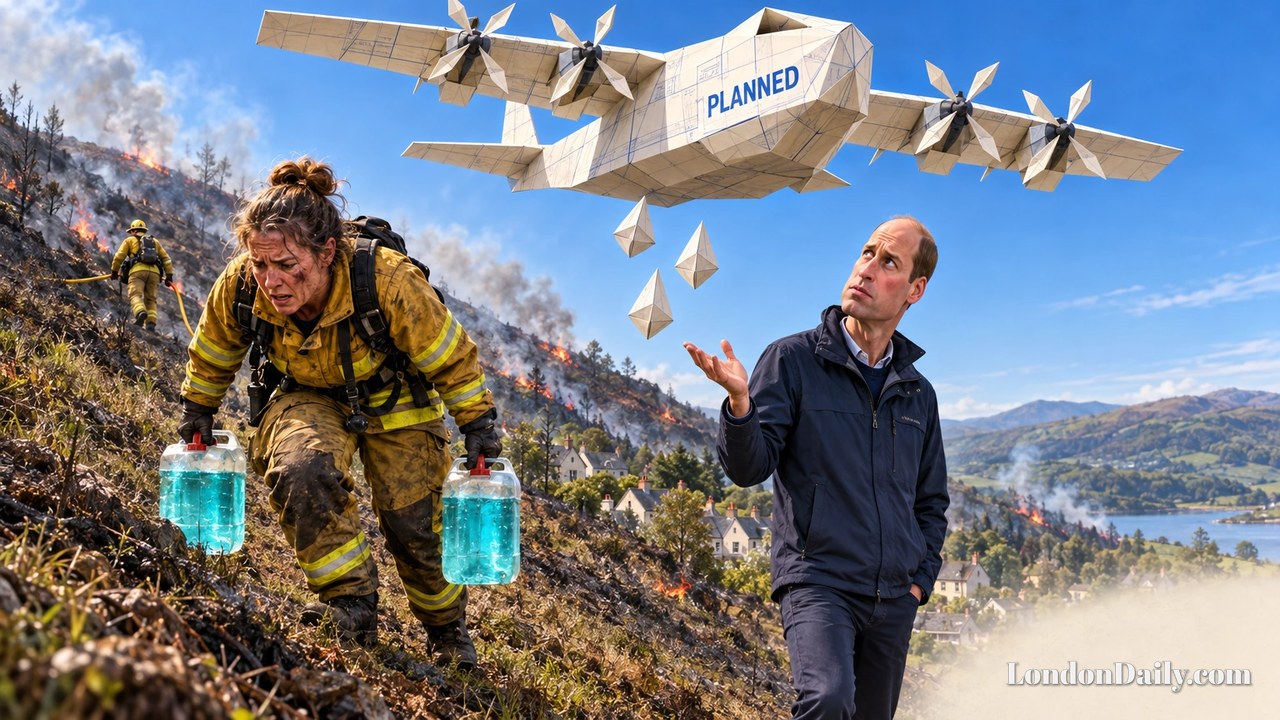
The Prince of Wales has urged Britain to take wildfires as seriously as continental Europe, warning of a “terrifying prospect” of further outbreaks linked to climate change and questioning the availability of firefighting aircraft.
Visiting Treherbert in Rhondda Cynon Taf, where an August mountain fire threatened homes, Prince William praised the “gargantuan” effort by firefighters, military personnel and volunteers. The blackened hillside lies metres from the community centre where they met.
South Wales Fire and Rescue Service declared a major incident while tackling 14 wildfires simultaneously. Reinforcements came from 22 other UK fire services. Soldiers dug fire breaks and helped supply 2.1 million litres of water, with 200 members of the Queen’s Own Gurkha Logistic Regiment among those deployed.
Aled Bound, crew manager at Maesteg fire station and an on-call firefighter at Treorchy, described his hardest wildfire season: “mentally and physically draining”. Deep-seated fires repeatedly reignited despite the quantities of water carried uphill. Climate change meant this could indicate what lay ahead, he warned.
Months of record-breaking heat and dry conditions brought wildfires across the UK through spring and summer. National Fire Chiefs Council figures recorded 1,350 significant wildfires across England and Wales, an all-time high: more than 300 above 2025 and more than 1,000 above 2024.
William said 2026 was the first summer when he had felt worried about the scale of British wildfires. “We need to start taking wildfires as seriously as the continent has done,” he said.
He questioned gaps in aerial capability, recalling firefighting with Sea King helicopters in the Falklands. He served with RAF Valley’s search-and-rescue team between 2010 and 2013, qualifying as a captain.
The UK government has announced plans to equip RAF Chinook helicopters and A400M aircraft for firefighting. A Welsh government wildfire summit also produced preparedness commitments. Deputy chief fire officer Adam Openshaw said lessons would inform changes following the summits. Those commitments concern future capability, rather than resources already available during August’s emergency.
Discussions also covered protective kit, preventative land management, social media firms’ role in discouraging deliberate fires and greater use of volunteers.
Kath Edwards, managing director of Valleys Kids, feared losing its community centre and nearby homes. Volunteers kept the building open continuously from Saturday evening until Thursday, providing an operational hub and somewhere for crews to rest. Businesses supplied food; 40 pizzas arrived within the first 20 minutes.
Openshaw said community and military support freed firefighters to concentrate on controlling the incident. For Edwards, whose community also faces floods and moving coal tips, the practical priority was how volunteers and agencies could work together before the next emergency.








Join the conversation