London Daily

Focus on the big picture.
Monday, Oct 05, 2026

They know it’s a spyware: UK’s Police told not to download NHS Covid-19 app

They know it’s a spyware: UK’s Police told not to download NHS Covid-19 app

The National Police Chiefs Council (NPCC) has confirmed officers are being told not to install the NHS Covid-19 app on their work smartphones.

The app detects when users have been in proximity to someone with the virus.

Some officers have also been told they may not need to obey self-isolate alerts generated by the app when downloaded to their personal phones.

Lancashire Constabulary has told staff to call the force's own Covid-19 helpline instead.

The BBC contacted the North-West of England force after a source claimed the advice had been given because of "security reasons".

The source also said officers had been told not to carry their personal phones while on duty if they had activated the app.

This applies to staff working in public-facing roles as well as those in back-office positions.

"The health and wellbeing of our officers, staff and the public remains our priority," a Lancashire Constabulary spokeswoman subsequently told the BBC.

"Members of staff, like all members of the public, are personally able to download the Track and Trace application should they choose to do so. Guidance provided to staff within the workplace remains in line with the national NPCC position."

The NPCC confirmed the work-phones policy was common to all forces, and said it was carrying out an urgent review of the matter.

"Police forces use a variety of mobile devices with different system restrictions," said a spokesman for the council.

"It is important that we have confidence that the NHS app will work for officers and staff consistently across the country, and it is for this reason that we have recommended that officers and staff download the app to their personal, as opposed to work devices, rather than any suggestion of security implications."
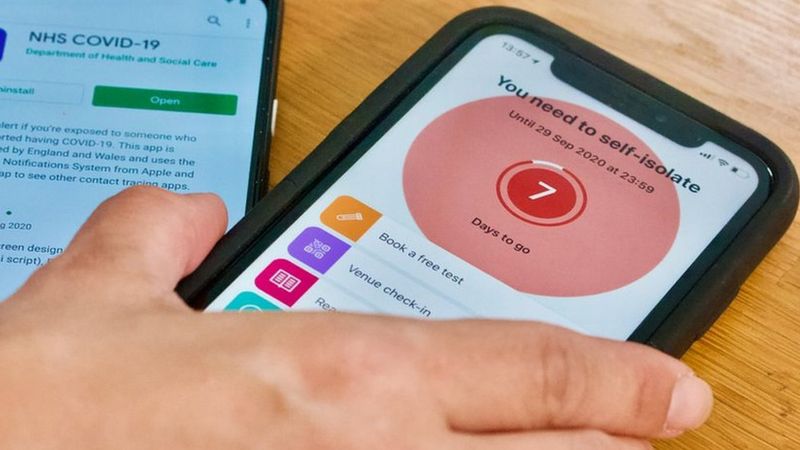

Members of the public are being urged to download the app to protect themselves and others


The NPCC might drop the policy as soon as Tuesday.

NHS Covid-19 launched last Thursday, since when it has been downloaded more than 12 million times.

In addition to contact-tracing, it also offers a way for users to scan codes when they enter a building to log they were there, as well as a means to check if they have symptoms of the coronavirus and to order a test.

The NPCC had previously raised concerns about officers sharing information with human contact tracers on the grounds it could compromise undercover work and other sensitive operations.

But since the app is designed to keep people's identities secret, this should not be a problem in this case.


Newsletter

Related Articles

0:00
0:00
Close
BT Accused of Pressuring Vulnerable Customers During Digital Landline Shift
British Carmakers Warn of Growing Pressure From EU-China Tariff Dispute
Green Party of England and Wales Adopts Motion Defining Zionism as Racism
Medical Charity Threatens NHS Legal Action Over Two-Year Autism and ADHD Assessment Waits
British Transport Police Report Record Rise in Violence on Railways
Glasgow Council Workers Face Pay Cuts Under Fire-and-Rehire Plan
British Medical Groups Press Prime Minister Andy Burnham to Cancel £330 Million Palantir NHS Contract
UK Faces Record Bluetongue Outbreak Across Livestock Farms
UK Schools Report Thousands of Child-on-Child Sexual Offences
High Court Overturns Ban Blocking Gaza Families From Reuniting With Relatives in UK
G7 Authorizes Emergency Fuel Release as UK Diesel Prices Hit £2 a Litre
France and Italy Draw 1-1 in Nations League Match
Pope Leo XIV and Prince Albert II of Monaco Meet in Metz
SNCF Expands Low-Cost Ouigo High-Speed Service Between Lyon and Bordeaux
Paris Expands Dedicated Cargo Bike Routes for Urban Deliveries
French Film Industry Pushes for Tighter Streaming Investment Rules
Marseille Court Hands Down Prison Terms in Public Procurement Corruption Case
LVMH and Kering Rely on US Demand as Chinese Luxury Spending Slows
Toulouse Aerospace Sector Launches €80 Million Modernization Fund
Javier Milei Courts French Investment in LNG and Lithium
Mistral AI Launches Sovereign Model for European Public Services
French Competition Authority Fines Retailers €40 Million Over Misleading Promotions
France Records Exceptional Electricity Exports as Nuclear Output Recovers
Dassault Aviation Expands Rafale Assembly Capacity at Mérignac
Sanofi Invests €1 Billion in New Biologics Production Hub Near Lyon
France Protests Germany’s Extension of Border Controls Into 2027
French Public-Sector and Transport Unions Threaten National Strike
France Deploys Riot Police After Violence in Lyon Suburbs
French Anti-Terrorism Prosecutors Investigate Radicalized Flydubai Co-Pilot
France’s Defense Budget Surpasses NATO’s 2% of GDP Target
French Government Faces No-Confidence Threat Over Budget
France and G7 Release 100 Million Barrels From Strategic Oil Reserves
France Convenes Emergency Defense Council Over Threats to Commercial Shipping
France and Germany Coordinate Military Response After Russian Strikes on Kyiv Infrastructure
UK Police Release Six Iranian Nationals on Bail After RAF Fairford Security Alert
UK Business Confidence Falls as Energy Costs and Tax Uncertainty Rise
Cornwall Insight Warns UK Energy Bills Could Rise 16% in January
UK Introduces Zero VAT on Household Electricity Bills
UK 30-Year Gilt Yield Hits 6% as Bond Market Pressures Intensify
UK Introduces Stricter Subcontractor Checks and Expanded Trade Union Access
Green Party Proposes Three-Year Emergency Freeze on Private Rent Increases
UK Treasury Committee Seeks Tax Clarification Over Manchester City Investigation
Royal Marines Deploy to Faroe Islands for Northern European Security Exercise
UK Business Confidence Weakens as High Costs Delay Investment
UK GDP Growth Revised Up to 0.5% in Second Quarter
Bank of England Warns of Financial Stability Risks From Autonomous AI
UK Expands Early Prisoner Release Scheme to Ease Overcrowding
UK Records Worst Bluetongue Outbreak on Record Across Livestock Farms
UK Government Faces Shrinking Fiscal Headroom Ahead of October 28 Budget
UK 30-Year Gilt Yield Reaches 6% as Energy Shock Drives Borrowing Costs Higher
×