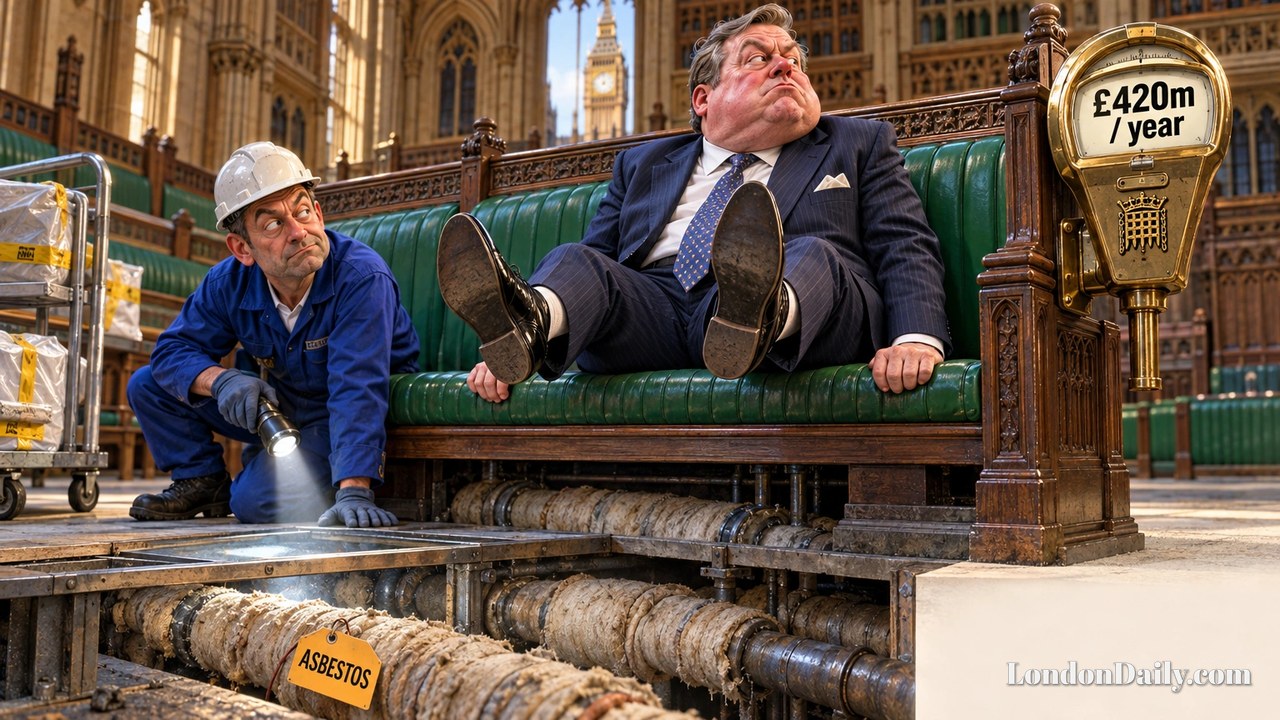
More than 1,650 asbestos-containing items are now known to be present across the Palace of Westminster and wider parliamentary estate, despite 700 being removed over the past five years. The findings add to pressure for a restoration decision after years of delay.
The recorded total has risen by 500 since 2021. Parliamentary authorities said further items, including insulation, roofing, floor tiles and ropes, were discovered during surveys preparing for refurbishment. The increase therefore reflects additional discoveries, not newly installed asbestos.
Under Health and Safety Executive guidelines, most are classed as low risk because they are concealed and less likely to be disturbed. Almost 200 are medium risk and may require remedial work. Airborne fibres endanger health; although asbestos is largely fireproof, surrounding fire and heat can spread fibres over long distances.
Parliament says staff and visitor safety is its priority, citing improved monitoring, awareness training and further removal plans. Commons authorities nevertheless say an asbestos-free building is impractical without demolition or extensive damage to its fabric.
Kris Gledhill, whose mother, former Labour MP Alice Mahon, died from malignant mesothelioma in 2022, said “asbestos should never be considered low risk”. He urged precautions covering deterioration, extreme weather, floods, fire and disturbance during maintenance or renovation. Mahon had identified two workplaces where she might have been exposed, including Westminster; that does not establish where exposure occurred.
Dr Hannah Moody, chief executive of Mesothelioma UK, supports a national asbestos register, phased removal from public buildings and safety advice for workers. She said asbestos remains a cause of serious illness and work-related deaths despite its 1999 ban.
The Public Accounts Committee warned on Wednesday that each additional year of restoration delay costs taxpayers £420m. Its Conservative chairman, Geoffrey Clifton-Brown, described a grave, rising fire risk and criticised political reluctance to act. Round-the-clock fire patrols are already in place.
The committee says MPs and peers have enough information to vote before the year ends. Government whips have discussed a debate and vote, but no date is scheduled. It would authorise up to £3bn of initial works and narrow four options before a final decision by 2030.
The wider refurbishment could cost up to £40bn. One option would move both Houses out for up to 24 years from 2032, costing up to £15.6bn; moving only the Lords would cost £39bn and take 61 years. The committee identified overcomplicated decision-making and delays securing the government-owned Queen Elizabeth II conference centre as a temporary Lords home as critical setbacks. The unresolved choice concerns both disruption and the cost of keeping Parliament occupied during the work.








Join the conversation