London Daily

Focus on the big picture.
Wednesday, May 13, 2026

OPEC and Russia keep promising to pump more oil. They're not delivering

OPEC and Russia keep promising to pump more oil. They're not delivering

Here's one big reason oil prices are near a seven-year high: OPEC and Russia are producing less than they promised.

The Organization of the Petroleum Exporting Countries and 10 other major crude oil producers, including Russia, have been gradually increasing their output after taking 9.7 million barrels per day out of the market as demand collapsed in the early days of the coronavirus pandemic.

But the group, known as OPEC+, has repeatedly failed to meet its monthly target of adding back 400,000 barrels per day due to production shortfalls in several countries.

Despite huge pressure from major energy consuming nations, including the United States, to help tame high prices that are fueling global inflation, it will be difficult for the coalition to quickly increase output because of limited spare capacity and a fraught geopolitical backdrop.

OPEC+ authorized another 400,000-barrel-per-day increase for March on Wednesday, brushing off calls for the group to pump even more. The modest output jump, even if delivered in full, is unlikely to reduce global oil prices, which have surged to a seven-year high of roughly $90 per barrel following two months of steady gains.

"There are concerns in the market, partly priced in, that OPEC+ will not be able to produce what they say in the future," said Bjørnar Tonhaugen, the head of oil markets at Rystad Energy. "There is anxiety about damage to production capacity from Saudi Arabia to Kuwait and Russia, from too low investments during the pandemic and before."

Missed targets


Production from OPEC+ countries increased by only 250,000 barrels per day in December, or 63% of the group's stated target, according to the International Energy Agency. The IEA attributed most of the shortfall to reduced supply from Nigeria and Russia, which pumped below its monthly quota.

Including the December shortfall, OPEC+ was running 790,000 barrels per day below its overall output target. The core OPEC group undershot its output quota again in January, according to survey data complied by Reuters, meaning the gap could widen further.

Goldman Sachs analysts said Monday that oil prices are "entering political intervention territory." But many OPEC+ countries are pumping at full capacity, and bringing forward production increases could upset the balance of power within the group.

Who could pump more?


Saudi Arabia and the United Arab Emirates are the OPEC+ countries with the most spare pumping capacity, according to the International Energy Agency.

But Saudi Arabia is not inclined to dramatically increase output, if the outcome of Wednesday's meeting is any indication. "We have an OPEC+ agreement, and I have to honor my colleagues and my friends," Saudi oil minister Prince Abdulaziz bin Salman told S&P Global Platts in January at a conference in Dubai.
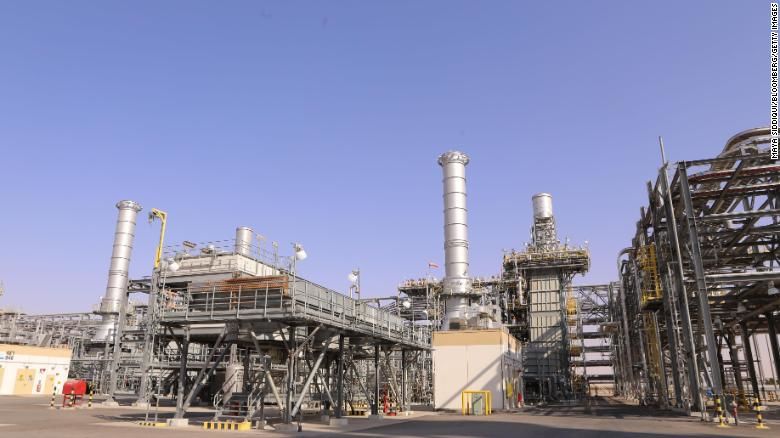
Processing facilities at the Khurais oil field in Saudi Arabia, on Monday, June 28, 2021.


OPEC+ countries that rely on oil revenue to fund government spending have benefited from the recent price surge. Russia, which has amassed roughly 100,000 troops on Ukraine's borders but denies that it is planning to invade its neighbor, has its own reasons to want higher prices.

"Russia's foreign exchange reserves have swelled on the back of rising commodities prices, as well as key fiscal reforms such as raising the retirement age, potentially giving it more financial bandwidth to endure additional western sanctions," said Helima Croft, the head of global commodity strategy at RBC Capital Markets.

With the risk from the Omicron variant of coronavirus fading, Tonhaugen said markets are looking for OPEC+ to meet global demand.

"While the jury is out on the actual spare capacity of OPEC+, the market is not convinced the capacity actually exists until it is proved, and it falls on OPEC+ and Middle East producers to deliver," he said.

Comments

Oh ya 4 year ago
Yup the US trying to start a war between Russia and the Ukraine and then sucking up to get more oil from them. Let's go Brandon

Newsletter

Related Articles

0:00
0:00
Close
The Great Western Exit: Why Best Citizens Are Fleeing the Rich World [PODCAST]
The New Robber Barons of Intelligence: Are AI Bosses More Powerful Than Rockefeller?
The End of the Old Order [Podcast]
Britain’s Democracy Is Now a Costume
The AI Gold Rush Is Coming for America’s Last Open Spaces [Podcast]
The Pentagon’s AI Squeeze: Eight Tech Giants Get In, Anthropic Gets Shut Out [Podcast]
The War Map: Professor Jiang’s Dark Theory of Iran, Trump, China, Russia, Israel, and the Coming Global Shock [Podcast]
Labour Is No Longer a National Party [Podcast]
AI Isn’t Stealing Your Job. It’s Dismantling It Piece by Piece.
Lawyers vs Engineers: Why China Builds While America Litigates [Podcast]
Churchill’s Glass: The Drunk, the Doctor, and the Myth Britain Refuses to Sober Up From
Apple issues an unusual warning: this is how your iPhone can be hacked without you doing anything
Kennedy’s Quiet War on Antidepressants Sparks Alarm Across America’s Medical Establishment
The Met Gala Meets the Age of Billionaire Backlash
Russian Oligarch’s Superyacht Crosses Hormuz via Iran-Controlled Route
Gunfire Disrupts White House Correspondents’ Dinner as Trump Is Evacuated
A Leak, a King, and a Fracturing Alliance
Inside the Gates Foundation Turmoil: Layoffs, Scrutiny, and the Cost of Reputational Risk
UK Biobank Breach Exposes Health Data of 500,000, Listed for Sale on Chinese Platform
KPMG Cuts Around 10% of US Audit Partners After Failed Exit Push
French Police Probe Suspected Weather-Data Tampering After Unusual Polymarket Bets on Paris Temperatures
CATL Unveils Revolutionary EV Battery Tech: 1000 km Range and 7-Minute Charging Ahead of Beijing Auto Show
Crypto Scammers Capitalize on Maritime Chaos Near the Strait of Hormuz: A Rising Threat to Shipping Companies
Changi Airport: How Singapore Engineered the World’s Most Efficient Travel Experience
Power Dynamics: Apple’s Leadership Shakeup, Geopolitical Risks in the Strait of Hormuz, and Europe's Energy Strategy Amidst Global Challenges
Apple's Leadership Transition: Can New CEO John Ternus Navigate AI Challenges and Geopolitical Pressures?
Italy’s €100K Tax Gambit: Europe’s Soft Power Tax Haven
News Roundup
Microsoft lost 2.5 millions users (French government) to Linux
Privacy Problems in Microsoft Windows OS
News roundup
Péter András Magyar and the Strategic Reset of Hungary
Hungary After the Landslide — A Strategic Reset in Europe
Meghan Markle Plans Exclusive Women-Focused Retreat During Australia Visit
Starmer and Trump Hold Strategic Talks on Securing Strait of Hormuz Amid Rising Tensions
Unofficial Australia Visit by Prince Harry and Meghan Expected to Stir Tensions with Royal Circles
Pipeline Attack Cuts Significant Share of Saudi Arabia’s Oil Export Capacity
UK Stocks Rise on Ceasefire Momentum and Renewed Focus on Diplomacy
UK to Hold Further Strategic Talks on Strait of Hormuz Security
Starmer Voices Frustration as Global Tensions Drive Up UK Energy Costs
UK Students Voice Concern Over Proposal for Automatic Military Draft Registration
Rising Volatility Drives Uncertainty in UK Fuel and Petrol Prices
UK Moves to Deploy ‘Skyhammer’ Anti-Drone System to Strengthen Airspace Defense
New Analysis Explores UK Budget Mechanics in ‘Behind the Blue’ Feature
Man Arrested After Four Die in Channel Crossing Tragedy
UK Tightens Immigration Framework with New Sponsor Rules and Fee Increases
UK Foreign Secretary Highlights Impact of Intensified Strikes in Lebanon
UK Urges Inclusion of Lebanon in US-Iran Ceasefire Framework
UK Stocks Ease as Ceasefire Doubts in Middle East Weigh on Investor Confidence
UK Reassesses Cloud Strategy Amid Criticism Over Limited Support Measures
×