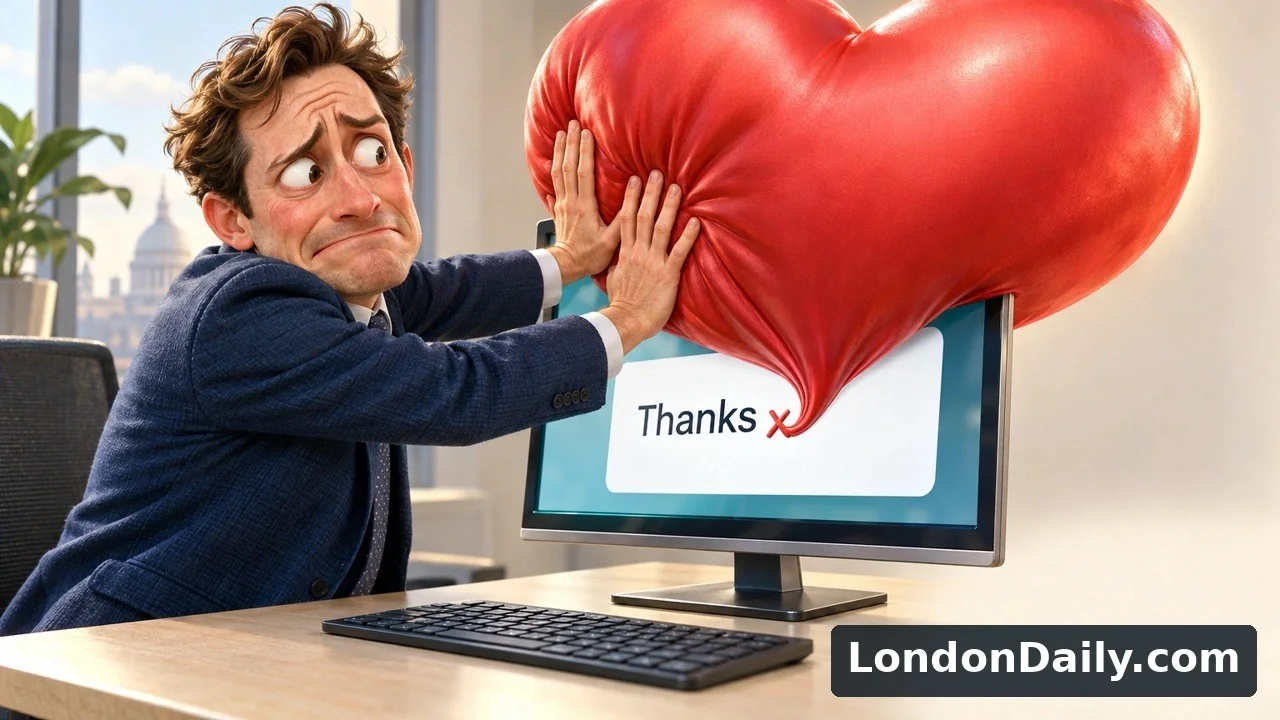
Nearly five million UK workers have accidentally added a kiss to a professional message, research suggests, with younger respondents far more likely to report the unintended sign-off than older colleagues.
A survey of 2,009 UK workers for business insurance broker Premierline found that 14% had mistakenly ended a work message with an affectionate ‘x’. Among Gen Z respondents, the proportion was 29%, compared with 8% of Baby Boomers. The question covered work messages generally, not specifically messages to bosses.
Dubbed ‘kissclicking’, the error can leave recipients reading rather more into a routine exchange than the sender intended. One commenter on Reddit’s r/CasualUK wrote: ‘I accidentally sent x to a colleague and they took it the wrong way and confessed to having a liking for me. Do not recommend,’
Another recalled adding a kiss to a team group chat after texting their mother. Colleagues replied with hearts, glittery GIFs and ‘u ok hun’ messages. These are individual accounts, rather than evidence of how recipients usually respond.
Accidental affection was less common than several other workplace errors. Missing email attachments topped the list at 36%; 31% had messaged the wrong person and 26% had forgotten an important task.
The research examined mistakes linked to tiredness. Gen Z respondents reported the shortest sleep before work, averaging five hours and 22 minutes, against six hours and 29 minutes among Baby Boomers. Younger workers said they began feeling tired after two hours and 21 minutes at work. Across all workers surveyed, two in five admitted accidentally falling asleep when they were meant to be working during the past year.
Affected respondents estimated that their latest tiredness-related mistake cost an average of £554 to correct and took seven hours and 29 minutes to resolve. Those figures concern tiredness-related errors broadly, not accidental kisses alone; the findings do not establish that shorter sleep caused the generational difference in sign-offs.
A Premierline spokesperson said: ‘For a small business, a mistake can mean another visit, extra materials, a missed deadline or a difficult conversation with a customer.’
Almost a quarter of respondents answering follow-up questions about mistakes had corrected their latest error without telling their boss. Embarrassment and fear of getting into trouble were among the reasons given for delayed reporting, suggesting that the difficulty can extend beyond making the mistake to admitting it.








Join the conversation