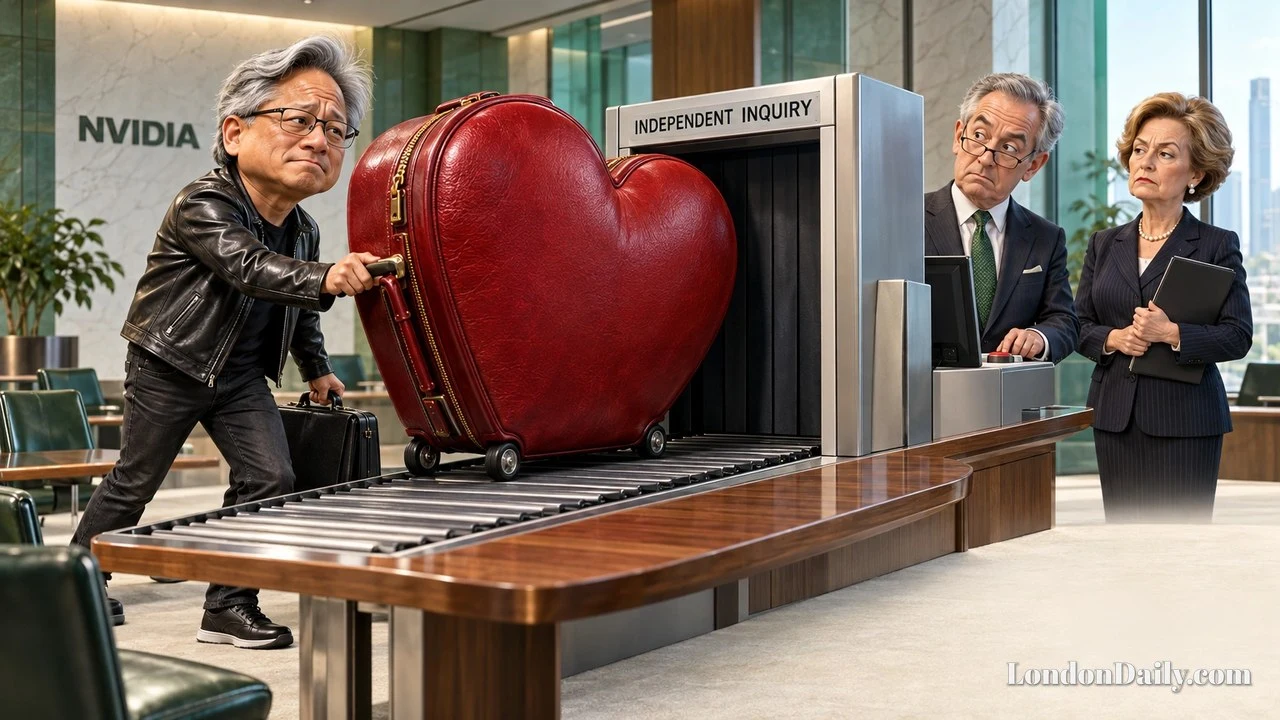
Nvidia has launched an independent investigation after chief executive Jensen Huang admitted an extramarital affair, amid allegations that the woman linked to him had been recruited by Chinese intelligence. No public evidence has emerged that he disclosed trade secrets or classified information.
The inquiry turns a personal admission into a question about security at a company central to the technological rivalry between Washington and Beijing. Nvidia says it has no reason to believe sensitive corporate information or material concerning American national security was exposed.
Huang, 63, apologised to his family in a letter to employees, acknowledging that he had been unfaithful to his wife, Lori, after more than four decades of marriage. He said his actions had hurt his wife and children, were unjustifiable and were his responsibility. He did not identify the woman, but pledged to co-operate with the investigation.
Reports have linked him to Alice Huang, a Chinese businesswoman and former senior executive at Singapore-based data-centre company Megaspeed. American authorities reportedly investigated her and concluded that Chinese intelligence had recruited her. That reported finding does not establish that Jensen Huang passed her confidential information.
Megaspeed is itself under American scrutiny over suspicions that it helped Chinese parties obtain advanced chips subject to Washington’s export restrictions. Investigators face the unresolved question of whether the relationship was exploited, or intended to be exploited, for intelligence purposes.
China rejected the espionage allegations on Monday. A foreign ministry spokesman described them as baseless and an attempt to smear the country.
Senior Republican lawmakers have demanded that Huang attend a closed congressional briefing to explain Nvidia’s safeguards against foreign espionage. President Donald Trump, meanwhile, has expressed support, describing Huang as honourable and praising his contribution to the country.
Nvidia shares fell almost 5% in Monday’s pre-market trading, against a backdrop of the controversy and existing weakness in technology stocks. Huang’s daughter Madison, a senior company executive, also cancelled a planned South Korea visit.
A committee of independent directors, assisted by external legal advisers, will oversee the inquiry. Huang remains chief executive and retains Nvidia’s backing.
The governance stakes extend beyond his personal standing. Huang founded Nvidia in 1993 and has led it for more than three decades, but does not control it through shares carrying enhanced voting rights. The board therefore retains the power to replace him, despite the significance of such a decision. Its immediate task is to establish whether an admitted private failing also created a corporate security risk.








Join the conversation