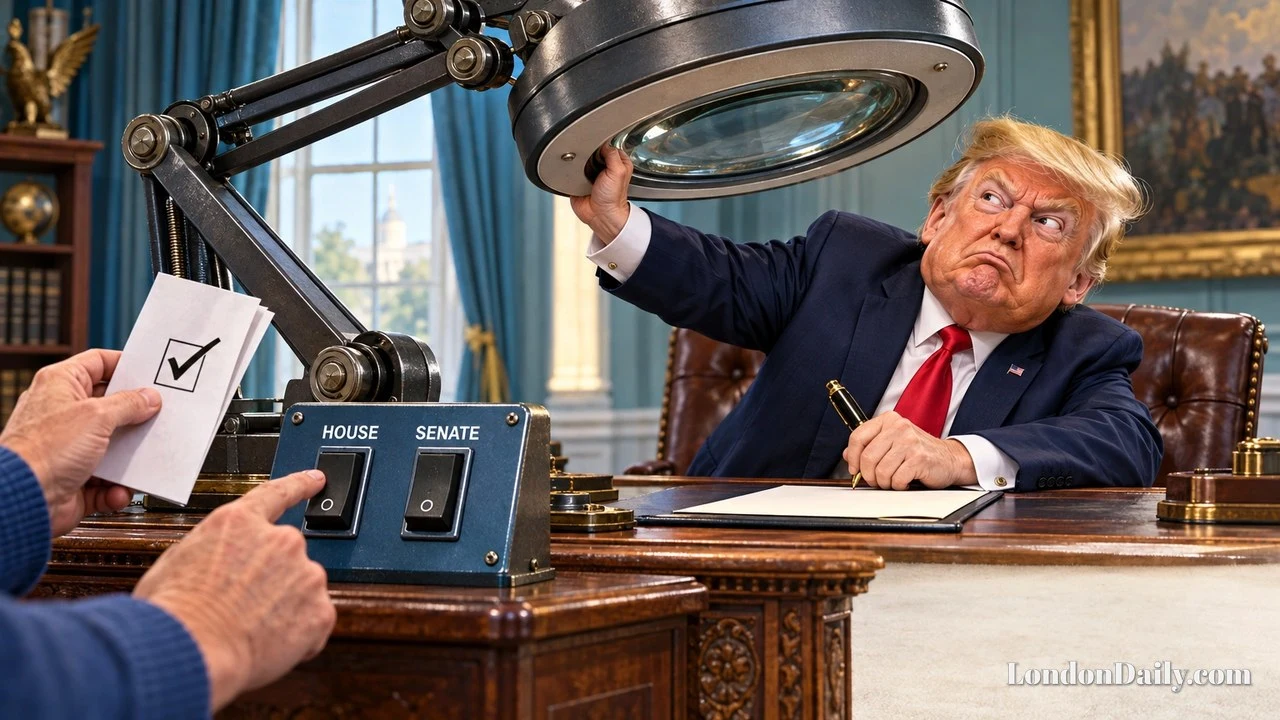
Americans are voting in midterm elections that could cost Republicans control of Congress and leave Donald Trump facing legislative obstruction and investigations for the remainder of his presidency.
All 435 House of Representatives seats and 35 of the Senate’s 100 seats are being contested. Congressional elections take place every two years; those halfway through a president’s four-year term are called midterms. Representatives serve two-year terms and senators six. Congress makes federal laws, with both chambers debating and approving legislation.
Republicans hold 218 House seats, the minimum for control, alongside one independent who votes with them. They have 53 senators. Democrats need 51 Senate seats to overcome the Republican vice-president’s tie-breaking vote if the chamber divides equally.
Winning either chamber would let Democrats bring forward legislation and make Trump’s domestic programme harder to enact, though he has exercised power without his wider party. Committees could investigate corruption allegations, the new White House ballroom and Immigration and Customs Enforcement tactics. Democrats are also debating impeachment: congressional charges leading to a political, not criminal, trial. Continued Republican control would give Trump greater scope to pursue his plans.
Living costs are prominent, including fuel, groceries, housing and healthcare. Inflation remains above the Federal Reserve’s target, partly because of the war the US and Israel began with Iran in February. Democrats argue Trump’s tariffs have also increased prices.
Republicans say tighter borders and the widespread, often controversial crackdown on illegal immigration fulfil a major 2024 campaign pledge. On artificial intelligence, senior politicians from both parties support regulation, putting them at odds with Trump’s rejection of laws controlling its development.
Voters have historically tended to punish the president’s party at midterms. Silver Bulletin polling put Trump’s approval at about 37% in early October, against 61% disapproval, down from just over 50% approval when his second term began.
That does not settle the outcome. Many seats are safe for either party. The Cook Political Report identifies 18 House districts as toss-ups, including in Florida and Michigan, and six Senate races, including Alaska and Texas. Republican efforts to redraw House districts advantageously, followed by Democratic moves, add uncertainty.
Voters are also choosing state-level politicians, with governor contests in California, Florida, Georgia and Michigan closely watched. Trump is not on the ballot, but has urged Republicans to treat their votes as endorsements of him.
The results will also frame the contest for 2028. Trump cannot seek a third presidential term; attention will turn towards his potential Republican successor and the Democrats who might challenge them.








Join the conversation