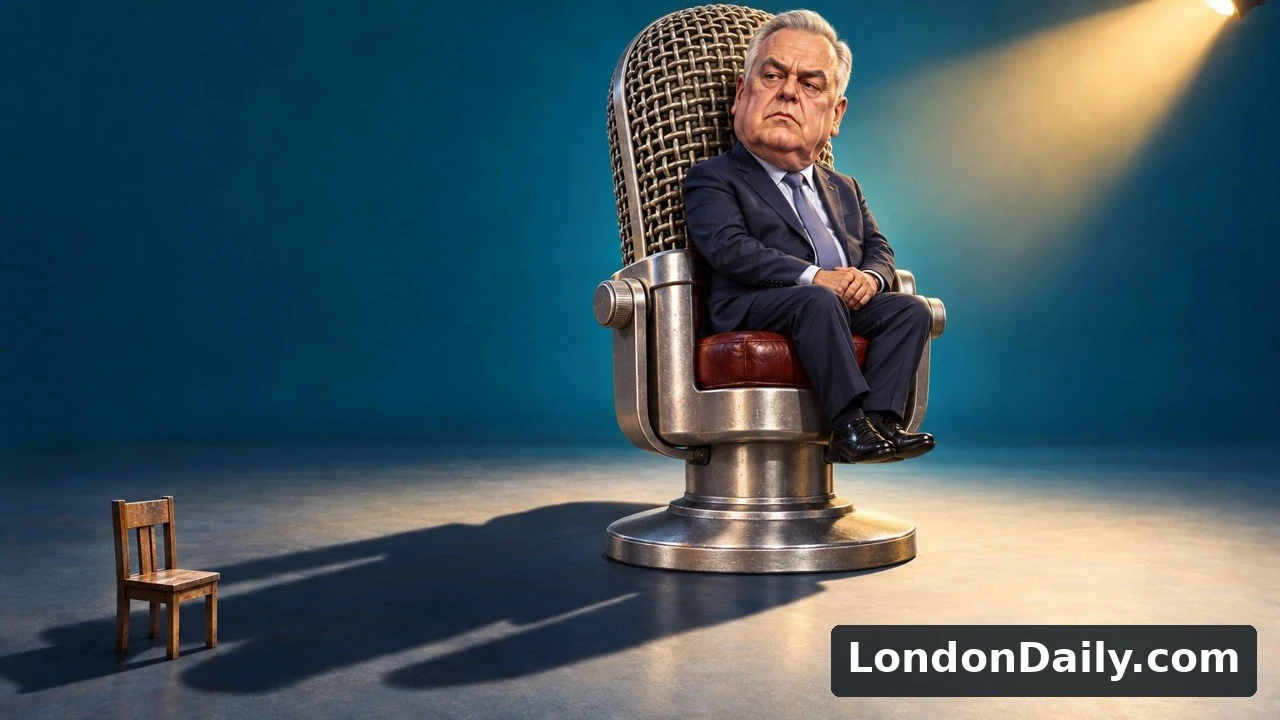
Huw Edwards has given interviews for a Channel 4 documentary and an Observer and Tortoise Media podcast, prompting Downing Street to say it has “no interest in hearing” from the former presenter convicted of making indecent images of children.
The prime minister’s spokesperson said victims of child sexual abuse and exploitation must come first and broadcasters should “act responsibly”. But, asked whether Channel 4 had failed that test, the spokesperson stressed its editorial independence: individual programmes and contributors were its responsibility.
Both productions are due on Tuesday, with some material expected in the Observer on Sunday. Tortoise Media owns the Observer.
Edwards was convicted in 2024 after admitting three counts of making indecent images of children. The case involved 41 images and videos sent through WhatsApp, including some depicting a victim aged between seven and nine.
Channel 4 says director Patrick Forbes held Edwards to account, with “no questions off limits”, examining his account of his offending and public downfall. That is the central editorial defence: an interview can scrutinise its subject rather than endorse him.
Critics question whether these programmes will achieve that distinction. Environment Minister Emma Hardy said the decision made her feel “sick”, arguing that Edwards was receiving a platform unavailable to his child victims.
Duncan Craig, head of We Are Survivors, which supports male survivors of sexual abuse and rape, said the companies appeared not to be thinking about victims. He supported rehabilitation in principle but said this did not feel like it, particularly during what he called a media abuse “reckoning moment”.
Craig also challenged interviewer Ceri Thomas’s promotional description of Edwards’s circumstances as an “unbelievable, terrible fix”, arguing that it obscured the abuse depicted in the material.
Three people who previously accused Edwards of inappropriate messaging also criticised the interviews. Two were explicitly unconnected to the criminal case; a third was a former junior employee. One alleged threatening messages, another suggestive and “pushy” messages. They questioned the airtime and consideration given to victims.
Broadcaster Nicky Campbell likewise urged attention to the children’s lives. Journalist Sangita Myska described the documentary as reputational rehabilitation; broadcaster Richard Bacon disputed that a documentary necessarily served that purpose.
Conservative MP Dame Caroline Dinenage, chair of the Commons culture and media committee, said the programmes must properly challenge Edwards, including over whether he would return more than £200,000 paid by his former employer after his arrest.
The Observer has been asked for a response to the criticism. Whether the interviews deliver accountability, rather than the rehabilitation critics fear, remains the central unresolved issue before publication.








Join the conversation