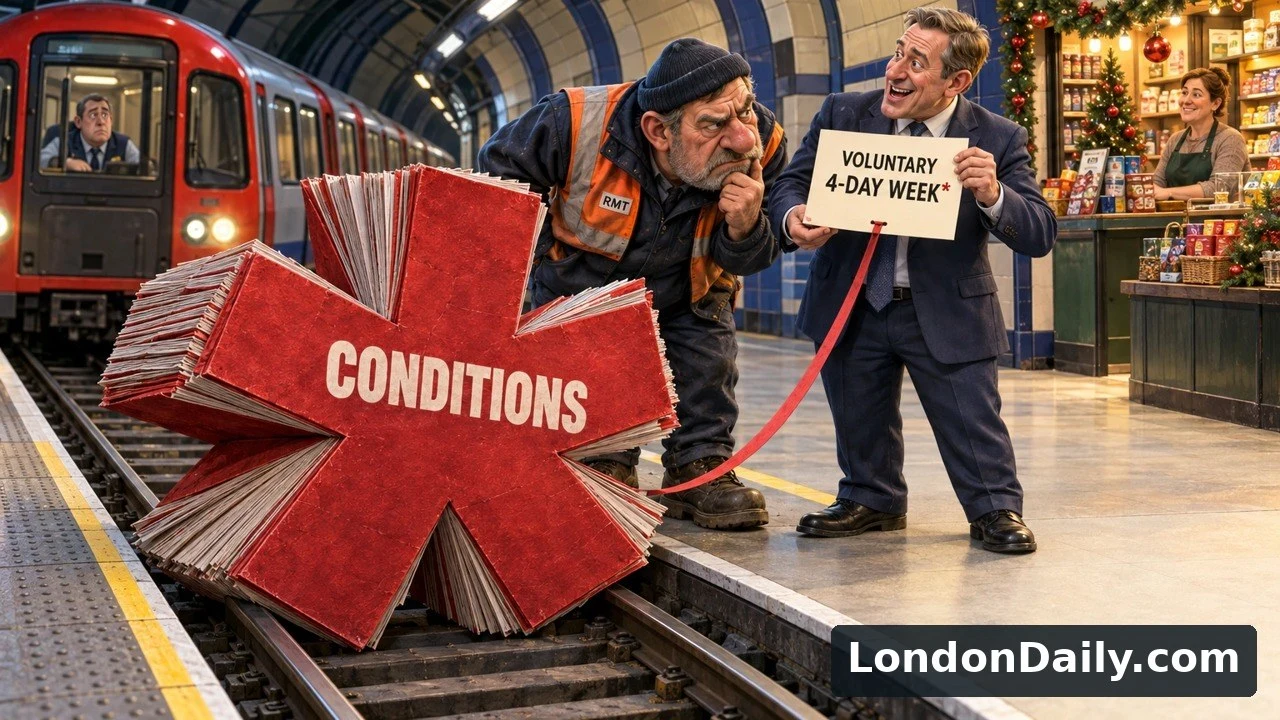
RMT Tube drivers have ended a 24-hour strike over conditions attached to a four-day working week, with seven further walkouts planned across December, January and February and businesses warning of damage to Christmas trade.
The action ran from noon on Thursday until noon on Friday. Six Underground lines were suspended or partly suspended on Friday, while five experienced delays. Disruption was forecast to continue until 18:00 GMT as services recovered.
The dispute concerns Transport for London’s framework giving drivers a choice of a four or five-day week. The RMT supports the framework but opposes changes to existing employment conditions. It fears that drivers retaining their old arrangements could face altered working practices, including depot moves.
General secretary Eddie Dempsey said: "RMT is not opposed to a genuine four-day working week that benefits our members, but we will not accept it being used as a vehicle for job cuts, intensified working and the erosion of terms and conditions."
TfL says changes to working patterns are voluntary and rejects suggestions otherwise as misleading. It argues that the proposals would give drivers more time off and make the Underground more efficient.
Aslef, the other union representing Tube drivers, accepted the voluntary compressed week and did not join the strike. It previously expressed surprise at the RMT’s decision. The disagreement is therefore about the conditions accompanying the shorter week, rather than simple opposition to it.
TfL said more drivers reported for duty than during previous industrial action. More than 55% of the network ran on Thursday; just over 40% of services operated on Friday morning up to 09:00. All lines had operated services before 06:30, earlier than expected, although Waterloo & City later had none. Thursday’s Tube ridership was around two-thirds of normal, while overall transport usage reached 90%.
Forest reported 17% more e-bike rides on Thursday evening than a week earlier. Uber also reported higher demand.
For traders, fewer passengers meant fewer customers. Simon Mitchell, chief executive of Kerb, which operates Seven Dials Market, reported a sharp fall in Thursday footfall and expected the same on Friday. One strike had affected two trading days, he said; December action would coincide with his business’s strongest week of the year.
King’s Cross trader Ollie called frequent strikes excessive. Amelia, at The Flower Station bakery stall, acknowledged workers’ reasons but stressed the wider business impact.
At Finsbury Park, Aya feared missing an A-level mock exam. Marie, travelling home with guinea pigs collected from a sitter after a Morocco trip, described unreliable buses and difficulty seeing friends during strikes. The consequences extended well beyond the journey to work.








Join the conversation