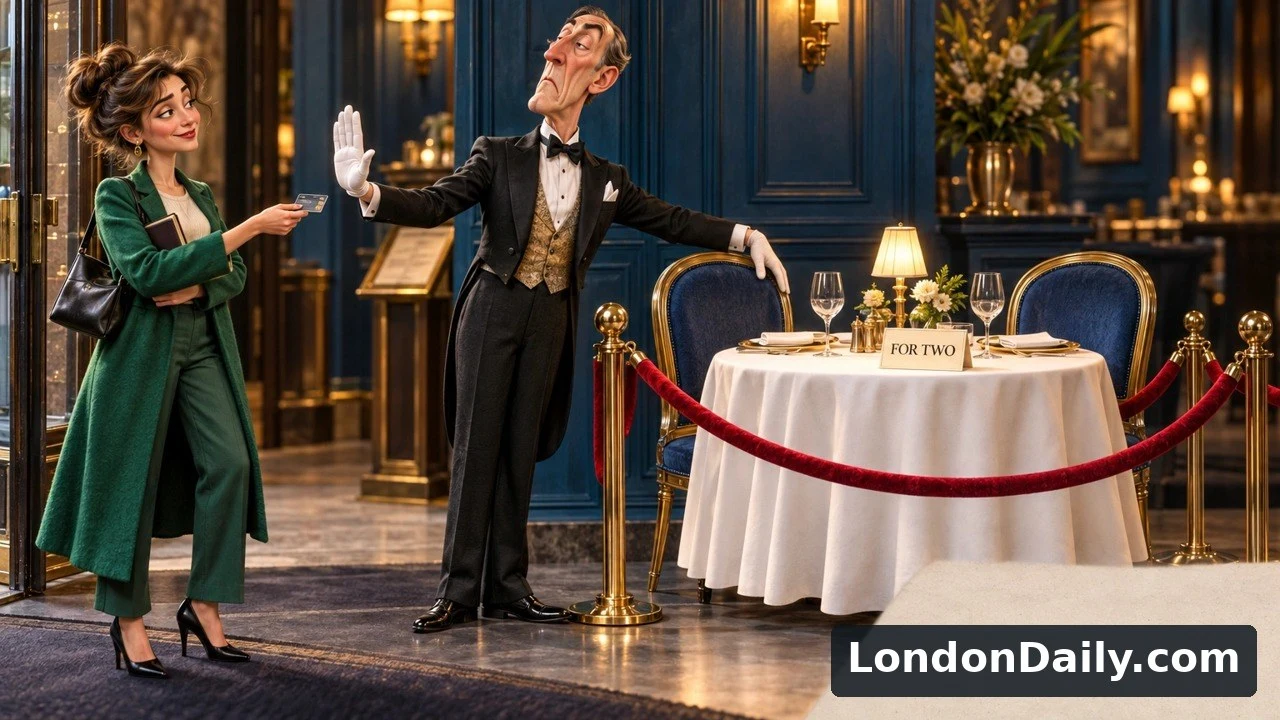
Catherine Smith typically spends £100 to £200 a meal dining alone at high-end restaurants, choosing exactly where and when to eat. Yet even a customer willing to spend that much cannot always secure a table for one.
The 23-year-old from Yorkshire began eating out alone at university and now does so at least once a month, visiting restaurants in Britain and abroad that she would not usually choose with friends or family. She researches venues carefully, then reads, writes in her journal or enjoys the quiet.
Many of her friends are vegan or vegetarian; she describes herself as a big meat eater. Going alone removes the need to find a menu that suits everyone.
“It definitely feels like not only a form of self-care but also a form of female liberation,” she says. She has nevertheless been turned away by restaurants that do not accommodate solo diners, an experience she finds disappointing.
OpenTable, which says it covers more than 5,000 UK restaurants, describes solo bookings as its smallest but fastest-growing category. It reports a 23% increase between 1 January and 31 August compared with the same period a year earlier. The underlying data was not supplied for independent verification, and the figures describe bookings through its platform rather than the whole restaurant market.
The welcome remains uneven. SoloTable, a website identifying restaurants suitable for lone diners, found that one in eight of 178 London restaurants surveyed did not accept online reservations for one.
Charles Banks, joint managing director of food trends agency The Food People, says eating alone is not new but has become “almost aspirational”. He also identifies a commercial tension: a single customer can be seen as an inefficient use of a table.
Social expectations present another obstacle. Nishi Singh, previously an enthusiastic solo diner in London, says someone in Delhi assumed she had been stood up. After she began documenting her meals on social media, people contacted her saying they wanted to try it but were afraid.
At Jungli, a recently opened Indian restaurant in Newcastle upon Tyne, co-founder and director Yousaf Khalid sees an opportunity to attract these customers. High tables, bar seats and charging points accommodate people arriving alone. Staff are encouraged to chat, but also to recognise when solitude is the point.
That distinction matters to Catherine: dining alone is a chosen experience, not simply the absence of company. As she puts it: “Food is a great way to bring people together, but it's also a great way to have good experiences on your own.”








Join the conversation