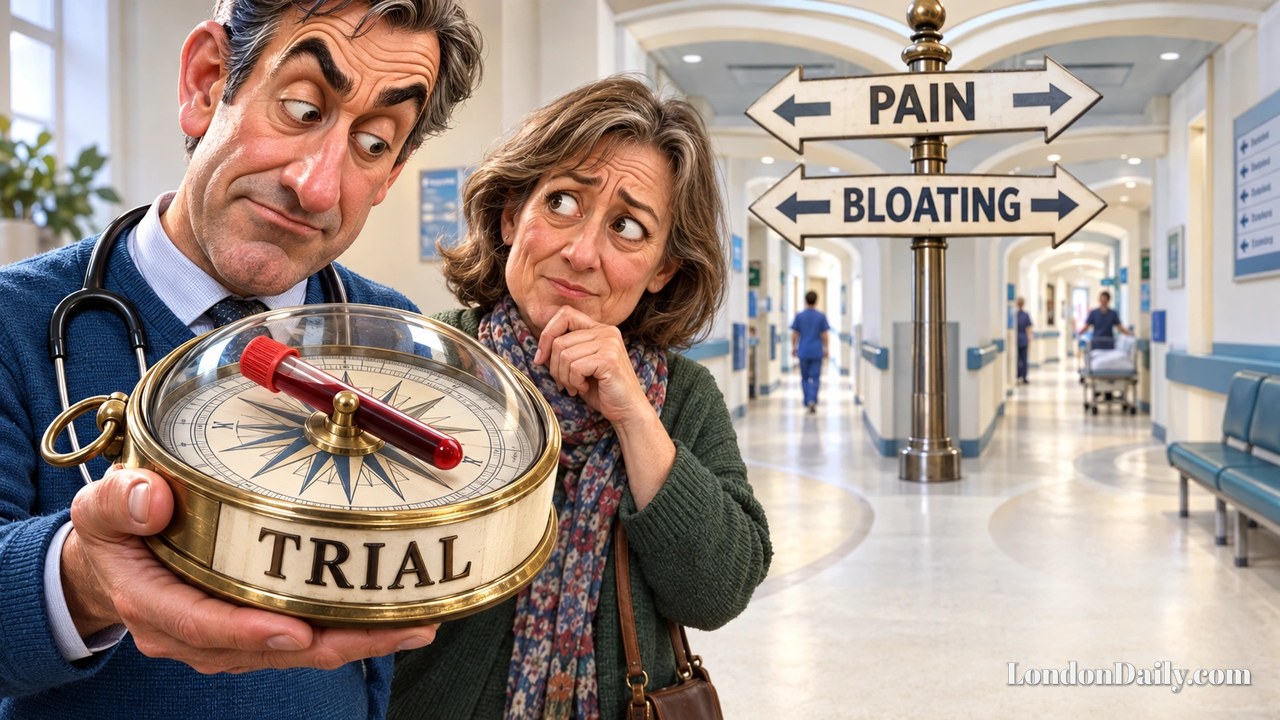
Blood tests designed to detect several cancers at once will be offered at around 200 GP surgeries in England, in a trial examining whether they can help doctors investigate vague symptoms sooner.
More than 20,000 NHS patients aged 45 and over with symptoms such as pain or persistent bloating will be eligible. The government-funded STRIDE-RCT trial, led by the University of Birmingham, will assess whether the tests are accurate enough for wider NHS use.
The aim is to identify hard-to-diagnose abdominal cancers, including liver, ovarian and pancreatic cancer, which are often discovered only after they have spread. Earlier diagnosis gives patients a much better chance of successful treatment and survival.
Professor Peter Johnson, NHS England’s national clinical director for cancer, said early detection of abdominal cancer was “notoriously difficult” because symptoms could easily be mistaken for less serious conditions. Around 71,000 people in England are diagnosed each year with pancreatic, stomach, liver, ovarian or bowel cancer, and nearly 35,000 die from these diseases.
Participants will give one or two tubes of blood at their GP practice alongside routine tests. Scientists will look for proteins or fragments of DNA that may signal cancer and could also help pinpoint a tumour’s location. The results could guide doctors towards patients who need further investigation; a positive result does not necessarily mean cancer is present, while a negative result cannot guarantee an all-clear.
The trial covers cancers of the bowel, small bowel, stomach, oesophagus, pancreas, liver, bile duct, gallbladder, ovaries, endometrium, kidneys, bladder and prostate.
Health Secretary Yvette Cooper said she hoped simple blood tests of this kind would identify patients needing urgent investigation much sooner. Michelle Mitchell, from Cancer Research UK, said GPs had long needed better tools to determine which patients required further testing, describing the trial as an important step towards meeting that need.
The promise remains to be demonstrated. A separate NHS trial of the Galleri multi-cancer test recently failed to meet its main goal of reducing late-stage cancer diagnoses, although researchers are still assessing its potential benefits. For the new trial, the unresolved question is whether blood-test results can reliably help GPs decide what should happen next.








Join the conversation