A woman with multiple sclerosis says she has spent most of her time in bed with “horrific pain” after running out of Nabilone during a UK-wide shortage that is not expected to end until December.
Jill Kenning, from Coleraine in County Londonderry, says alternative medication has not worked and her health has deteriorated sufficiently to require several nights in hospital.
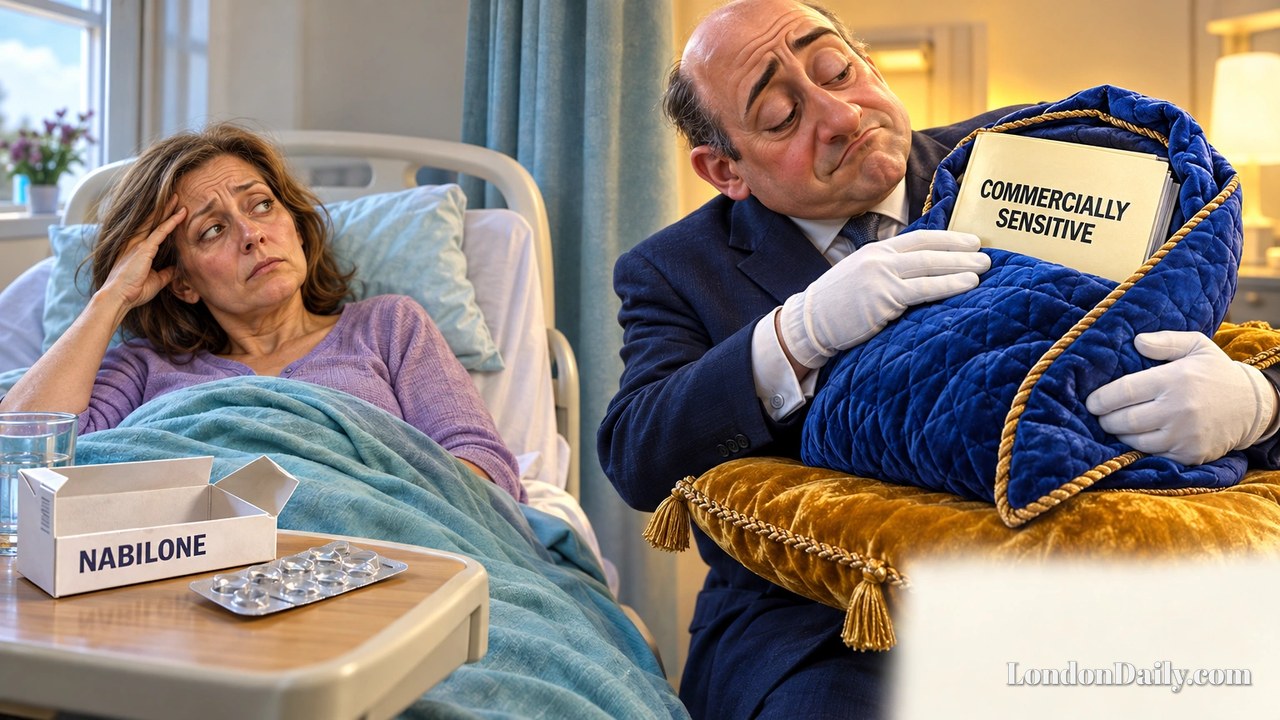
Northern Ireland’s Department of Health confirmed that both licensed strengths of Nabilone are out of stock with wholesalers across the UK. Supplies of 1mg capsules began to be affected in July; the 0.25mg strength became unavailable more recently. The department declined to explain the cause, describing the information as “commercially sensitive”.
Kenning was diagnosed in 2008 after developing sight problems, followed by numbness down her left side. She was treated by a neurologist and prescribed Nabilone after a severe relapse that required four weeks in hospital. She says she has used it for 17 of the 18 years since her diagnosis.
“It helps me basically that I can get out of bed in the morning,” she said.
Since running out last Tuesday, she says she has suffered constant eye pain, likening it to being “stabbed with a hot poker”. Her health trust told her there were no supplies when she sought her regular repeat prescription and advised her to contact her neurologist, who prescribed alternatives.
“I have been living on painkillers... I can't sleep, I'm sick, I'm not eating.”
Kenning believes patients should have been better prepared for the disruption. “I'm not only fighting for me, I'm fighting for all the other patients that are on this drug.”
MS affects nerves in the brain and spinal cord. The immune system damages myelin, the protective material surrounding those nerves, disrupting signals between the brain and the body.
The shortage comes amid a wider rise in supply problems. A tracker published by the industry reference guide MIMS recorded 157 medicines in short supply this week, compared with a January low of 107, with the average trending upwards this year.
The department said it was working with the UK’s Department of Health and Social Care and health trusts. Guidance covers alternative treatments, including unlicensed imports of Nabilone where available, but does not establish that suitable supplies can be secured for every patient.
Acknowledging patients’ concerns, it advised anyone unable to obtain prescribed medication, or worried about an alternative, to speak to their specialist healthcare team. For Kenning, the alternatives prescribed so far have not restored the relief she says Nabilone provided.








Join the conversation