London Daily

Focus on the big picture.
Sunday, Jul 19, 2026

MPs vote in favour of bill cracking down on 'annoying' protests

MPs vote in favour of bill cracking down on 'annoying' protests

A controversial bill that would give police more powers to crack down on protests has cleared its first hurdle in the Commons, paving the way for it to become law.

The Police, Crime, Sentencing and Courts Bill passed its second reading on Tuesday night by 359-263 – a majority of 96 – and was overwhelmingly backed by Tory MPs.

The legislation would make non-violent protests or ‘intentionally reckless acts’ without a ‘reasonable excuse’ that cause ‘serious annoyance’ or are judged to be too ‘noisy’, punishable with a fine or up to 10 years in jail in theory.

It would be a crime to ‘intentionally or recklessly cause public nuisance’ that cause ‘intimidation or serious unease’ and ‘impact’ the community without a ‘reasonable excuse’.

The 307-page Bill also proposes to increase the maximum penalty for those who destroy or damage a memorial from three months to 10 years.

Police would also have the power to tell one-person protests to stop shouting and could impose noise limits and start and finish times on gatherings.

The ‘controlled area’ where protests are banned around Parliament would also be extended.
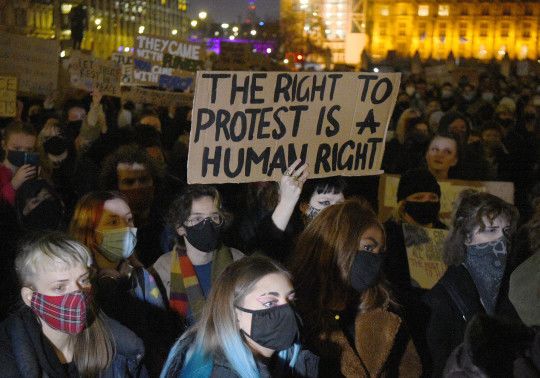
Hundreds marched through central London on Monday in protest of the Bill


Labour had tabled an amendment to block the legislation from receiving a second reading – but their defeat means it will now move onto the next Parliamentary stage and is a step closer to becoming law.

Sir Keir Starmer had told his MPs to vote against the Bill saying it contained ‘next to nothing’ to counteract violence against women and girls but included ‘lots of stuff on statues’.

Opposition MPs had backed some sections of the legislation such as tougher sentences for serious crimes including child murder and sex offences – but warned it ‘rushes’ changes to protest laws and ‘fails’ to better protect women.

Hundreds yesterday marched through central London in protest of the Bill and violence against women in the wake of Sarah Everard’s death.

The outcry against the Met Police’s handling of a vigil held in memory of the 33-year-old on Saturday has sparked a fresh focus on the Bill.
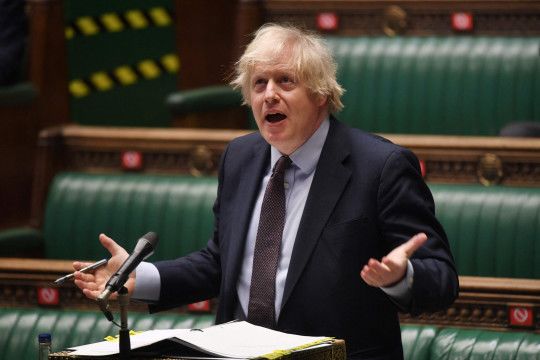
Critics of the Bill said it showed the Government’s ‘descent into authoritarianism’


MPs warned during a fierce debate in the Commons that the ‘draconian’ plans would ‘make a dictator blush’ and showed the Government’s ‘descent into authoritarianism’.

Labour MP Nadia Whittome said the restrictions on protests were being introduced because Home Secretary Priti Patel ‘despises’ Black Lives Matter and Extinction Rebellion.

She told MPs: ‘I attended the Black Lives Matter demonstrations in Nottingham East and the protest and vigils at Scotland Yard and Parliament on Sunday and yesterday. We took to the streets because people are angry, we’re hurting, we’re sick of male violence.

‘We are sick of male violence whether it is at the hands of the state, our partners, our family members or strangers. And we march because some people don’t survive male violence.’
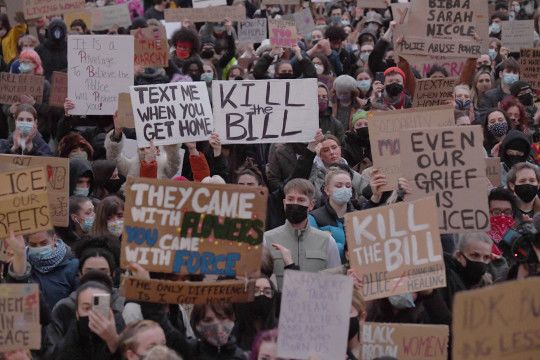
The Bill’s proposed plans for protests has caused backlash


Labour MP Clive Efford claimed ‘we’re witnessing a Tory-led coup without guns,’ while former justice minister Maria Eagle added: ‘This populist Government has swiftly developed a penchant for authoritarianism.’

The Home Office previously argued the the Bill was needed to act against ‘highly disruptive tactics used by some protesters’, noting that Extinction Rebellion’s April uprising demonstrations cost the Met Police more than £16 million.

Tory MPs argued the the wide-ranging Bill was necessary, as it includes plans to bring in tougher sentences for child killers and those who cause death on the roads and longer jail terms for serious violent and sexual offenders.

It would also expand child sex abuse laws to ban religious leaders and sports coaches from having sex with 16 and 17-year-olds in their care.

Newsletter

Related Articles

0:00
0:00
Close
Brothers Andrew and Tristan Tate Who Turned "Toxic Masculinity" Into a Brand Arrested in Miami as Britain Seeks Their Extradition
Trump Administration Pressures Banks to Restrict Financial Access for Undocumented Immigrants
Passenger Bound for Germany Refused to Sit Beside a Woman on a Plane — Then Slapped a Flight Attendant
Ukraine’s Leadership Rift Spills Into the Streets as Protesters Target Army Chief
Ukrainian Drone Barrage Kills Eight and Strikes Russian Logistics Network
Key Trends to Watch
Financial Conduct Authority Warns Cloud and Digital Risks Are Becoming a Financial Priority
Jeffrey Donaldson Appeals Sexual Abuse Conviction as Democratic Unionist Party Opens Review
Welsh Health Authorities Launch Emergency Meningitis Vaccination Programme for Students
Scottish Business Activity Falls for Third Month as Companies Face Rising Costs
Bank of England Regulators Demand Better Access to Digital Banking Services
United Kingdom Cuts Bilateral Aid to Several African Countries by Up to Ninety Per Cent
United Kingdom Introduces Tougher Deportation Rules After Rochdale Exploitation Scandal
NHS England Launches Wearable Technology Plan to Reduce Sepsis Deaths
Amazon Web Services Billing Error Sends Trillion-Dollar Invoices to British Companies
Bank of England Takes Direct Regulatory Role Over Major Global Cloud Providers
Extreme Summer Heat Drives Record Fire Risk and Rising Deaths Across Britain
United Kingdom Nationalisation of British Steel Sparks Diplomatic Dispute With China
United Kingdom Economy Shows Weak Growth Ahead of Major Autumn Budget
Andy Burnham Set to Become United Kingdom Prime Minister After Labour Leadership Victory
The Ten World Cup Finals That Defined Football History
Smartphones Are Getting More Expensive, Sales Are Collapsing, and Even Apple Admits: "Prices Will Rise"
The Monaco Bombing Has Become a Test of Ukraine’s Intelligence Accountability
Leadership Change and Strategic Rivalry Redraw the Political Map
Energy Risk, Uneven Growth and the New Geography of Global Capital
The AI Race Enters Its Infrastructure Era
Security and resilience remain long-term national priorities
Britain balances growth ambitions with public finance pressures
Regional devolution becomes a defining theme of the next Labour era
Industrial strategy returns to the centre of British economic policy
Political Instability Remains a Challenge for UK Investment Confidence
Brexit Economic Debate Continues as Public Concerns Over Long-Term Impact Remain
UK Climate Risks Rise as Met Office Warns Extreme Weather Is Becoming More Common
Housing Shortages and Regional Inequality Become Key Priorities Under Incoming Labour Leadership
National Health Service Reform Remains One of Britain’s Biggest Political Challenges
Bank of England Remains at Centre of UK Economic Debate Over Inflation and Growth
UK Economy Shows Recovery Signs but Households and Businesses Remain Under Pressure
Britain Deepens European Defence Cooperation as NATO Allies Seek Stronger Security Capabilities
United Kingdom Expands Sanctions Against Russian Cyber Networks Over Security Threats
UK Industrial Strategy Faces Test After Government Takes Control of British Steel
British Businesses Seek Policy Clarity as Andy Burnham Prepares to Lead Labour Government
Andy Burnham’s Labour Leadership Signals Major Shift Toward Regional Power and Devolution
British Steel Nationalisation Creates New UK-China Tensions Over Control of Strategic Industry
For 36 Years, He Scammed About 300 Luxury Hotels — Until He Was Caught
England's World Cup Exit Expected to Cost Hospitality and Retail £334 Million
Former ICC Prosecutor Aide Speaks Publicly About Allegations Against Karim Khan
Opposition Raises Questions Over June Heatwave Power Grid Pressures
Mastercard Explores Sale of Majority Stake in UK Payments Operator Vocalink
Boeing Forecasts Global Commercial Aircraft Fleet Will Double by 2045
London GP Surgeries Receive £18 Million to Expand Primary Care Capacity
×