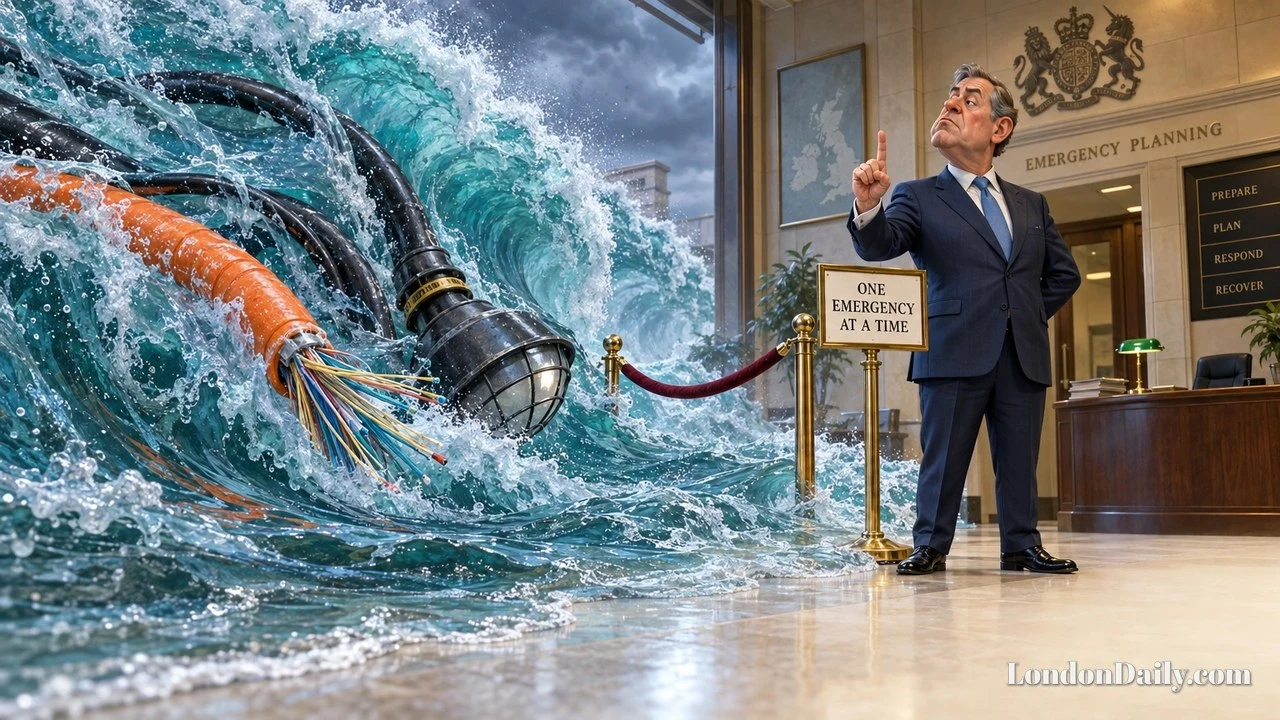
Ministers appear complacent about overlapping threats to Britain, leaving the country underprepared for potentially catastrophic disruption, the House of Lords national resilience committee has warned.
After months of expert hearings, the committee found that emergency plans were often outdated and too fragmented: designed for individual failures of power, water or computer systems rather than several crises combining. It called for an urgent overhaul of national preparedness.
The danger, peers said, is an increasingly plausible ‘polycrisis’, in which disruptions merge, while artificial intelligence intensifies the threat from cyber-attacks. Other risks include violence carried out through proxies, attacks on undersea cables, extreme weather and flooding.
Labour recently launched its ‘Be Ready’ campaign, advising households to keep food and water supplies. But the committee said most people remained unaware of the scale of the potential threats.
“In the face of potentially catastrophic risks and despite the recent launch of the Be Ready campaign, the government appears complacent and the UK is underprepared. We need to move fast to turn things around,” it warned.
Medicines and food illustrate the practical vulnerability. Both depend on highly centralised, generally international supply chains, with few, if any, alternatives when those networks are disrupted.
The report noted that most antibiotics are now manufactured in China or India. About 90% of the world’s 6-APA, the organic compound used as the basis for penicillin-type antibiotics, comes from China.
Peers attributed this concentration to years of price pressures and cost-based procurement. Europe now has only one integrated penicillin facility; the UK has none. The concern extends beyond medicines: one witness warned that dependence on imported scissors and medical staplers could leave many routine surgical operations badly disrupted if supplies were interrupted.
The committee wants a dedicated cabinet minister for resilience and an annual statement to Parliament from the prime minister setting out the country’s preparedness. It also recommends sending every household an emergency-preparedness booklet, following Denmark and Sweden.
Communication needs alternatives too, peers said. They called for a pause to plans to switch off Freeview-style digital terrestrial television, so it could remain available if other systems failed.
The recommendations address the same weakness at different levels: households need practical guidance, but national preparedness also depends on supply chains and communications that can withstand disruption rather than merely function when conditions are normal.








Join the conversation