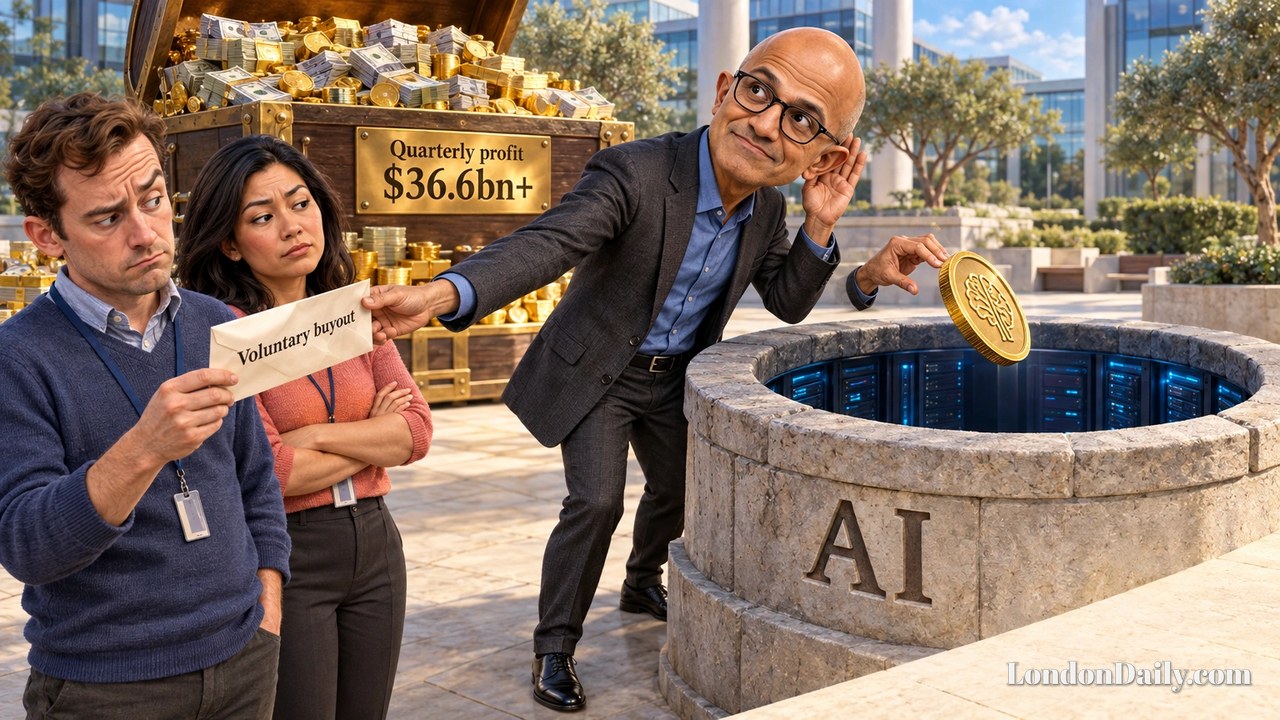
Microsoft has reported quarterly profits of more than $36.6bn (£27.5bn), days after announcing voluntary redundancy offers for around 60,000 workers as it seeks to cut costs while investing billions in artificial intelligence.
Revenue for the three months to the end of September reached $92.3bn, up 19% on a year earlier. Strong cloud computing growth helped drive the results, with revenue from Microsoft Cloud, its range of enterprise technology services, rising by 30%.
The stronger-than-expected earnings sent Microsoft shares up almost 2.9% in after-hours trading in New York on Wednesday. They also highlighted the contrast between the company’s current profitability and its efforts to reduce staffing costs while financing AI infrastructure.
Announced on Monday, the buyout programme will extend to eligible employees across teams in Canada, India, the UK and US. Around 60,000 workers represents more than a quarter of Microsoft’s global workforce of more than 220,000. These are voluntary offers, however, rather than confirmation that every eligible worker will leave.
Microsoft said the programme would help it adapt to “changing needs” and provide “greater flexibility”, while giving departing employees financial support and career planning resources.
Chief executive Satya Nadella said AI development had encouraged adoption of the technology and delivered “real-world impact across every industry.” The company nevertheless identified “substantial investments” in AI among the risks and uncertainties that could affect its finances.
That distinction matters to investors assessing whether the industry’s spending can be sustained. Major technology companies, including Amazon, Meta and Alphabet, are expected to spend more than $700bn this year on AI chips and infrastructure such as data centres. Whether that expenditure will generate sufficient returns remains unresolved.
Alphabet’s results offered a contrasting market reaction on Wednesday. The Google owner reported a 25% year-on-year fall in quarterly net profit and said it would continue spending heavily on AI. Its shares fell by 9.75%, underscoring that investors are weighing the financial performance behind the investment plans, not simply their scale.








Join the conversation