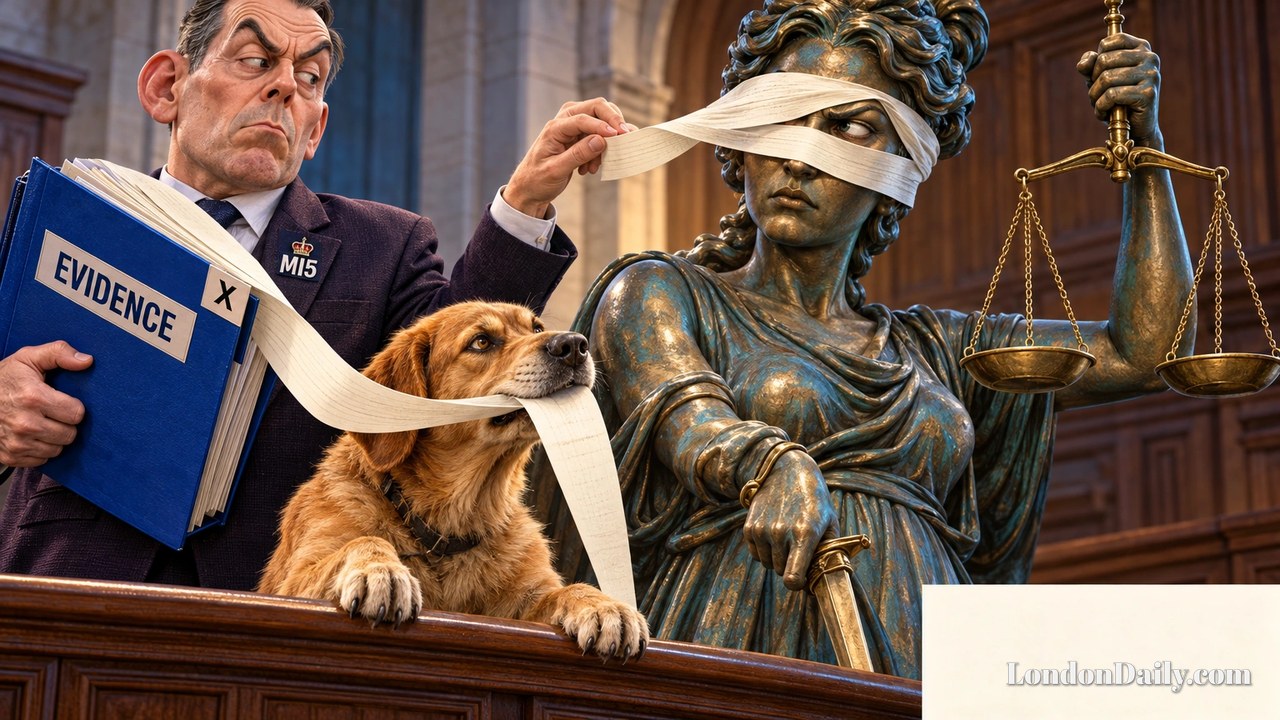
MI5’s false evidence to courts over a violent neo-Nazi informant ranks among the most serious cases Britain’s intelligence watchdog has handled, Lord Leveson has said, as the High Court considers whether to take action against the agency or its staff.
The investigatory powers commissioner’s inquiry found that a senior officer repeatedly lied, while another misled colleagues and lied about what he had been told. Its report, published earlier this year, identified “serious and systemic failures in MI5's conduct”.
MI5 accepted the findings “without reservation” last month. The High Court is due to decide soon what action, if any, should follow.
Speaking on Thursday as his annual report was published, Leveson said: “Oversight depends on candour”. He added: “Failings of candour undermine the entire basis of oversight and accountability.”
The case concerns agent X, who coercively controlled his partner, known as Beth, and attacked her with a machete. MI5 helped him move abroad to continue intelligence work while he was under police investigation.
In 2022, the government unsuccessfully sought to stop a BBC investigation but secured legal anonymity for X. Beth subsequently sued MI5 at the Investigatory Powers Tribunal and sought a High Court review of a ruling in 2024.
MI5 falsely claimed to three courts that it had maintained its policy of neither confirming nor denying an agent’s status. The courts consequently permitted information to be withheld from Beth and others, seriously disadvantaging her.
An officer had disclosed X’s status to a journalist during calls in 2020 aimed at discouraging an investigation. He falsely denied that X was an abusive misogynist or genuine extremist and proposed a meeting with him. The officer found to have repeatedly lied has since resigned.
Leveson said his investigation, ordered by the prime minister, established that both the courts and his office had been misled.
The annual report also recorded an increase in MI5 agent-related errors from four in 2017 to 21 in 2025; MI6’s fell from ten to three.
It criticised the National Crime Agency’s handling of an informant under 18: late notification to the commissioner, an unlawfully extended authorisation, inadequate recording of reasons for proceeding without an appropriate adult, and instructions to undertake criminal conduct without valid legal authorisation. Leveson said this fell “well short of what the law requires” and wrote to its director general.
GCHQ, meanwhile, estimates that thousands of portable storage devices remain unaccounted for. They may contain sensitive data and are extensively used in its operations. Leveson expressed continuing concern and disappointment at the investigation’s pace, years after first raising the issue.








Join the conversation