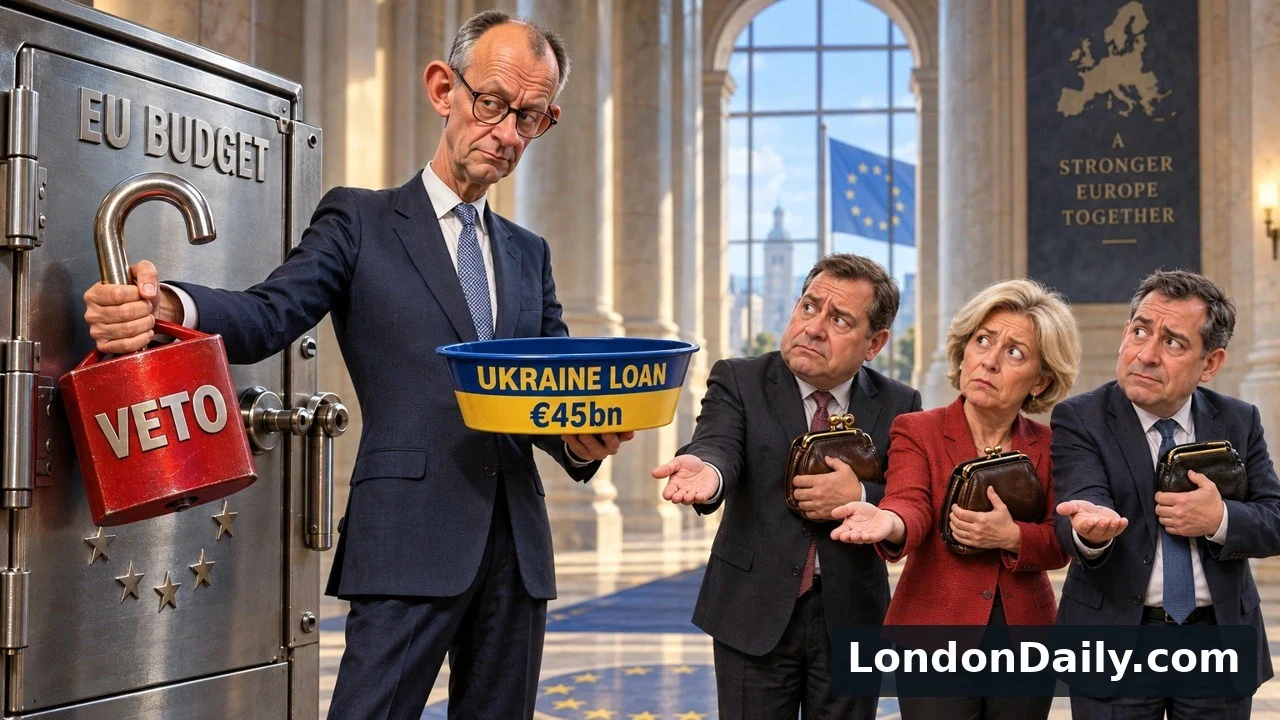
German chancellor Friedrich Merz has threatened to veto the EU’s next seven-year budget unless all 27 member states contribute to a €45bn (£38bn) Ukraine loan for 2027, tying support for Kyiv to spending negotiations that require unanimity.
Arriving in Brussels on Thursday, Merz reiterated that EU funding must involve every member. Slovakia, Hungary and Czechia want to opt out; all receive more from the EU budget than they contribute, leaving them exposed if negotiations fail. Slovakia’s prime minister, Robert Fico, who maintains close Kremlin ties, has accused Merz of blackmail.
Czech prime minister Andrej Babiš wants Ukraine financing negotiated separately. Defending cohesion funds, which help poorer regions catch up, he cited hospitals and a motorway to Austria as domestic priorities, while urging EU efforts towards peace.
Merz has broad backing across western European, Nordic and Baltic states. Sweden’s Ulf Kristersson argued that governments cannot accept EU support for Ukraine while refusing to contribute. Some sympathetic governments nevertheless fear Merz’s public threat over regional funding makes compromise politically harder for holdouts.
The European Commission proposed the loan last week to address a funding shortfall caused by Russian attacks: €25bn for military spending and €20bn for civilian needs, including schools and hospitals. Bulgaria dropped its opposition on Thursday, offering civilian-only contributions. Prime minister Rumen Radev cited Ukraine’s historic Bulgarian diaspora and ruled out funding weapons.
Separately, Berlin wants future Ukraine funding decisions under the EU budget taken by majority vote rather than unanimously. Its aim is to prevent a potential French presidency under Marine Le Pen from blocking aid. The far-right National Rally leader, ahead in opinion polls, has pledged to end French financial support for Ukraine and cut France’s EU contributions.
The wider negotiations concern António Costa’s €1.78tn proposal for 2028–2034, presented last Saturday and described as 10% below the Commission’s original €2tn plan. Net contributors Germany, the Netherlands and Sweden favour a smaller budget prioritising defence and competitiveness; 17 southern, central and eastern member states oppose cuts to traditional programmes.
France occupies a separate position. Emmanuel Macron wants a larger budget and protected farm subsidies, insisting France must lose none of its common agricultural policy funding. Preserving those payments would make the budget harder for Le Pen to unravel; she says the manoeuvre is intended to constrain a future government, not defend farmers.
Costa and Ireland’s Micheál Martin want agreement this year, before 2027 elections complicate negotiations. Macron has signalled he could leave talks without an acceptable December deal. Other governments resist a French election-driven timetable: one senior EU diplomat warned that focusing on Le Pen could strengthen her argument that the EU opposes her movement.








Join the conversation