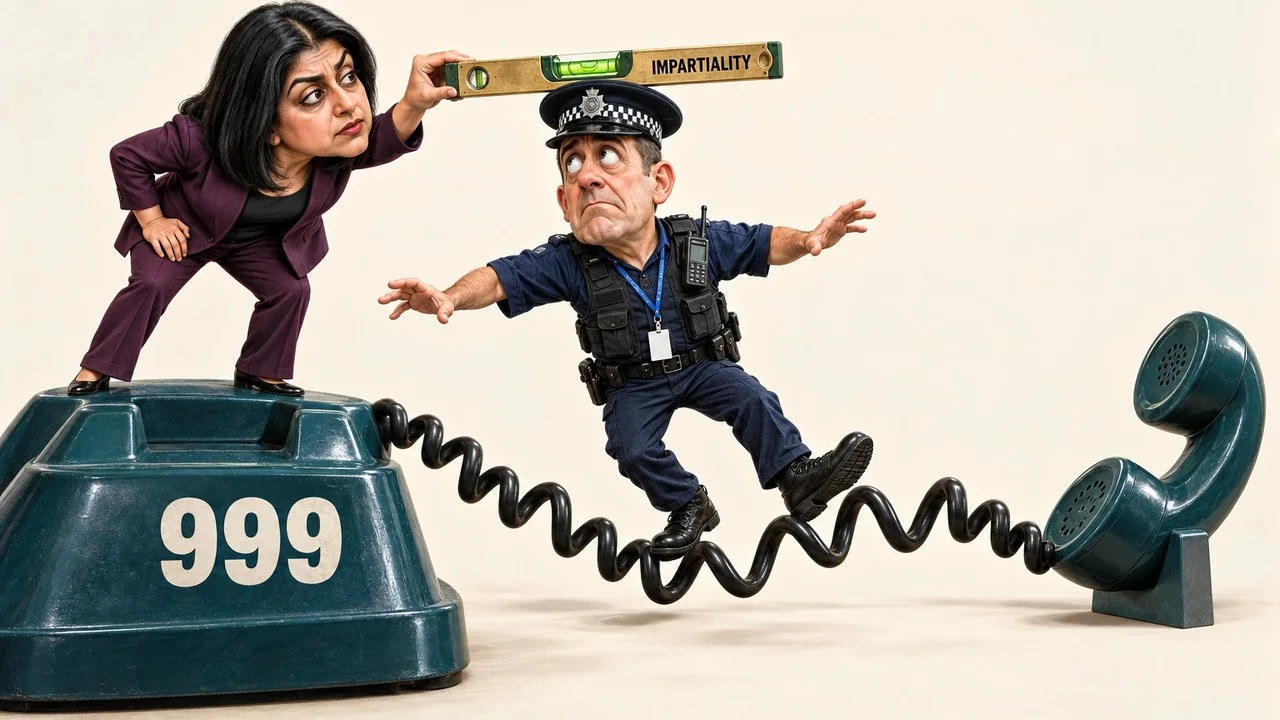
Home Secretary Shabana Mahmood will set out plans for a police impartiality standard on Wednesday, warning that misguided equality measures risk differential treatment and undermine confidence in policing.
Addressing chief constables and police and crime commissioners, she will acknowledge examples of differential treatment while insisting the vast majority of officers act impartially. She will describe the growing perception of two-tier policing as “corrosive” and accuse motivated actors of exploiting those cases.
The College of Policing is developing the standard, with consultation planned for next year. It will bring impartiality principles together to support equal treatment regardless of race, faith or other characteristics, covering symbols on badges and lanyards and behaviour at community-led events.
Mahmood will argue that approaches including the former police anti-racism commitment risked undermining confidence. She is expected to say: “To the public, it was patently absurd to tell police officers that fair policing does not mean treating everyone the same.”
She will also call it “shameful” that, 33 years after the murder of black teenager Stephen Lawrence, the proportion of black officers remains virtually unchanged. Her stated aim combines better representation with equal treatment.
National Police Chiefs’ Council chairman Gavin Stephens emphasised impartial use of powers but defended discretion. He said officers receive a 999 call every two seconds, often with limited information, and apparently similar emergencies can require different responses. He urged tolerance of mistakes, including clumsy guidance, as forces pursue improvements.
That distinction presents a practical test for the standard: separating unequal treatment from legitimate decisions based on different circumstances.
Henry Nowak’s murder prompted fresh two-tier policing accusations and far-right protests after he was handcuffed as he lay dying, his killer having falsely accused him of racist abuse.
A More in Common poll earlier this year found a third of Britons believed police favoured ethnic minorities over white people, double the proportion two years earlier. It measures perceptions, not police conduct.
Shadow home secretary Chris Philp condemned unequal treatment based on skin colour. Reform UK leader Nigel Farage portrayed Mahmood’s acknowledgement as vindication, saying his party had been called racist for alleging two-tier policing.
Mahmood will urge engagement with residents rather than activist groups pursuing agendas, telling officers to leave politics to politicians.
Responding to the cross-party Police Leadership Commission, she will announce 200 fast-stream places for officers, police staff and external entrants, without requiring degrees, on a five-to-10-year path to superintendent. She will blame earlier underinvestment for inconsistent, sometimes inadequate leadership. Findings in July showed eight serving or former chief constables under misconduct investigation; investigations do not establish guilt.








Join the conversation