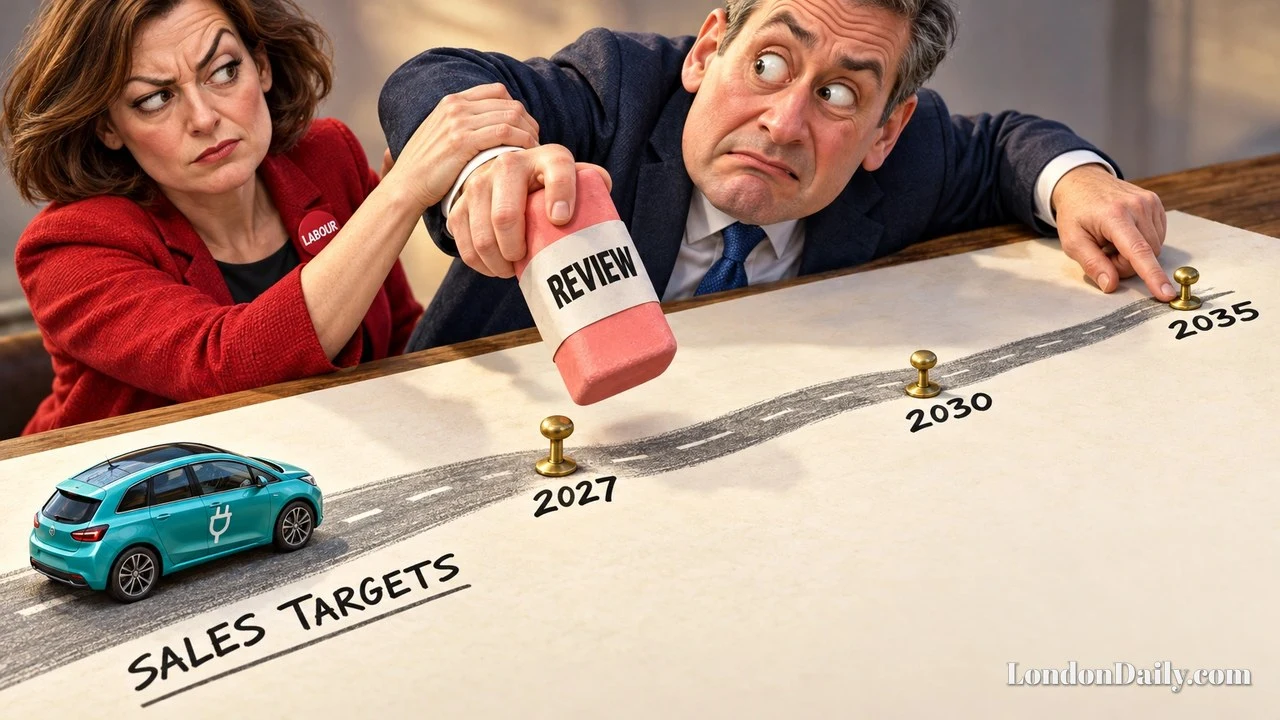
Labour backbench MPs are resisting potential cuts to electric vehicle sales targets, warning ministers that weakening the zero-emission vehicle mandate would damage Britain’s international climate credibility without easing household cost-of-living pressures.
The dispute concerns a possible change, not an agreed policy. On 9 November 2026, prime minister Andy Burnham said that “no decision has been made” on electric vehicle targets and that ministers were examining consultation responses, Sky News reported.
The government has, however, set a timetable for resolving the uncertainty. Government whip Baroness Dacres told the House of Lords on 10 November that the mandate review’s outcome would be published by the end of 2026, with ministers working alongside the devolved administrations.
The review reaches beyond the headline sales targets. Dacres disclosed that the Department for Transport had discussed mild hybrid vehicles with manufacturers and said their future role would be addressed in the outcome. She announced no decision on that question either.
That distinction matters. A review can change the pace of the transition through sales requirements, but its treatment of different vehicle technologies also helps determine what the transition permits. The percentages alone will not tell the whole story.
The backbenchers’ affordability criticism presents ministers with a separate test. Sales obligations govern what manufacturers must sell; they do not, by themselves, establish what households will pay. Any claim that weaker targets would relieve financial pressure therefore needs an explanation of how the benefit would reach motorists.
Dacres also told peers that the government was investigating public-charging affordability. That work remains exploratory, rather than an implemented pricing measure.
The year-end decision will need to distinguish three things that can too easily be bundled together: the required pace of electric vehicle sales, the future role of hybrids and the cost of using an electric car. Easing the first would not, on its own, demonstrate progress on the third.








Join the conversation