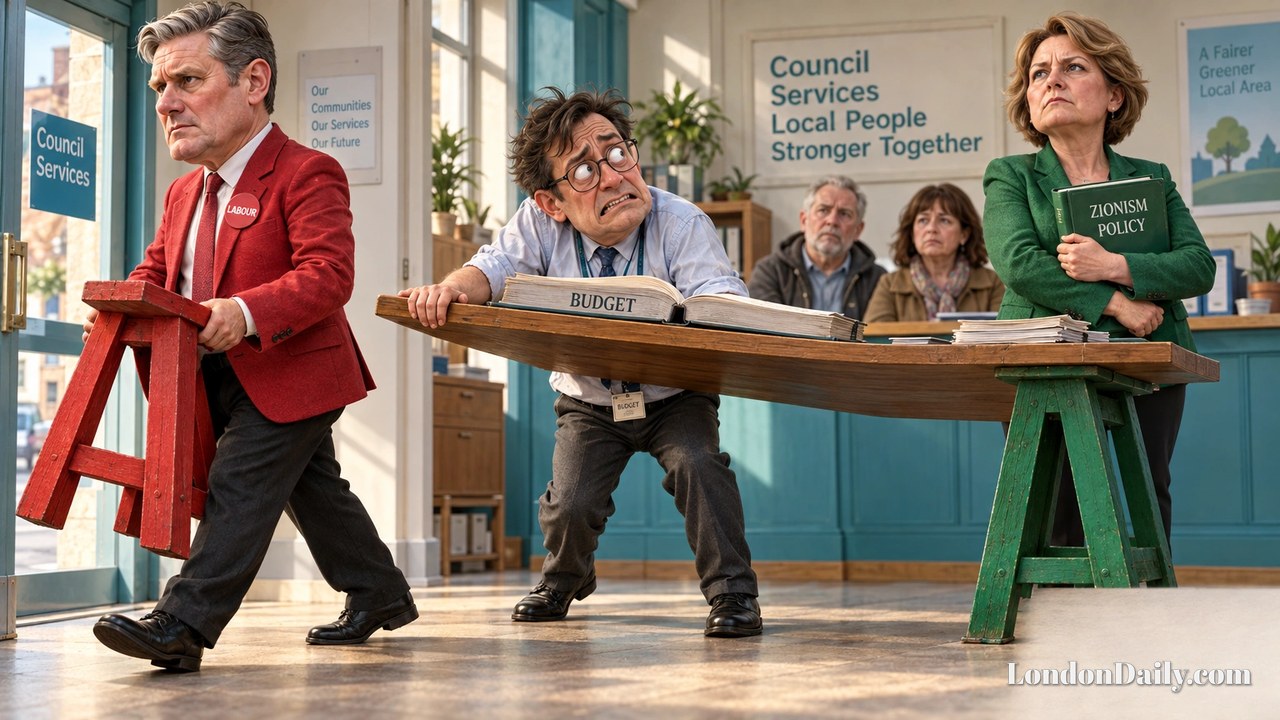
Labour has withdrawn from power-sharing agreements with the Greens in 11 councils after local groups failed to meet its demand to disown their national party’s policy defining Zionism as racism. The split leaves administrations seeking new partners or minority rule, potentially slowing budget and policy decisions affecting hundreds of thousands of residents.
The Green motion, adopted by members in October, described Zionism as supporting an “ethnonationalist Jewish State in historic Palestine” and backed a “single democratic Palestinian State”, including in modern-day Israel. It became party policy but divided senior Greens and drew condemnation from Jewish groups and opposition parties.
Prime Minister Andy Burnham called the policy “antisemitic” in October and ruled out partnerships. Labour subsequently demanded that local Greens reject it and urge their national leadership to reconsider. Party chair Bridget Phillipson said Labour could not work with a party supporting it at any level of government.
Green leader Zack Polanski called the motion “imperfect” but defended its premise, arguing that Israel’s treatment of Palestinians was “clearly underpinned by racist ideology”. He predicted Labour’s decision would backfire and accused it of disrupting services and imposing support for genocide. Israel denies committing genocide in Gaza.
Green co-deputy leader Rachel Millward, who leads Wealden Council, accused Labour of disrupting well-run councils through fear of Green success. She argued that criticism of Israel’s actions should not be conflated with antisemitism. Warwick Greens refused to condemn a democratically agreed policy under what they called political intimidation. Havant Green leader Netty Shepherd said foreign policy was outside her council remit and warned of a “complete disaster for residents”.
Labour said 11 of 18 local arrangements failed its conditions, including Sheffield, Warwick and Lewes. Broadland, Monmouthshire, North Somerset, Rother, West Oxfordshire and West Sussex met them. Coventry has no formal agreement and will not establish one; co-operation continues in the West of England mayoralty, whose deputy mayor is Green.
In Sheffield, 25 Labour and 20 Green councillors formed an administration after the May 2026 elections, serving 550,000 residents. Green leader Angela Argenzio insisted her councillors were not antisemitic and accused Labour of following national rather than local concerns. Labour council leader Fran Belbin said on Monday she would propose minority rule on Wednesday, citing broken trust and accusing Greens of refusing to stand up for Jewish citizens.
The Greens and their Local Government Association group condemned the loss of successful local partnerships. Liberal Democrat leader Sir Ed Davey has also rejected a national Green partnership over a policy he called dangerous and antisemitic, asking local coalition leaders to press Greens to reject it and campaign for reversal. Existing council partnerships now face the practical test of securing votes without their former allies.








Join the conversation