London Daily

Focus on the big picture.
Saturday, May 30, 2026

Kyiv says Big Oil should pay to rebuild Ukraine’s shattered infrastructure

Kyiv says Big Oil should pay to rebuild Ukraine’s shattered infrastructure

Energy minister also warns the war risks dragging on forever unless the West closes sanctions loopholes on the Kremlin’s hydrocarbon revenues.

Major international energy companies that raked in bumper profits because of price spikes over the course of the war should pour some of that cash into rebuilding Ukraine's shattered power infrastructure, Kyiv's Energy Minister German Galushchenko told POLITICO.

In a wide-ranging interview, Galushchenko also argued the West needed to close sanctions loopholes on Russian energy sales to prevent an "endless war" in Ukraine, and said Kyiv could provide alternative nuclear fuel so some EU countries could wean themselves off their dependence on Russian supplies.

"A lot of energy companies get enormous windfall profits due to the war. So we estimated this at more than $200 billion," Galushchenko said on a visit to Brussels. "They get this money because we are fighting, because of the war."

"I think it would be fair to share this money with Ukraine. I mean, to help us to restore, to rebuild the energy sector," he added.

The $200 billion figure given by Galushchenko has been widely cited as the profits of five top companies — BP, Chevron, ExxonMobil, Total and Shell — in 2022. The Kyiv School of Economics estimates the damage to Ukrainian infrastructure at close to $140 billion.

The minister noted that a Lithuanian company, Ignitis Group, is already looking to hand over some 10 percent of its profits to help reconstruction in Ukraine and said bigger companies should follow suit.

Galushchenko also warned that Moscow would be able to wage a perpetual war in Ukraine for as long as the Kremlin is able to rake in cash from selling fossil fuels. Despite sanctions against Russian oil imports imposed by the EU and a price cap set by the G7 club of rich democracies, he warned that Russian President Vladimir Putin was still finding ways to beat international embargoes.

"If on one side you're trying to restrict them and on the other you're giving them opportunities, you'll allow them to make endless war," he complained, arguing the Kremlin was using its energy export earnings "not to help Russian people to live better" but "to produce weapons" and keep the war going.

"This money costs Ukrainian lives," he said.

Russia boasts that it has diverted its oil supplies to friendly countries such as China and India, but there are signs that restrictions from big Western markets are biting hard.

Calculations by Bloomberg on March 3 suggested that tax revenues from oil almost halved in February from a year ago, while gas revenue dropped 42 percent from a year earlier given reduced sales to Europe. The EU's ban on Russian oil has been a key factor is torpedoing the price of Urals crude.

Keen to keep up that pressure, Galushchenko protested that some oil was still seeping under the cordon.
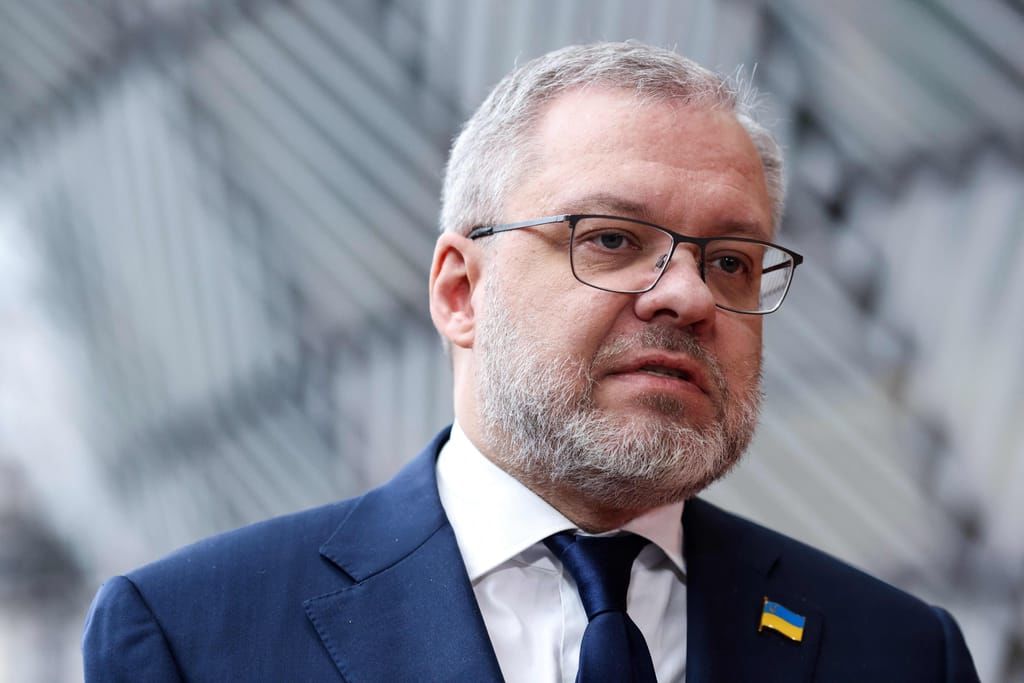
Ukraines Energy Minister German Galushchenko


"It's important not to help Russia to escape sanctions," he said, arguing that "sanctions are efficient only if you have no way to escape and we see the Russians are trying to escape — in some cases, they find a way."

His warning comes amid recent reports that Moscow's hydrocarbons may be reaching EU countries via Azerbaijan and Turkey. Allegations are also growing that Russian oil has been discreetly sold at prices far exceeding the $60 cap imposed by the G7 in December.

The EU's plan to make the bloc independent from Moscow's fossil fuels before 2030, called RePowerEU, includes encouraging member countries to jointly purchase natural gas, and the Ukrainian minister said his country also wanted in on that program.

While the EU has slashed its oil and gas imports from Russia, the bloc still has 18 Russian-designed VVER reactors — located in Finland, Slovakia, Bulgaria, Hungary and the Czech Republic — for which no alternative fuel supply exists so far.

Rather than continuing to rely on Russia, they could soon buy their supplies off Kyiv, he said. Ukraine is in the process of making specially-tailored replacement nuclear fuel along with Westinghouse of the U.S. that could be ready by "the beginning of next year."
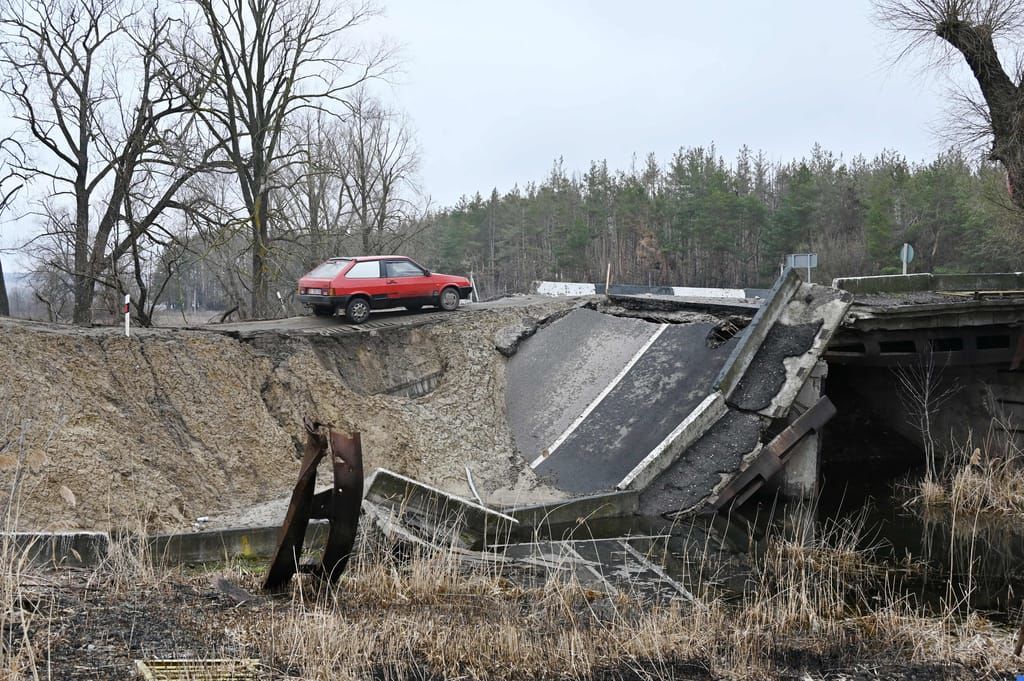
A destroyed bridge over the Murom river near Russkiye Tishki


He also called on the European Commission to set an EU-wide target for eliminating countries' reliance on Russian nuclear technology, while reiterating Ukraine's call to bring sanctions against Moscow's state-run atomic giant Rosatom for its role in overseeing the occupied Zaporizhzhia nuclear power plant. So far, the EU has refrained from hitting Russia's nuclear industry with sanctions.

"They are participating in the capture and illegal operation of [this] nuclear station," Galushchenko said.

Comments

Oh ya 3 year ago
If Ukraine had followed the Minsk agreement that they signed non of this would have happened. Let the NAZIS Ukrainians stew in there own mess. The little jew nazi running the country signed a law he would not negotiate with Putin so that shows he is not interested in peace.

Newsletter

Related Articles

0:00
0:00
Close
Japanese Technology Firm Fujitsu Launches Advanced Artificial Intelligence Tool for Corporate Disclosures
South Africa Officially Launches Nationwide Campaign for Highly Contested Local Government Elections
United Kingdom Commits Additional Funding for Unexploded Ordnance Clearance in Laos
Singapore Announces Stringent New Greenhouse Gas Regulations for Commercial Cooling Systems
Cambodia and Thailand Hold High-Level Border Security Talks at United Nations Headquarters
Myanmar Military Government and China Sign Major Agreement to Upgrade Media and Cultural Cooperation
Knife Attack at Swiss Train Station Leaves Three Injured in Suspected Act of Domestic Terrorism
Transnational Extortion Gang Threatens Canadian Police With Army of One Thousand Armed Operatives
Australia Imposes Forty-Two-Day Quarantine on Cruise Ship Passengers Following Deadly Hantavirus Outbreak
International Monetary Fund Unlocks Seven Hundred Million United States Dollars for Sri Lanka Following Economic Reforms
Australia Launches Record One Point Four Billion Dollar Lawsuit Against Chemical Giant 3M Over Contamination
China and Canada Foreign Ministers Meet in Ottawa in Effort to Stabilize Strained Diplomatic Ties
Indonesia Demands Urgent United Nations Security Council Reform Amid Escalating Global Conflicts
Extreme Weather Patterns Trigger Severe Drought in Madagascar and Destructive Flooding in East Africa
Indian State of Karnataka Faces Political Upheaval as Chief Minister Siddaramaiah Abruptly Resigns
Philippines and Japan Reaffirm Defense Ties as Crucial for Indo-Pacific Regional Stability
Norway Joins French Nuclear Deterrence Initiative in Major Shift for European Security Architecture
Global Critical Mineral Alliances Expand as Western Nations Move to Counter Chinese Supply Dominance
United States Imposes Fifty Percent Tariffs on Mexican Steel and Aluminum Ahead of Trade Pact Review
European Union and China Head Toward Major Trade Conflict Over Clean Technology Exports
United States Economic Growth Severely Downgraded to One Point Six Percent as Stagflation Fears Mount
World Health Organization Warns Central African Ebola Epidemic is Outpacing Containment Efforts
United States Treasury Department Conditions Sanctions Relief on Reopening of the Strait of Hormuz
Iranian Air Defenses Intercept and Destroy United States Military Drone Over Bushehr Province
Iranian Armed Forces Launch Ballistic Missiles Toward Unspecified Targets Prompting Regional Condemnation
United Nations Secretary-General Warns Global Order Facing Highest Level of Conflict Since 1945
Israel Issues Sweeping Evacuation Orders in Southern Lebanon Amid Intensified Hezbollah Conflict
Russia Announces Systemic Military Strikes Targeting Ukrainian Defense and Energy Infrastructure
United States and Iranian Negotiators Reach Draft Agreement to Extend Ceasefire and Resume Nuclear Talks
United Nations Security Council Deeply Divided Over United States Capture of Venezuelan President
US and Iran Exchange Direct Military Strikes Amid Fragile Gulf Ceasefire
World Health Organization Warns of Catastrophic Ebola Outbreak in DR Congo
Russia Threatens New Wave of Strikes on Ukrainian Infrastructure and Embassies
Scientists Warn Atlantic Ocean Currents Could Collapse Faster Than Projected
Anthropic Reaches $900 Billion Valuation in Historic AI Funding Round
Washington Imposes Crippling Sanctions on Iranian Maritime Authority
Japan and the Philippines Initiate Strategic Intelligence-Sharing Pact
Microsoft Deploys Autonomous Computer-Using AI Agents to Global Markets
Anthropic Secures $45 Billion Compute Infrastructure Agreement With SpaceX
U.S. Director of National Intelligence Resigns Amid Administration Shakeup
Micron Technology Crosses Trillion-Dollar Valuation Amid Unprecedented Hardware Demand
Canada and Germany Finalize Historic Long-Term LNG Export Agreement
China Expands International Travel Restrictions on Domestic AI Researchers
Japan Approves Sweeping Overhaul of National Intelligence Apparatus
Global Airlines Scramble Logistics as Middle East Airspace Remains Fractured
Japan's Naphtha Imports Plunge 47 Percent Amid Strait of Hormuz Closure
Global Crude Prices Retreat Below $96 as Gulf Tensions Momentarily Ease
Generative AI Outperforms Human Baselines in Landmark Global Creativity Study
NASA Partners With Private Aerospace to Unveil Permanent Lunar Base Architecture
South Korean Equity Markets Surge on Next-Generation Memory Chip Frenzy
×