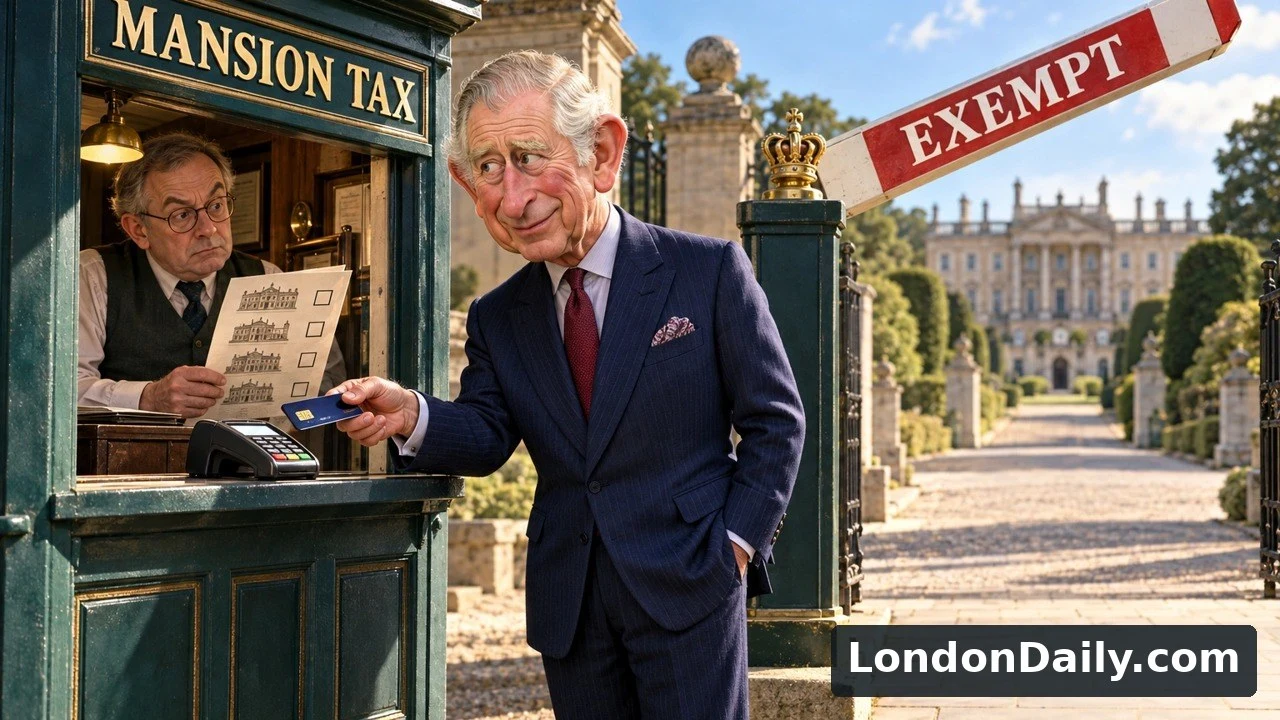
King Charles III has volunteered to pay the forthcoming mansion tax on all relevant royal properties, despite the Crown’s legal exemption, with the precise reach of the commitment still under discussion.
The decision has been shared with the Treasury and is intended to promote greater transparency and accountability. The high-value council tax surcharge starts in April 2028, covering an estimated 165,000 homes in England with annual bills of £2,500 to £7,500. Rachel Reeves introduced it at her final Budget as chancellor in 2025.
The distinction is between choosing to pay and being legally obliged to do so. A Treasury source confirmed that the Crown exemption would remain, “consistent with the wider tax system”. Government guidance allows the Crown total relief unless legislation specifically makes it liable. Royal sources stressed that exemptions were for Parliament, not the Palace, to determine.
Discussions continue over which properties will be exempt and the wider consequences for the royal household. Liability rests with owners rather than residents: after the 2025 Budget, ministers confirmed that occupants of official residences, including No 10, would not personally pay the levy.
Buckingham Palace, Windsor Castle and Clarence House are held by the Crown Estate, while the King privately owns Sandringham and Balmoral, inherited from his mother. Highgrove, his Gloucestershire country estate since 1980, belongs to the Duchy of Cornwall, meaning any bill would fall to the Prince of Wales as Duke of Cornwall.
Other relatives could face charges. The Princess Royal owns Gatcombe Park, given to her by her mother as a wedding present in 1976. The Duke of Edinburgh’s 150-year lease on Bagshot Park could make him liable rather than the Crown Estate.
By contrast, the Prince and Princess of Wales hold a 20-year lease on the eight-bedroom Forest Lodge in Windsor Great Park. They paid £42,000 in stamp duty, but their tenancy falls short of the 21-year threshold for a long lease, leaving liability with the Crown Estate.
Voluntary payment follows the practice begun by Elizabeth II in the 1990s and continued by the King for income tax and capital gains tax. In June, amid increased scrutiny of royal finances, Buckingham Palace disclosed his personal tax bill for the first time: £12.9 million for 2024–25. Kensington Palace separately said Prince William paid £7.76 million in income tax that year.
Tax expert Mike Warburton welcomed the King’s offer, saying: “It’s a nice gesture.” Its practical extent will depend on the unresolved property-by-property arrangements: the commitment does not itself remove the Crown’s statutory exemption.








Join the conversation